

You should weigh six leaderboards: reliability (Subaru, Toyota, Honda lead used and new), total cost of ownership (used lowers upfront and depreciation), safety/ADAS (new models add more active tech), fuel efficiency (hybrids like Prius/Accord excel used and new), depreciation/resale (new lose ~20–30% first year), and best-used picks (Accord, Civic, Corolla retain value). This data-driven snapshot helps you pick strategic tradeoffs, and scrolling on will show model-level comparisons.
Key Takeaways
- Rank the top six models by total cost of ownership comparing new vs. used at 5-year intervals.
- Compare first‑year depreciation percentages for new cars versus equivalent used models.
- List reliability scores and common major repairs for the top six new and used contenders.
- Show safety and ADAS feature availability differences across the six best new and used options.
- Present fuel‑efficiency (MPG) and estimated fuel cost per 10,000 miles for each of the six models.
New vs. Used Reliability Rankings by Brand
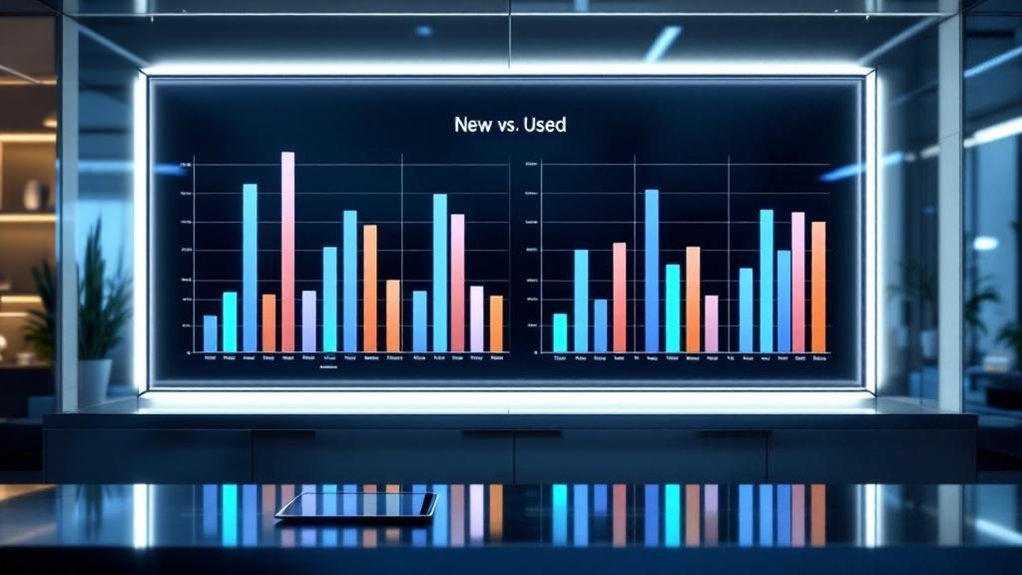
While Consumer Reports’ Overall Scores — a blend of road-test performance, safety, predicted reliability, and owner satisfaction — drive brand rankings, you’ll see clear differences between new- and used-vehicle reliability across makers. You’ll note Subaru often tops reliability rankings for both new and used cars, reflecting consistent owner satisfaction and predicted reliability. Honda and Toyota remain strong choices in the used cars market; models like the Honda Accord frequently appear as pragmatic picks due to long-term dependability across model years. Luxury marques such as BMW and Lexus score well for reliability, but sample sizes and model variability matter. Brands with limited model lines, like Chrysler, can show skewed results, while large portfolios from Ford and Chevrolet deliver a wider spread of reliable options.
Cost of Ownership: New Cars Compared to Used Models
You’ll weigh a higher upfront cost for new cars — the average new vehicle is about $48,000 versus roughly $9,150–$10,450 for a used 2014 Accord — against steep first-year depreciation, often ~20%. Factor in maintenance and repair: new cars cost less initially but used stalwarts like the Civic and Corolla typically yield lower lifetime maintenance expenses. Also quantify fuel differences, since hybrids (e.g., 2014 Accord Hybrid at ~47 MPG) can shift total ownership costs despite higher purchase prices.
Purchase vs. Depreciation
Because new cars typically shed 20–30% of their value in the first year, buying new creates an immediate, measurable hit to your total cost of ownership compared with purchasing a used model that’s already absorbed that depreciation. You’ll see lower upfront loss with used cars, improving short-term cost of ownership and reducing depreciation risk.
| Purchase option | First-year loss | Strategic advantage |
|---|---|---|
| New | 20–30% | Latest tech, higher initial loss |
| 1–3 yr used | 10–15% | Lower depreciation, good resale |
| Older used | 5–10% | Best cost-per-mile, minimal early loss |
Select models (Toyota, Honda) keep value, so buying slightly used often maximizes resale and minimizes depreciation exposure.
Maintenance and Fuel
Maintenance and fuel are the two ownership buckets that most affect your running costs over time: new cars average about $2,800 per 10,000 miles, but fuel-efficient models and hybrids can cut that substantially (the Mirage runs roughly $10.99 per 10,000 miles, and the Corolla Hybrid and Accord Hybrid can exceed 45–50 MPG), while reliable Japanese models like the Accord, Civic, CR‑V and Avalon offer lower long‑term maintenance and high mileage lifespans (roughly 186k–211k miles), meaning a slightly higher new purchase price can still be offset by fuel savings and reduced repair frequency compared with many used alternatives. You should weigh lower initial cost of used cars against higher fuel and maintenance outlays over time; prioritize hybrids or proven Japanese models for minimal total cost of ownership.
Safety and Advanced Driver-Assistance Performance Across Ages
While older models like the 2014 Honda Accord and Prius proved reliable and scored well in crash tests, newer cars generally offer improved occupant protection and accident-avoidance thanks to recent advances in crash-structure design and standard ADAS features (automatic emergency braking, lane-keeping assist, rearview cameras, adaptive cruise), so you’re likely to get measurably better safety performance by choosing a later model year even within the same make and model. You should treat safety as a moving target: new vehicles increasingly include advanced driver-assistance systems as standard, while many used cars—especially pre-2015—lack rearview cameras and updated prevention tech. Use recent crash-test data and standard-feature checklists when comparing model years; incremental ADAS additions often produce quantifiable reductions in collision risk and occupant injury.
Fuel Efficiency and Hybrid Benefits for New and Pre-Owned Vehicles
If you’re prioritizing lower fuel costs, hybrids are where you’ll see the biggest returns: used hybrids like the 2014 Prius and Accord deliver about 47–48 MPG, new Accord hybrids average roughly 45 MPG, and newer Corolla hybrid variants exceed 50 MPG, translating to substantial savings over time and often higher resale value. You should weigh total cost of ownership: fuel efficiency cuts operating expenses dramatically, and hybrid vehicles from Japanese automakers lead in reliability and economy. For budget buyers, the Mitsubishi Mirage offers very low per-10,000-mile costs, though it’s a different tradeoff than a hybrid. If you’re compiling Best Used Cars, prioritize proven hybrid models for long-term savings, lower fuel consumption, and strong market demand.
Resale Value and Depreciation Trends by Model Year

You should track year-to-year depreciation rates closely, since new cars typically lose 20–30% in the first three years and luxury brands can shed 50–60% in five. Compare trade-in offers to private-sale values—private sales often fetch higher prices but take more time and effort. Use model-specific trends (e.g., Corolla/Civic retaining >50% at five years, hybrids holding value better) to set timing for resale or trade-in.
Year-to-year Depreciation Rates
Because new cars shed value fastest early on, expect roughly a 20–30% drop after the first year and accelerated losses over the first three years—often exceeding 50% for some luxury models—before depreciation rates generally settle to about 15% annually thereafter; brand and model year matter, with Japanese makes like Toyota and Honda typically holding value better and well-maintained used cars retaining more of their original price at five years (around 60% on average) compared with their faster-depreciating competitors. You should track year-to-year declines to plan buy vs. lease decisions and to time resale. New Cars and used cars follow predictable curves; make sure you compare model-specific data.
| Year | Avg % Loss |
|---|---|
| 1 | 20–30% |
| 2 | 15–25% |
| 3 | 40–50% |
| 5 | ~40% |
Trade-in vs. Private-sale
When weighing trade-in versus private-sale, remember dealers typically offer about 10–20% less than what you’d get privately because they factor in reconditioning and resale margins, which compresses your recovery of a car’s model-year–specific value; newer models often lose 20–30% in year one and some (e.g., Toyota 4Runner) hold value better, while five-year-old cars can be down ~50%, so choosing a sale channel should reflect the vehicle’s age, brand retention patterns, and current market demand. You’ll want to balance trade in advantages—speed, tax credits, and lower hassle—against private sale strategies that maximize price: clean history, targeted listings, and timing for demand spikes. Prepare for dealer negotiations by knowing market comps and worst acceptable offers.
Best Value Picks: Top Used Models That Outperform New Competitors
Although newer models promise tech upgrades, buying smart used can give you better fuel economy and lower cost-per-mile — for example, the 2014 Honda Accord Hybrid and 2014 Prius deliver 47–48 MPG, and mid-decade Mazdas like the 2016 Mazda 3 and 6 offer 33 and 30 MPG respectively while retailing well below comparable new sedans, making them clear value picks if your priority is efficiency and total ownership cost. You’ll find best used models that maximize fuel efficiency and cost savings: prioritize verified maintenance history, low mileage, and clean title records. Targeted buys like the Accord Hybrid, Prius, Mazda 3, and Mazda 6 give measurable total-cost advantages versus new rivals when depreciation and fuel are factored.
- Prioritize fuel efficiency metrics (MPG)
- Compare retail ranges vs. new prices
- Verify maintenance and title
- Calculate cost-per-mile and depreciation
Frequently Asked Questions
What Are the Pros and Cons of New Cars Vs Used Cars?
You get new car advantages like latest tech, warranties, and lower early maintenance, but pay higher depreciation; you’ll avoid some used car pitfalls—uncertain history, repairs—but can lower long term costs by buying reliable used models.
Who Makes the Most Reliable Cars Consumer Reports?
Like a photo finish, Subaru tops Consumer Reports’ reliability list; you’ll see reliable brands like Subaru, Lexus and Porsche deliver strong consumer satisfaction and long term value, so you can plan strategically based on data-driven reliability scores.
Which Car Brand Depreciates the Most?
Lincoln and Alfa Romeo depreciate the most, so you’ll see steep depreciation rates and poor car value retention; use resale trends to avoid them, favoring Toyota or Honda for stronger long-term value and lower depreciation.
What Makes a Used Car a “Good” Buy?
A good used car balances strong used car values, clean vehicle history, and low ownership costs; you’ll want documented maintenance, reliability metrics, safety scores, and firm buyer negotiation tactics to secure fair price and long-term value.
Conclusion
You’ve seen sharp stats showing reliability, running costs, safety, and resale — so pick prudently. Prioritize proven pre-owned performers if price pressures push you, but pay for new tech when safety and efficiency matter most. Balance brand-by-brand breakdowns, depreciation data, and fuel figures to maximize value. Use a strategic, score-based shortlist, scrutinize service history, and secure certified inspections — smart shopping slashes stress, spares savings, and surprises.