

You need a data-driven BDC leaderboard that sets clear daily outbound targets (e.g., 75–100 calls, 20 texts, 15 emails) and shows real-time progress so agents stay accountable and focused. Track calls-to-appointment conversion, lead response time, and AQIs to spot coaching needs and boost productivity by ~30%. Use color-coded visuals, CRM/telephony integration, and automated reports for fast feedback. Keep goals realistic, recalibrate monthly, and tie incentives to KPIs — continue for tactical setup and metrics.
Key Takeaways
- Set clear daily outbound targets (e.g., 75–100 calls, 20 texts, 15 emails) tied to measurable appointment goals.
- Display a real-time, color-coded leaderboard integrated with the CRM showing calls, texts, emails, and appointment conversions.
- Automate alerts for missed thresholds and prioritized follow-up tasks to shorten lead response time under five minutes.
- Use short, data-driven coaching huddles and individualized benchmarks based on leaderboard trends to improve agent performance.
- Run monthly recalibration and reward programs (bonuses, recognition) linked to AQIs and conversion rates to sustain engagement.
Why Daily Outbound Goals Matter for BDC Agents

Every day, clear outbound targets give BDC agents a precise roadmap for converting leads into appointments, because they set measurable expectations for calls, texts, and follow-ups that drive accountability and focus. You’ll see daily outbound goals translate into measurable upticks in agent productivity: when targets are specific, agents track progress and adjust behavior in real time. Data shows agents hitting daily goals produce higher appointment setting rates, which directly increases sales opportunities. You’ll also get a performance pulse faster, enabling managers to foster healthy competition and recalibrate goals based on team metrics. Adopt short feedback loops and transparent leaderboards so you can reward top performers, identify coaching needs, and continuously optimize tactics that maximize appointment-setting efficiency and overall revenue impact.
Setting Realistic Targets for Calls, Texts, and Emails
Building on daily outbound goals, you should set concrete, realistic targets for calls, texts, and emails that reflect your dealership’s size and historical performance—typically 75–100 calls, about 20 texts, and 15 emails per day—because agents meeting those thresholds see roughly a 30% higher appointment-setting rate and a 15% boost in overall outreach when leaderboards are in play. Use BDC software to track outbound calls, texts, and email activity against daily goals and historical benchmarks. Aim for follow-up within five minutes to leverage conversion gains and improve response rate, and model targets on a typical 50% response rate to create achievable quotas. Monitor appointment sets per agent to recalibrate targets monthly, keeping goals data-driven and motivating.
Designing a Visual Leaderboard That Drives Action
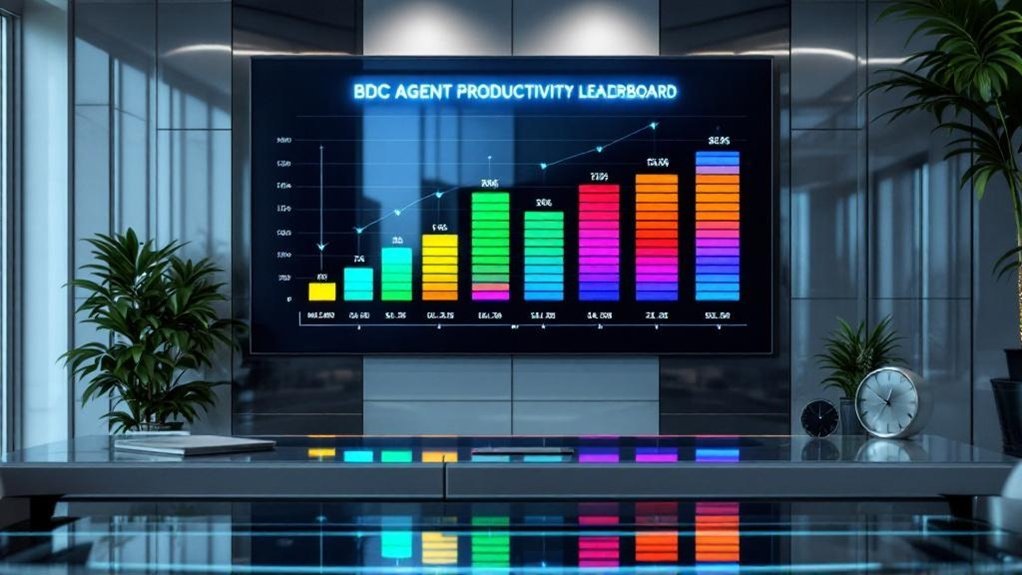
You’ll set clear daily outbound targets on the board so every agent knows the exact call and appointment goals they need to hit. Use real-time visual cues—color-coded progress bars and leader rankings—that update via CRM integration to turn raw data into immediate insight. Add actionable performance alerts that prompt specific next steps (call more, prioritize warm leads, or follow up) when agents fall behind their targets.
Clear Daily Outbound Targets
Start with a concrete daily target—like 50 outbound calls or 30 texts—and display it prominently on a live visual leaderboard so agents can see exactly what’s expected and how they’re performing in real time. You’ll set BDC daily goals tied to measurable actions—outbound calls, texts, appointments—to create clear performance benchmarks. Show each agent’s progress versus target and update counts continuously so you can quantify gaps and wins. Use the data to coach: identify when someone falls behind and deploy quick interventions or share tactics from top performers highlighted on the visual leaderboard. Consistent, specific daily goals raise accountability, sustain momentum, and drive higher contact and appointment rates. Track outcomes to refine targets and optimize team throughput.
Real-Time Visual Cues
Having daily outbound targets visible is only half the equation; how you present that data determines whether agents act on it. You need a BDC Leaderboard that delivers real-time insights and clear performance metrics so agents can course-correct instantly. Visual cues—color coding, progress bars, and ranking tiers—drive accountability and friendly competition without debate. Large-screen displays and customizable widgets guarantee daily outbound goals stay top of mind and aligned with dealership KPIs. Use the leaderboard in huddles to reinforce priorities and focus behavior.
- Color-coded status: green/yellow/red for goal proximity
- Progress bars: percent to daily outbound goals
- Live ranks: highlight top performers
- Custom KPIs: tailor metrics per role
- Team view: shared real-time insights for accountability
Actionable Performance Alerts
When actionable alerts are integrated into your BDC leaderboard, managers and agents get immediate, data-driven prompts that turn passive metrics into targeted next steps. You’ll use actionable performance alerts to flag deviations from daily outbound goals and specific KPIs—outbound calls, appointments set, and conversion ratios—so the BDC team knows where to focus. Alerts should trigger coaching workflows in real time, assign corrective tasks, and surface trends that affect appointment show rate and pipeline velocity. Visual priority cues help the sales department reallocate resources to high-impact opportunities. Measure alert effectiveness by reduced response time to underperformance, improved appointment show rate, and uplift in daily outbound completion. Implement tight feedback loops so alerts evolve with changing targets and behavior.
Integrating Leaderboards With Your CRM and Telephony

If you connect your leaderboard to your CRM and telephony, you’ll get real-time visibility into daily outbound goals, call volume, appointment-set rates, and conversion ratios—metrics that let managers spot top performers and those who need coaching instantly. You’ll use leadership dashboards to align incentives, show CRM-driven KPIs, and push telephony call outcomes into one pane for clear performance tracking. Automation removes manual reports, keeps data accurate, and speeds coaching cycles. Dynamic feedback motivates agents to hit outbound targets and lift appointments and conversions. Integrate wisely to preserve data integrity and user permissions while maintaining update cadence that matches your sales rhythm.
- Surface call volume and abandoned call rates
- Show appointment-set rates by agent
- Display conversion ratios in real time
- Automate daily performance reports
- Trigger coaching alerts for dips
Measuring Agent Productive Time and Activity Quality
You’ll want to track productive time metrics like talk time, call volume, and appointment-confirmation hours to quantify revenue-focused activity versus idle or long wrap-up periods. Pair those with activity quality indicators—call types, follow-up effectiveness, and appointment conversion rates—to pinpoint which behaviors drive results. Use automated reports to turn these measures into targeted coaching and daily outbound goals.
Productive Time Metrics
Although productive time covers a wide range of activities—from answering inbound calls to making outbound dials and follow-ups—it’s best measured by a few precise KPIs (talk time, call volume, response rates, and wrap-up duration) that reveal where agents spend their minutes and where time leaks occur. You’ll focus on productive time metrics tied to appointment setting and lead engagement, using key performance indicators (KPI) to quantify agent productivity. Track talk time and call volume to gauge activity, measure response rates for follow-up effectiveness, and monitor wrap-up duration to spot inefficiencies. Use real-time dashboards to drive coaching and adjust scripts or workflows. Data should inform training, daily goals, and operational changes that boost confirmed appointments.
- Talk time per agent
- Calls made per shift
- Response rate to leads
- Average wrap-up time
- Appointments confirmed per hour
Activity Quality Indicators
Because Activity Quality Indicators (AQIs) focus on the substance of agent interactions—not just raw volume—they give you a precise, actionable view of productive time and where value is created. Use activity quality indicators to measure call duration, lead engagement, and appointment confirmations so BDC’s performance reflects real outcomes, not just dials. Track meaningful customer interactions, appointments set, and conversion rates from calls to appointments to quantify effectiveness. Monitor lead response time alongside engagement metrics to identify bottlenecks and optimize routing. Regular AQI analysis lets you spot high performers, target coaching where conversion gaps exist, and reward behaviors that raise yield. By tying AQIs to daily outbound goals, you can shift the BDC from cost center to revenue driver with measurable impact.
Coaching Strategies Based on Live Leaderboard Data
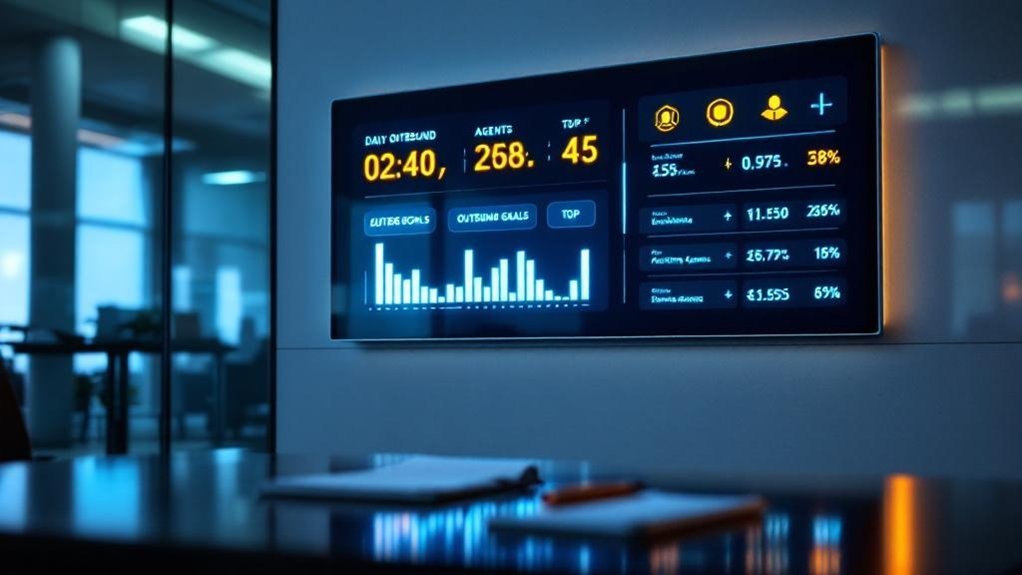
Several times a day, live leaderboard data gives you precise, real-time visibility into which BDC agents are underperforming against daily outbound goals, so you can deploy focused coaching that targets specific gaps in call volume, quality, or engagement metrics. You’ll use coaching strategies driven by live leaderboard data to set individualized performance benchmarks, provide immediate feedback on call quality, and reinforce behaviors that improve appointment setting rates. Short, data-backed huddles during shifts let agents adjust tactics and meet outbound goals before day’s end. Use trends to prioritize who needs coaching and which skills to address, ensuring your interventions are measurable and time-bound.
Live leaderboards enable targeted, data-driven coaching—short huddles and micro-goals boost call quality and appointment rates in real time.
- Review top shortfalls versus benchmarks and assign quick wins
- Deliver live call coaching on engagement metrics
- Set micro-goals for outbound volume
- Track single-session appointment setting improvements
- Rotate focus based on real-time trend shifts
Incentives and Recognition to Sustain Friendly Competition
You’ll amplify leaderboard impact by tying consistent daily performance to tangible monthly rewards like bonuses or gift cards, which studies show increase sustained effort by measurable margins. Pairing those rewards with public peer recognition—weekly shout-outs and a monthly “Top Performer” highlight—reinforces social incentives that boost engagement and retention. Track reward-driven shifts in outbound activity and conversion rates to verify incentives are driving the right behaviors.
Tangible Monthly Rewards
One clear way to sustain friendly competition is to tie a structured monthly rewards program directly to measurable KPIs—like outbound calls and appointments set—since incentives and recognition can boost productivity by up to 25%. You’ll align tangible monthly rewards with daily outbound goals so BDC agents stay focused on KPI achievements, boosting appointment-set rates and downstream unit sales. Design clear thresholds, automate leaderboard updates, and fund predictable incentives (gift cards, bonus payouts) to maintain momentum. Track outcomes and iterate monthly.
- Clear tiered rewards linked to outbound call and appointment thresholds
- Automated leaderboard reflecting daily outbound goals and progress
- Monthly payout or gift-card distribution based on KPI achievements
- Short-cycle review to adjust thresholds by performance
- Data dashboard for measurable impact and ROI
Public Peer Recognition
Building on monthly rewards tied to KPI thresholds, public peer recognition uses real-time leaderboards to amplify motivation and accountability across your BDC team. You’ll leverage BDC agent productivity data to display daily outbound progress, creating transparent benchmarks that drive friendly competition. That visibility raises morale, nudges underperformers, and validates top performers, lifting overall sales team effectiveness. Tie incentives to leaderboard tiers—bonuses, spot awards, or development opportunities—to sustain engagement and improve appointment conversion rates. Use dynamic updates and brief public shout-outs to reinforce behaviors that move metrics. Monitor lift in conversion and outbound volume to iterate thresholds and reward types. Below is a simple leaderboard snapshot you can adapt.
| Rank | Agent | Metric |
|---|---|---|
| 1 | Alex | 42 calls |
| 2 | Priya | 37 calls |
| 3 | Dan | 34 calls |
Using Leaderboards to Track Appointments and Close Rates
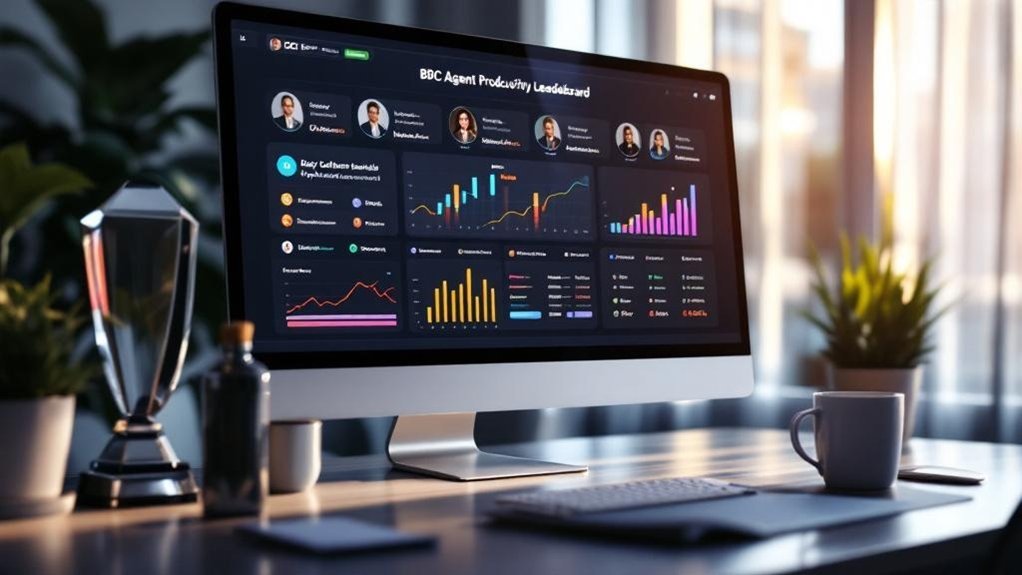
When leaderboards show daily outbound goals and live metrics like appointments set, conversion rates, and unit sales, they give you a clear, data-driven snapshot of who’s driving pipeline and who needs coaching. You’ll see appointments and closing rates tied directly to individual performance, so you can reward high performers and swiftly address gaps. Real-time updates enable targeted coaching, boosting accountability and overall productivity. Displaying conversion metrics and unit sales helps agents understand their impact on revenue and prioritize outreach that converts. Use leaderboard insights to set tactical daily goals, align coaching to weak spots, and scale best practices across the team.
- Track appointments set per agent daily
- Monitor appointment-to-sale conversion rates
- Highlight top-performing agents
- Flag underperformers for coaching
- Measure productivity against outbound goals
Overcoming Common Implementation Challenges
Although change can trigger pushback, you’ll minimize resistance by pairing clear communication with targeted training that shows how the leaderboard links daily outbound activity to appointments, conversion rates, and revenue impact. Address implementation challenges by coordinating IT early to integrate the BDC Agent Productivity Leaderboard with your CRM, mapping fields and automating imports to reduce manual errors. Enforce data accuracy through standardized entry protocols, audits, and agent training so performance tracking reflects true effort. Set short feedback cycles to surface issues and adjust rules quickly. Reinforce accountability and recognition: publish fair, transparent rankings, celebrate top performers, and pair corrective coaching with measurable improvement plans. This strategic, data-driven approach lowers friction and sustains adoption.
Metrics to Monitor for Continuous Improvement
Now that you’ve set up clear communication, training, and data integrations to support leaderboard adoption, focus on the metrics that will drive continuous improvement. You’ll monitor BDC activity and outcomes to align behavior with goals, using data to pinpoint coaching, refine scripts, and reallocate leads. Emphasize daily outbound calls and multichannel touches, track appointment set rate versus goals, and measure appointment conversion rate to judge interaction quality. Review no-show trends and lead source performance to optimize follow-up cadences and acquisition spend. Use short-cycle reporting and hypothesis-driven experiments to iterate.
Track daily outreach, appointment set and conversion rates, no-shows, and lead source ROI—use short-cycle reporting to iterate.
- Daily outbound calls, texts, and emails: engagement volume and cadence
- Appointment set rate vs. daily goals: outreach effectiveness
- Appointment conversion rate: quality-to-sale ratio
- Appointment no-show rate: follow-up fidelity
- Lead source: channel ROI and conversion patterns
Frequently Asked Questions
How Many Calls a Day Should a BDC Agent Make?
You should aim for 50–100 calls daily; that call volume meets daily targets, supports lead generation, and feeds performance metrics. That range boosts conversion and team motivation while allowing data-driven adjustments for ideal results.
How to Run a Successful BDC Department?
You’ll run a successful BDC by optimizing BDC team dynamics, enforcing effective communication, tracking performance metrics, systematizing lead nurturing, and deploying customer engagement strategies—using data-driven coaching, CRM automation, and clear daily goals to boost conversions.
Conclusion
You’ll see daily outbound goals turn effort into measurable progress — like a compass guiding your team through noise. Use realistic call, text, and email targets tied to CRM and telephony data, and display a clear leaderboard that highlights productive time, appointment rates, and close conversions. Track activity quality, run A/B incentives, and iterate on metrics. Stick to the data, sustain recognition, and you’ll drive consistent BDC agent improvement and measurable ROI.