
You’ll lock core brand elements—logo, colors, type—and give stores controlled templates to tailor promotions, inventory displays, and schedules to local demand. Use a central CMS with permissions, real-time inventory feeds, and standardized hardware to keep visuals consistent while letting teams swap approved copy, offers, and featured vehicles. Enforce weekly audits, analytics tracking, and sustainability specs. This balance boosts local relevance, protects brand integrity, and improves conversions; continue for practical setup steps and metrics.
Key Takeaways
- Define locked brand elements (logos, colors, typography) and separate editable content blocks for local promotions and inventory.
- Use a centralized CMS with templates enforcing brand rules while granting store-level customization permissions.
- Schedule real-time inventory and time-based promotions to display accurate, locally relevant vehicle offers.
- Standardize hardware and content schemas to enable consistent appearance, analytics, and future technology upgrades.
- Track performance with location-tagged analytics to optimize creative, timing, and store-level messaging strategies.
Key Takeaways for Dealership Digital Signage
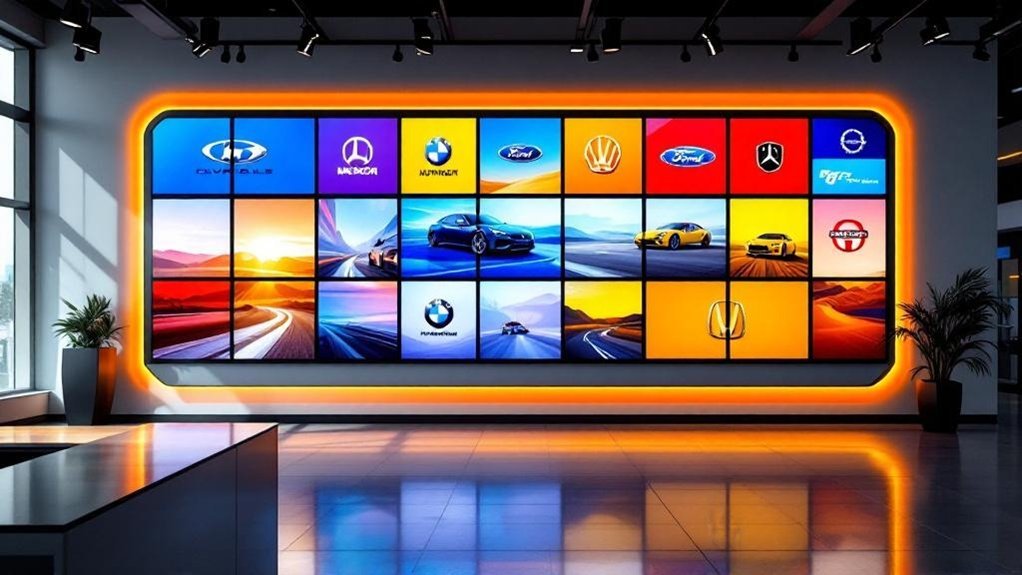
While you’ll want every display to reflect the group’s visual identity, effective digital signage must let local teams tailor messaging to regional tastes and inventory—so set clear rules for which elements are locked (logos, color palette, typography) and which can be adapted (promotions, featured vehicles, event notices). You’ll define digital signage content templates in a centralized content management system that uphold brand consistency while permitting localized content blocks for promotions and specials. Require schedules for real-time inventory updates to boost customer engagement and improve the customer experience. Capture performance via data analytics so managers can make strategic adjustments to creative and timing. For dealership signage, document approval workflows, file formats, and measurement KPIs to guarantee consistent execution across locations.
The Case for Combining Brand Standards With Local Flexibility
Your digital signage rules set the boundaries, but combining strict brand standards with local flexibility is what makes those boundaries work in the real world. You’ll enforce brand standards for consistent look and tone while permitting local flexibility so messaging matches customer demographics and regional preferences. Use customizable signage to react to inventory changes, seasonal offers, and events, boosting relevance and urgency in marketing efforts. Track performance with analytics to refine content strategies and improve engagement, aiming to increase foot traffic.
Enforce brand standards while allowing local customization—use templated, data-driven signage to boost relevance, urgency, and foot traffic.
- Define immutable brand elements and allowed local variants.
- Create templated customizable signage for quick updates.
- Monitor metrics by location and adjust content strategies.
- Require approvals to protect identity while enabling responsiveness.
Designing a Scalable Signage Framework for Multi-Location Dealerships

Because multi-location dealerships need both cohesion and responsiveness, design your signage framework around centralized control, standardized templates, and defined local permissions so every site can operate quickly without compromising brand integrity. You’ll deploy a content management system to push approved assets, schedule campaigns, and log version history while granting local teams controlled customization based on local demographics and inventory. Require templates that enforce brand typography, color, and messaging while allowing modules for customer preferences and regional offers. Integrate digital signage with analytics to collect performance metrics, inform adjustments, and A/B test localized creatives. Embed ADA standards in every template to guarantee accessibility. Define governance: roles, approval workflows, update cadences, and audit trails so signage stays compliant, measurable, and scalable across all dealerships.
Tailored Content Strategies for Store-Level Personalization
You’ll spotlight local inventory by programming digital displays to feature in-stock vehicles that match nearby customer search trends and recent lot turnover. Schedule time-based promotions to run during identified peak hours and align messaging with current stock levels, so offers expire when inventory shifts. Keep all copy and visuals within brand standards while allowing these tactical, store-level tweaks.
Local Inventory Spotlight
When local inventory spotlight signage is used strategically, it lets your dealership put the exact vehicles on display that matter most to nearby shoppers—models in stock, current specials, and regionally popular trims—so messaging stays relevant and actionable. You’ll deploy customizable digital signage that highlights unique vehicle offerings, links to dealership stock, and respects brand standards while enabling tailored content. Use these focused tactics:
- Rotate featured models based on market trends and local inventory to boost customer engagement.
- Promote personalized promotions tied to in-stock units, financing options, and trade-in alerts.
- Configure displays to reflect local demographics, clickable VIN details, and targeted calls-to-action.
- Audit content weekly to verify accuracy, brand alignment, and measurable impacts on showroom traffic.
This prescriptive approach keeps messaging precise and conversion-focused.
Time-Based Promotions
Although peak showroom traffic and customer behavior shift throughout the day and week, time-based promotions let you align offers with those patterns to maximize engagement and conversions. Use customer behavior data to map peak windows and schedule time-sensitive offers on digital signage, creating a clear sense of urgency during high-foot-traffic periods. Apply store-level personalization by tailoring promotions to local customer demographics and nearby events or seasons, increasing relevance and likelihood of immediate action. Maintain centralized content management to push standardized templates while allowing localized edits—price, financing, and timing—based on store-specific insights and performance metrics. Monitor results hourly and adjust schedules, creative, and offer depth to optimize conversion rates and sustain consistent brand standards across all locations.
Implementation Best Practices and Technology Considerations

Because consistent execution depends on both design discipline and the right tools, start by defining a cohesive visual strategy that specifies typography, color palettes, logo treatments, and acceptable local variations, then map those standards to the technologies and materials you’ll use so every location can apply them reliably; prioritize a centralized content management system for approvals and distribution, digital signage for real-time localized messaging, and durable fabrication materials to guarantee brand integrity across environments. You’ll enforce brand standards while allowing measured customization to boost customer engagement and localization. Follow this checklist:
- Deploy content management systems with role-based approvals and templates.
- Standardize digital signage hardware and firmware for real-time updates.
- Specify materials and installation methods for a professional appearance.
- Align signage strategy with marketing strategies and track performance metrics.
Measuring Impact: Metrics, Analytics, and Continuous Optimization
If you want to prove that your brand standards are working and continuously improve them, establish a clear measurement framework that ties digital signage and on‑floor updates to specific KPIs—like incremental sales per campaign, dwell time and pathing from foot‑traffic sensors, interaction rates on touch displays, and content recall from short exit surveys—and make sure data sources are timestamped and location‑tagged so you can correlate creative changes with customer behavior and business outcomes. Define primary metrics and dashboards that combine sales, foot traffic and viewer interaction. Use analytics to A/B test messaging strategies and content strategies, segment by location and customer profile, and surface market trends. Capture feedback to refine displays, prioritize continuous optimization, and drive measurable improvements in customer engagement and customer satisfaction.
Future-Proofing Your Signage With Emerging Trends and Innovations

When you design signage for the next 5–10 years, prioritize modular systems that can ingest AI-driven feeds, support AR experiences, and swap to more efficient hardware without a full rip‑and‑replace — that means standardizing on open protocols, timestamped/location-tagged content metadata, and mounting/electrical layouts that accommodate brighter, higher‑resolution panels and sensor arrays. You’ll future-proof digital signage by combining personalization, real-time analytics, and sustainability goals so customer experience and customer engagement improve together.
- Specify APIs and content schemas for AI-led personalization and real-time analytics.
- Plan mounting, power, and conduit for next-gen display technology and augmented reality rigs.
- Choose energy-efficient displays, recyclable materials, and lifecycle metrics for sustainability.
- Define UX rules for immersive experience, ensuring consistent brand control while enabling local relevance.
Frequently Asked Questions
How Do Signage Budgets Get Allocated Across a Dealership Group?
You’ll allocate signage budget allocation by blending dealership marketing strategies and dealer group collaboration: prioritize cost effective signage, balance digital vs. physical signage, factor regional branding differences, seasonal promotional signage, compliance with regulations, signage return investment, and signage effectiveness measurement.
Who Approves Store-Level Creative Variations and Exceptions?
You’ll get approvals from marketing teams and franchise owners: marketing enforces creative guidelines and brand consistency, franchise owners request local adaptations; decision making uses approval processes, compliance checks, stakeholder input, and defined design flexibility.
Can Third-Party Vendors Produce and Install Local Signage?
Yes — you can use third-party partnerships, but you’ll enforce vendor selection, local regulations, quality control, installation timelines, cost considerations, design consistency, brand alignment, communication strategies, and performance metrics to guarantee compliant, timely, high-quality local signage.
How Do Signage Standards Affect Franchisor-Franchisee Legal Agreements?
Strict standards shape your franchise agreement: strict signage compliance issues, clear franchise agreement clarity, prescribed signage design restrictions, limited marketing autonomy limits, outlined franchisee obligations overview, addressed intellectual property rights, brand consistency challenges, legal dispute resolution and legal ramifications analysis.
What Training Is Needed for Store Staff to Manage Localized Content?
You’ll need staff training covering localized content creation, signage management procedures, brand consistency rules, dealership autonomy limits, marketing guidelines, compliance protocols, visual merchandising standards, customer engagement techniques, and performance metrics tracking with hands-on practice and regular assessments.
Conclusion
You’ll want to keep brand rules firm yet let each store breathe—because when corporate standards and local insight coincide, customers feel both trust and relevance. Follow the scalable framework, pick flexible tech, and set clear content rules so every sign serves a measurable goal. Test, measure, and iterate at store level, and you’ll turn coincidence into strategy: the right message, in the right place, at the right time, every single visit.