
You’ll pay most for pixel pitch/brightness, screen size and bespoke shapes, component quality, installation/maintenance, and market/supply volatility. Choose the highest resolution only where close viewing demands it, favor modular standard panels, and invest in certified power and processing where failures would be costly. Opt for front-service modules and energy-efficient drivers to cut operating costs. Build a tariff and lead‑time buffer. Keep this list handy and you’ll learn how each choice affects upfront and lifetime budget.
Key Takeaways
- Pixel pitch and resolution: finer pitches (P1.2–P1.5) cost more but deliver crisp close-up showroom visuals—choose balance by viewing distance.
- Screen size and configuration: larger or custom-shaped walls increase panels, mounts, and labor—stick to modular standard sizes to save.
- Component quality and build: premium LEDs, driver ICs, and die-cast cabinets raise upfront cost but reduce maintenance and downtime.
- Installation and maintenance access: complex installs and rear access increase labor; use front-service modular panels to lower installation and long-term costs.
- Brightness and energy efficiency: outdoor/high-brightness units need protective hardware and more power—specify efficient power supplies and sensor dimming to cut operating costs.
Pixel Pitch, Resolution and Brightness Considerations

Pixel pitch, resolution and brightness are the primary drivers of a video wall’s upfront and operating costs: smaller pitches like P1.2–P1.5 require many more LED chips and stronger processing, pushing material and production costs markedly higher, while fine-pitch panels used in corporate or broadcast settings can cost nearly twice as much as lower-pitch alternatives. You’ll pay a premium for fine-pitch LED walls when you need high-quality visuals at short viewing distances; higher resolution and refresh rates demand advanced processing power and additional LED chips, increasing capital expenses. Outdoor LED options add cost for elevated brightness (5,000–7,500 nits) and protective hardware. Prioritize energy efficiency and sensor-driven dimming to reduce operational costs without sacrificing visual performance.
Screen Size, Configuration and Custom Shapes
Size matters: larger video walls mean more panels, higher material costs, and increased installation labor, so you should budget accordingly and assess whether scaling up delivers proportional marketing or sales ROI. When planning screen size and configuration, quantify panel counts and installation costs against expected ROI. Modular LED panels let you choose scalable sizes and reuse components, reducing waste and preserving capital for future expansion. Custom shapes and curved displays address showroom aesthetics but require specialized engineering; factor those higher investments into the overall budget rather than treating them as add-ons. SRYLED flexible displays handle unique configurations and appeal to premium buyers, yet unique configurations drive up design and labor costs. Prioritize standard mounts where possible to control expenses without sacrificing impact.
Component Quality, Processing and Build Materials
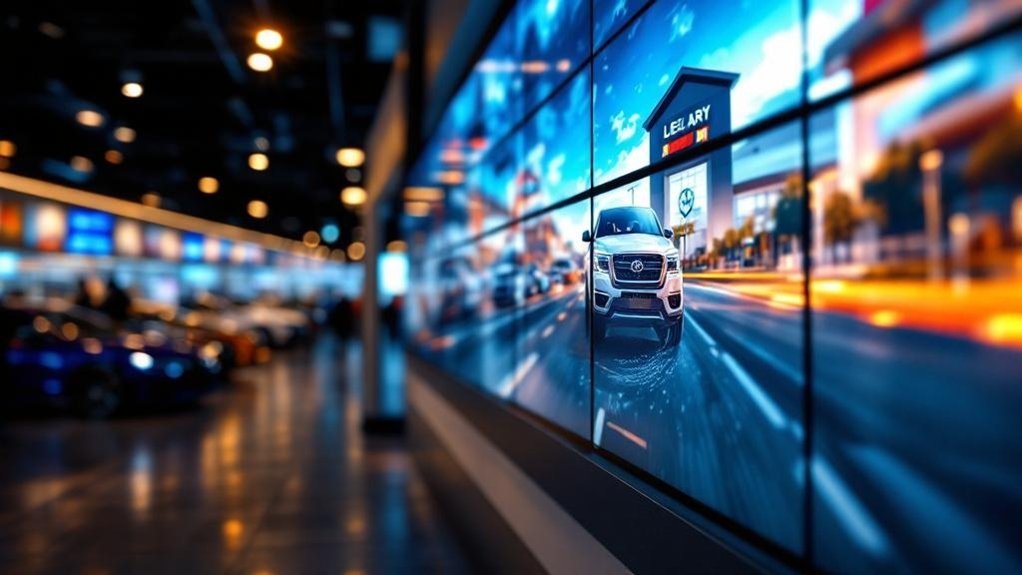
When you factor in component quality, you’re buying more than brightness — high-grade LED chips, advanced driver ICs, robust power supplies and die-cast aluminum cabinets all raise upfront costs but cut long-term maintenance and replacement expenses. You’ll pay more for certified components and advanced processing (receiving cards, auto color calibration, 8K-ready processors) because they improve performance, visual clarity and reliability. Choose die-cast build materials for durability and seamless joins; they justify higher capital expense by reducing part swaps. Prioritize power supplies with thermal headroom to avoid failures. SRYLED’s certified components illustrate how higher initial spend lowers lifecycle expense. Balance needs: spend on component quality where failure risks and visual impact are highest; economize elsewhere.
| Component | Benefit |
|---|---|
| LED chips | visual clarity |
| Driver ICs | processing performance |
| Power supplies | reliability |
| Cabinets | durability |
| Certified parts | reduced maintenance |
Installation Complexity, Maintenance and Total Cost of Ownership
Installation strategy is a major cost driver for dealership video walls, since standard mounts and modular panels cut labor and fixture expenses while custom mounts, irregular layouts or ceiling integrations can quickly inflate budgets. You should assess installation complexity early: choose SRYLED front-maintenance screens where rear access is limited to reduce labor costs and installation time. Factor installation time into project turnaround times to minimize disruption and start deriving customer engagement value sooner. Evaluate maintenance strategies and warranty plans against the initial investment; proactive maintenance lowers failure risk and long-term repair expenses. Calculate total cost of ownership by combining initial investment, ongoing maintenance, potential upgrades, and expected impact on sales. Budget for periodic service cycles and fast-response support to protect uptime and ROI.
Market Factors, Supply Chain and Energy Efficiency
Because geopolitical shifts, tariff swings (typically 12–18% in the U.S.) and raw-material volatility directly affect component prices, you should build contingency buffers into video wall budgets and monitor LED chip and PCB markets continuously. Assess market factors that drive pricing: raw material prices, demand for advanced technologies (MiniLED/MicroLED) and regional tariff policy. Prioritize vendors with resilient supply chain practices—SRYLED-style partners—to reduce delivery risk and unexpected cost escalations. Specify energy efficiency targets for LED screens to lower electricity spend and improve total cost of ownership. For cost management, model scenarios showing upfront pricing versus lifecycle savings from efficient panels and scaled production of new tech. In budgeting, include buffer percentages, lead-time premiums and maintenance assumptions to protect margins and guarantee predictable procurement.
Frequently Asked Questions
How Long Does Warranty Coverage Typically Last for Dealership Video Walls?
Typically 1–3 years, though warranty duration varies; manufacturer policies define coverage specifics, repair options, replacement costs, maintenance requirements, extended warranties, service agreements, customer support; you’ll monitor common issues and budget for extensions or out-of-warranty fixes.
Can Video Walls Integrate With CRM and Sales Software?
Yes — ironically simple to set up, you’ll get Video wall integration with CRM compatibility and sales software, boosting dealership efficiency, customer engagement and data visualization; enables marketing strategies, remote management, real time updates and analytics tracking.
What Financing or Leasing Options Are Available for Installation?
You can use financing options or leasing agreements with vendor partnerships to spread installation costs via payment plans, balancing interest rates, tax incentives, and budget considerations to improve cash flow and realize long term savings.
Are There Local Regulations or Permits Required for Large Video Displays?
Yes — you’ll face local regulations, display permits, zoning laws, installation guidelines, safety standards, environmental considerations, signage restrictions, aesthetic requirements, maintenance rules and compliance checks; factor permit fees, inspection timelines and potential mitigation costs into your budget.
Can Video Walls Be Used Outdoors in Car Lot Displays?
Yes — you can: choose outdoor durability, weather resistance, high display brightness for sunlight visibility, plan installation challenges, power requirements and maintenance frequency, add security measures, optimize digital content for customer engagement while keeping budget and technical constraints tight.
Conclusion
You’ve just seen the five cost drivers—pixel pitch, size and shape, component quality, installation and market forces—and they matter more than your morning coffee. Ignore them and your budget explodes like a faulty power supply; respect them and you save like a procurement ninja. Focus on the right resolution, durable materials, streamlined install and energy efficiency, and you’ll control upfront spend, cut maintenance, and lock in predictable total cost of ownership.