

You’ll get seven concrete benefits from a real-time DMS-connected status board: it unites sales, service, and parts with one live source of truth, exposes bottlenecks, and cleans up data for faster decisions. Real-time KPIs and alerts speed tactical changes and reduce manual reporting. You’ll cut repair event cycle time by resolving technician idle time and parts gaps, boost sales with leaderboards, improve BDC conversions, and enhance the customer lounge experience — keep going to see how each drives measurable results.
Key Takeaways
- Provide a single source of truth by syncing DMS and CRM data into a live, department-wide status board.
- Accelerate decisions with real-time KPIs, trend alerts, and consolidated performance metrics.
- Reduce repair event cycle time by exposing technician idle time, parts shortages, and workflow bottlenecks.
- Boost sales and motivation with live leaderboards, objective coaching data, and measurable behavior-driven contests.
- Improve customer experience and BDC efficiency by delivering instant service updates and eliminating manual entry errors.
Improve Cross-Department Visibility and Communication

When your dealership connects a real-time DMS-driven status board across sales, service, and parts, you’ll get a single source of truth that delivers live KPIs and operational metrics to every team member — enabling faster decisions, fewer handoffs, and measurable reductions in customer wait times. You’ll see repair orders, appointments, and inventory levels updated instantly, so teams act on the same data. That transparency drives department collaboration by exposing bottlenecks and aligning priorities against measurable goals. With live visibility, you reduce repeat contacts, speed throughput, and lower cycle times — quantifiable gains in operational efficiency. Teams can coordinate resource allocation, reroute parts, and adjust schedules immediately, cutting delays and improving customer satisfaction with predictable, trackable outcomes.
Accelerate Decision-Making With Real-Time KPIS
With instant performance visibility from a DMS-connected status board, you can see sales, service, and inventory metrics the moment they change so decisions aren’t delayed by stale reports. Real-time trend alerts flag anomalies and emerging patterns, letting you prioritize actions before small issues become costly. That immediacy lets you make faster tactical adjustments—reallocating staff, shifting inventory, or rescheduling appointments—to sustain throughput and customer satisfaction.
Instant Performance Visibility
Although real-time DMS-connected status boards pull live KPIs from multiple departments, they give you instant, actionable visibility into sales, service throughput, and technician productivity so you can spot bottlenecks and reallocate resources without delay. You get consolidated performance tracking and data visualization that reduces manual reporting and surfaces the metrics that drive profitability. With up-to-date DMS feeds, you’ll align teams around current targets, pinpoint underperforming technicians or slow service bays, and measure the impact of tactical changes in minutes. That operational clarity accelerates decision cycles: staffing, parts allocation, and sales focus shift based on measurable outcomes, not hunches. The result is faster remediation, improved throughput, and more predictable revenue performance across departments.
Real-Time Trend Alerts
If real-time trend alerts flag a sudden dip in sales or a spike in repair times, you can act immediately—shifting staff, prioritizing parts, or adjusting promotions to stop revenue leakage. Real-time trend alerts from a DMS-connected status board give you continuous trend analysis across sales, service, and inventory, so you spot shifts in KPIs as they emerge. Alert systems push concise, data-driven notifications to the right managers, cutting decision latency and enabling targeted operational responses. With visual KPIs and timestamped alerts, you measure impact of actions and iterate quickly, embedding accountability into daily routines. That capability keeps you aligned with market demand, reduces wasted resources, and sustains measurable revenue and efficiency gains.
Faster Tactical Adjustments
When your DMS-fed status board shows live KPIs for units sold, gross profit, service orders and technician throughput, you can cut decision cycles from hours to minutes and redeploy staff or inventory where impact is highest. You’ll gain tactical flexibility to reassign sales teams, shift service bays, or push promotions based on live demand. Real-time visibility drives rapid response: spot a dip in technician throughput, add support; see rising service orders, open capacity. This data-driven approach reduces wasted labor hours and improves gross margins. It also boosts customer satisfaction through timely follow-ups. Use performance clarity to enforce accountability and sustain continuous improvement.
| Metric | Immediate Action |
|---|---|
| Units Sold | Reallocate floor staff |
| Gross Profit | Adjust pricing/promos |
| Service Orders | Open extra bays |
| Tech Throughput | Add technicians |
Reduce Repair Event Cycle Time (RECT) and Service Bottlenecks
Because real-time DMS-connected status boards surface RECT metrics instantly, you can spot and eliminate slowdowns as they happen instead of after the fact. You’ll use repair efficiency and workflow optimization metrics to target specific delays — technician idle time, parts shortages, or staging bottlenecks — and quantify improvements. Real-time tracking of open work orders and automated DMS updates cut manual follow-ups, so issues are resolved faster and your bays stay productive. With visibility into technician loads and parts availability, you can reassign tasks or expedite orders to prevent queue buildup. The result: measurable reductions in RECT, higher throughput per bay, fewer overdue vehicles, and reliable data for continuous process adjustments that improve customer turnaround and operational KPIs.
Boost Sales Performance and Team Motivation

While tapping real-time DMS-connected status boards into your sales floor, you’ll turn raw numbers into immediate motivation by displaying live KPIs and dynamic leaderboards that drive measurable behavior change. You’ll use live sales performance metrics to run targeted sales competitions, setting daily and monthly targets that are visible to everyone. Dynamic leaderboards increase accountability and push reps to improve conversion rates and units-per-transaction, and they give managers objective data for coaching. Morning huddles can reference the board to prioritize action items and redistribute resources based on current performance gaps. Regular, visible performance recognition boosts morale and teamwork, reinforcing behaviors that move numbers. The result: measurable uplift in sales output, faster goal attainment, and predictable, repeatable performance gains.
Enhance Customer Experience in the Lounge and Service Drive
Shifting that same real-time visibility from the sales floor to the lounge and service drive lets you turn wait time into a measurable customer-experience advantage. A DMS-connected status board gives customers immediate service updates—estimated completion times and technician assignments—reducing anxiety and inbound inquiries by a measurable margin. Linking dynamic lounge TV programming to the board keeps guests engaged with timed promotions and service progress, improving perceived wait quality alongside actual throughput. With advisors freed from status calls, you can redeploy labor to proactive relationship-building, increasing satisfaction scores. Capture customer feedback directly after visible milestones to quantify trust and retention impact. Measured gains in repeat business and reduced idle time validate the operational ROI of integrating lounge amenities with live DMS data.
Streamline BDC and Appointment Conversion Tracking
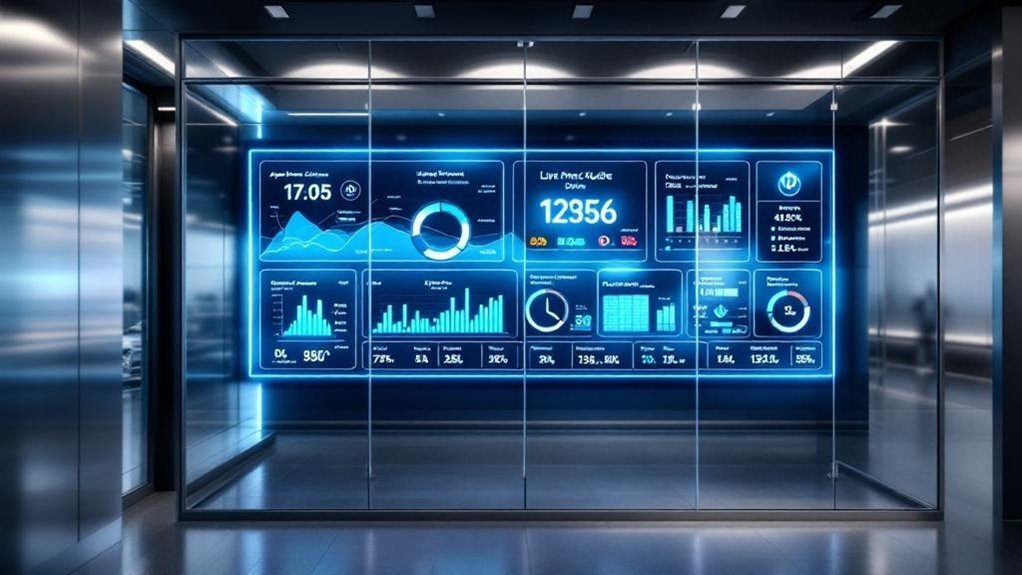
When your BDC can see live DMS data on a status board, you get immediate insight into call volume, appointment bookings, and conversion rates so teams can react and refine outreach in real time; that visibility drives measurable improvements by highlighting which scripts and channels convert, exposing bottlenecks, and making individual and team performance transparent against targets. You’ll use the board to improve BDC efficiency and appointment tracking, measuring touchpoints-to-show rates and time-to-confirm metrics. Real-time visibility shortens feedback loops so managers can reallocate resources, tweak scripts, and drive higher conversion.
- Live call and booking counts for workload balancing
- Conversion-rate trends by campaign and agent
- Open appointments and follow-up aging
- Individual vs. team KPI progress toward targets
This produces faster decisions and higher show rates.
Ensure Data Accuracy and Seamless DMS/CRM Integration
Because accurate, timely data is the foundation of operational decisions, you need a DMS-connected status board that syncs seamlessly with your CRM to eliminate manual entry errors and provide one source of truth across departments. You’ll get real-time data synchronization that updates service status, appointments, and repairs instantly, improving CRM alignment and interdepartmental communication. That unified view accelerates decision-making for sales and service, reduces delays, and boosts customer satisfaction. Centralized metrics help you spot inventory issues and service bottlenecks so you can optimize throughput and technician utilization. Implement integration monitoring and audit logs to maintain integrity and measure error reduction.
| Metric | Impact | Action |
|---|---|---|
| Sync latency | <1 min | Monitor alerts |
| Entry errors | -90% | Automate writes |
| Throughput | +15% | Rebalance workflow |
Frequently Asked Questions
What Is DMS for Car Dealers?
DMS for car dealers is integrated software that centralizes sales, service, inventory and finance; you’ll get DMS integration that boosts dealership efficiency, improves data accuracy, automates workflows, and delivers measurable operational and financial performance gains.
What Does DMS Mean in the Car Business?
DMS means Dealer Management System — DMS software that centralizes dealership management functions (sales, service, inventory, finance), so you’ll get real-time data, streamlined operations, fewer errors, and measurable productivity and profitability improvements.
Conclusion
Picture your dealership as a finely tuned engine: real-time DMS-connected status boards give every team the dashboard they need to drive performance. When visibility, KPI velocity, and data integrity hum together, bottlenecks melt, RECT drops, and appointment conversions climb—fueling measurable revenue gains and faster, repeatable outcomes. You’ll see customers smile sooner, service lanes flow, and sales targets hit with operational precision—proof that connected, timely data turns strategy into consistent, trackable results.