
You’ll keep customers calmer and more engaged by pushing hourly, timestamped service-status updates to a digital menu board. Data shows hourly updates cut inbound status calls by about one-third and meet the communication preference of 55% of customers who want app or text progress. Clear, concise timestamps reduce anxiety, boost trust, and free advisors for higher-value work while helping technicians prioritize. Continue on to see practical best practices and measurable ROI from hourly status updates.
Key Takeaways
- Hourly updates give customers real-time visibility into vehicle progress, reducing uncertainty and perceived wait times.
- Timely notifications cut inbound calls for status, freeing advisors for higher-value tasks and improving efficiency.
- Consistent, concise status messages build trust and predictability, increasing customer satisfaction and loyalty.
- Real-time boards help technicians prioritize work and reduce idle time, speeding overall service turnaround.
- Personalized, frequent updates meet customer preferences for app/text communication, driving repeat visits and engagement.
The Case for Real-Time Service Status Updates
Real-time service status updates give customers clear, continual visibility into their vehicle’s progress — reducing anxiety and inquiries while boosting trust and efficiency. You’ll cut incoming calls; one-third of service customers typically phone for progress updates, but automated digital menu boards lower that load. With 55% preferring mobile or text, hourly visible updates align with modern customer communication habits while also meeting service expectations for transparency. You’ll see operational gains: teams stop repeating status info and focus on repairs, lifting throughput and satisfaction. The data show hourly displays of write-ups, inspections, and servicing build trust through transparency, so you’ll both improve the customer experience and streamline workflows. That combination strengthens retention and reduces friction in the service lane.
Reducing Customer Anxiety With Hourly Notifications
When customers get hourly notifications on your service status board, they feel less anxious and call less—studies show over one-third of customers routinely phone for updates, a gap ASU fills by giving transparent, timestamped access to write-up, inspection, and repair stages. You’ll reduce customer anxiety by matching communication to expectation: automated hourly notifications set a predictable notification frequency so customers know when to expect progress. Data shows 55% prefer app or text updates, so delivering hourly alerts meets the majority’s channel preference and lowers inbound calls. By providing concise, timestamped status changes, you give customers control and measurable assurance without extra staff time. That consistency raises satisfaction scores and improves perceived service reliability, directly impacting dealership reputation.
How Transparency Builds Trust and Loyalty
Because customers want predictable, clear communication, transparent hourly ASU updates boost trust by giving precise, timestamped visibility into write-up, inspection, and repair stages. You’ll see trust building when 55% of customers prefer app or text updates, and when hourly visibility cuts the one-third of callers seeking status—automated updates meet that demand. Real-time tracking reduces anxiety and gives you a sense of control, which directly raises satisfaction and loyalty metrics. When customers can monitor progress, they’re more likely to return, improving retention. That customer engagement isn’t anecdotal: it’s behavior—fewer calls, higher repeat visits, and stronger perceptions of reliability. Implementing transparent, frequent ASU messages is a measurable step toward building lasting trust and loyalty.
Operational Benefits for Service Advisors and Technicians
Start with a simple metric: hourly digital service status updates cut repetitive customer calls and free advisors to handle higher-value tasks, boosting productivity and morale. You’ll see service advisor productivity rise because automated, visible updates remove manual status checks and lower inquiry volume, letting advisors manage more customers and complex cases per shift. Real-time board visibility improves technician task prioritization: teams reorder work based on current status, reduce idle time, and shorten turnaround. That streamlined communication reduces errors and keeps workflows predictable, which raises technician morale and retention. With customers informed hourly, you’ll handle fewer interruptions, resolve issues faster, and capture higher satisfaction scores that feed loyalty and repeat business—measurable gains in throughput and service quality.
Best Practices for Designing an Engaging Service Status Board
Although customers don’t want surprises, an engaging service status board gives them hourly, data-backed updates that cut uncertainty and reduce inbound calls — and you’ll see the biggest gains when those updates are concise, visually clear, and tied to real-time tracking that 55% of customers prefer via app or text. You should prioritize visual design and a simple user interface: clear progress bars, concise ETA, and action prompts (pickup, questions). Use hourly updates to normalize expectations and boost throughput. Track engagement metrics to refine messaging and offers. Keep text minimal, icons intuitive, and colors consistent with brand accessibility standards. The table below shows quick priorities to apply.
| Priority | Element | Metric |
|---|---|---|
| 1 | Visual design | Engagement % |
| 2 | User interface | Clicks/hour |
| 3 | Updates | Call reduction % |
Integrating Service Status Updates With Dealership Systems
Designing clear, hourly status boards is only half the benefit — linking those displays to your dealership management system (DMS) turns static updates into automated, personalized communications that cut inbound calls and boost throughput. With real-time data synchronization, you’ll track vehicle progress, push customer notifications to mobile devices, and reduce advisor interruptions. Integration routes system events (drop-off, inspection complete, ready-for-pickup) into tailored messages so customers get the right info at the right time. That lowers missed calls and voicemails while increasing transparency and trust.
- A technician marks inspection complete and a notification hits a customer’s phone instantly.
- Status changes reflect on the in-lobby menu board and the customer app simultaneously.
- Personalized ETA adjustments are sent when parts arrival shifts the schedule.
Measuring Impact: Metrics That Matter
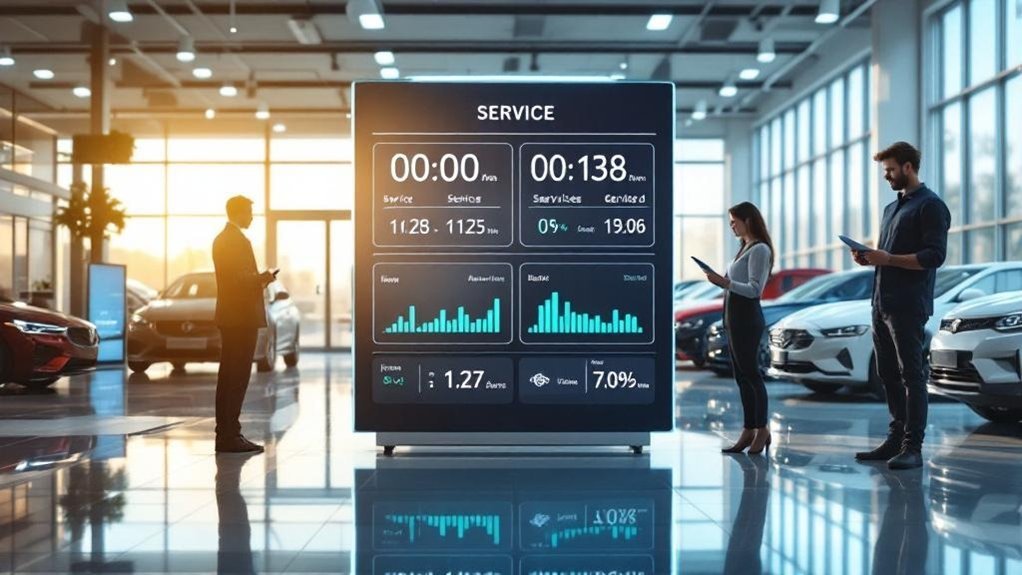
You’ll want to track real-time engagement metrics like click-throughs and opt-ins to see how hourly status updates drive customer interaction. Measure service throughput rates to quantify time savings and productivity gains from reduced inquiry volume. Tie those operational gains to repeat visit tracking to determine how transparency and convenience boost retention and lifetime value.
Real-Time Engagement Metrics
When dealerships provide real-time updates on digital service status boards, you’ll see measurable lifts in engagement and satisfaction — studies show a 30% rise in customer engagement and a 20% boost in satisfaction ratings — while 55% of customers prefer mobile or text updates that keep them connected to their vehicle’s progress. You’ll use real time analytics to track clicks, dwell time, and channel preference, turning raw engagement into actionable insights. Those insights reveal customer preferences, reduce inquiry volume, and let advisors focus on value-added work. Monitor key KPIs to prove ROI and iterate messaging cadence for peak responsiveness.
- A customer checking a text update while waiting for pickup.
- A dealer dashboard showing spikes in engagement after hourly refreshes.
- Reduced call volume as customers track progress themselves.
Service Throughput Rates
Throughput is the clearest operational metric you’ll use to measure how digital service status menu boards impact shop capacity and customer flow: by giving hourly, transparent updates that customers prefer via app or text, dealerships can handle more vehicles simultaneously, cut inquiry volume, and free advisors for higher-value tasks — improvements that lift throughput, shorten cycle times, and help convert better customer experiences into as much as a 30% revenue boost. You’ll track service efficiency by measuring vehicles completed per technician-hour, average cycle time, and inquiry reduction. Those metrics link directly to customer retention and revenue. Visualizing gains helps teams act fast:
| Metric | Before | After |
|---|---|---|
| Vehicles/tech-hour | 2.0 | 2.6 |
| Cycle time (hrs) | 6.0 | 4.2 |
| Inquiries/day | 40 | 18 |
| Retention (%) | 68 | 80 |
Repeat Visit Tracking
Loyalty is measurable: by tracking repeat visits linked to digital service status menu boards, you’ll quantify how transparent, hourly updates drive customers back — studies show an 80% greater likelihood to return and industry data points to a typical 20% increase in repeat business after implementing clear real-time communications. You’ll use repeat visit tracking as a core metric for customer retention, combining visit frequency with feedback and reduced advisory calls to prove ROI. Behavior analysis pinpoints which updates and message formats correlate with return visits, letting you tailor offers and communications. Combine quantitative repeat rates with 96% clarity-preference survey data to optimize messaging and service flow, improving satisfaction, loyalty, and operational efficiency.
- A customer scans updates hourly and books next service.
- Fewer calls to advisors, more self-service returns.
- Tailored offers based on visit patterns.
Addressing Common Implementation Challenges
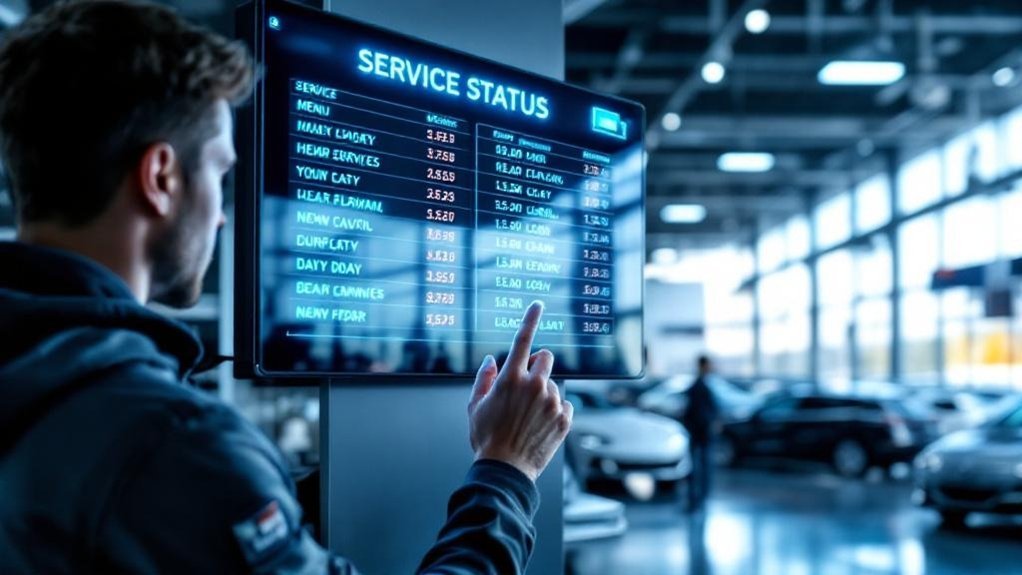
You’ll need to plan for system integration hurdles so your digital boards sync hourly with PMS, CRM and communication channels — seamless integration is critical given 55% of customers prefer real-time updates via apps or texts. Train staff on the new workflows and automation to cut the one-third of customers who otherwise call for status updates, reducing administrative load and missed calls. Together, technical alignment and focused training will improve throughput, transparency, and repeat business.
System Integration Hurdles
Because dealership IT environments vary widely and APIs aren’t always standardized, integrating digital service status menu boards often runs into compatibility and connectivity roadblocks that can delay deployment and raise costs. You’ll face system compatibility concerns that demand thorough API mapping, middleware, or custom adapters to synchronize with dealership management systems. Initial setup costs and potential downtime can provoke employee resistance, so quantify expected ROI, downtime windows, and mitigation plans to get buy-in. Plan for security validation and dedicated IT resources to avoid data exposure and reactive maintenance. Measure progress with clear KPIs (uptime, sync latency, incident rate) and communicate them to stakeholders to maintain trust and momentum.
- A tangled API web causing sync failures
- A paused service bay during cutover
- A locked-down network requiring exceptions
Staff Training Needs
When staff are trained to update and troubleshoot digital service status menu boards in real time, you’ll see measurable drops in customer wait anxiety and call-backs—so training should prioritize hands-on practice with status updates, basic diagnostics, and interpreting board-driven feedback; track outcomes with KPIs like update latency, first-time resolution rate, and customer satisfaction scores to prove impact and guide refresher sessions. You’ll need a curriculum that balances technical troubleshooting, data interpretation, and customer-facing communication to enable staff empowerment. Emphasize training frequency—short, regular sessions reduce skill decay and adapt staff to software updates. Teach team members to read board feedback, act on trends, and escalate unresolved issues. Measure progress against KPIs, iterate content, and tie competence to faster service cycles and higher engagement.
Enhancing the Customer Experience With Personalized Updates
If you want customers to feel informed and valued during service, personalized updates on digital status boards deliver—55% of customers prefer getting real-time progress via app or text, and hourly push updates cut uncertainty while building trust. You’ll use personalized notifications aligned with customer preferences to show milestones (inspection started, parts ordered, quality check) so patrons see progress without calling. That reduces inquiries, frees advisors, and boosts retention. Data shows continuous, relevant nudges increase perceived transparency and likelihood of return visits. Design concise messages, sync them to the vehicle’s workflow, and let customers choose channel and frequency to respect preferences and avoid fatigue.
- A text when diagnostics finish, with next steps visible on the board
- App push announcing parts arrival and ETA
- Board highlight when vehicle enters final inspection
Frequently Asked Questions
How Do You Protect Customer Privacy on Public Display Boards?
You mask identifiers, show only job statuses, and anonymize records; you’ll use data encryption, role-based access, and comply with privacy regulations. You’ll log access, audit regularly, and test displays to keep customer data safe and transparent.
Can Guests Opt Out of Receiving Hourly Updates?
Yes — you can. Preference profiles let guests set guest preferences to silence update notifications, with analytics showing opt-out rates, retention impact, and tailored timing. You’ll offer clear choices, confirmation, and easy re-enrollment.
What Hardware Ensures Uptime in Service Bays?
You’ll deploy rugged industrial PCs, redundant power supplies, UPS systems, network switches with PoE, cellular failover routers, and environmental sensors as service bay uptime solutions—these reduce downtime, guarantee monitoring, and deliver consistent customer communication.
How Do You Handle Status Errors or Incorrect Updates?
You catch errors fast by combining automated status management with manual overrides; you’ll get real-time error notifications, audit logs, and KPIs showing correction times, so you can minimize impact, inform customers, and prevent repeat mistakes.
Is There a Cost-Effective Option for Small Dealerships?
Yes — you can use affordable technology and budget friendly solutions like cloud-based digital signage subscriptions, simple tablets, and basic automation; you’ll cut costs, track engagement metrics, and maintain customer transparency with low upfront and predictable recurring expenses.
Conclusion
You’ll see faster trust-building when you update the digital service status board hourly — 78% of customers report reduced anxiety with frequent updates — so prioritize cadence and clarity. Like a steady heartbeat, hourly notifications reassure and remind customers you’re working for them. Pair transparent timelines with technician notes, integrate with your CRM, and track NPS, wait time and repeat visits. Do this, and you’ll measurably improve satisfaction, retention and operational efficiency.