
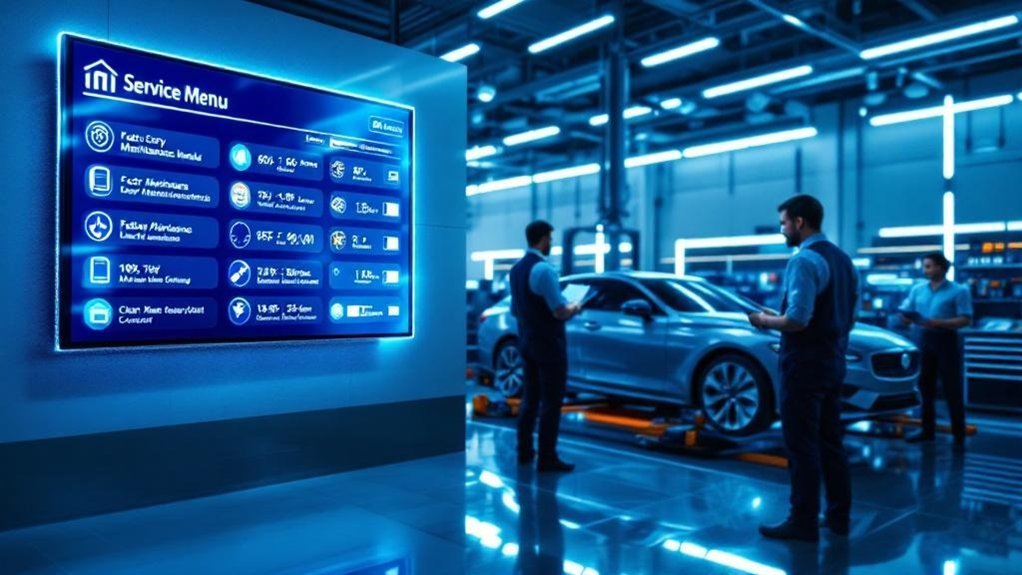
You’ll keep factory maintenance on track by using a standardized digital service menu that lists OEM-recommended tasks, intervals, parts, labor and fixed pricing so advisors follow the same checklist every time. The menu auto-updates with recalls and schedule changes, logs approvals, and ties to vehicle history and bay scheduling for accurate reminders and faster bookings. Customers get clear options and electronic consent. Continue for specific implementation steps and measurable KPIs to sustain compliance.
Key Takeaways
- Centralized digital menus publish factory-recommended services, intervals, parts, and fixed pricing as a single source of truth.
- Real-time updates and version control ensure menus always reflect current manufacturer maintenance schedules and recalls.
- Integrated service-history and recall matching auto-flag vehicles needing factory-specified work for prompt scheduling.
- Personalized reminders and scheduling tools align customer appointments with manufacturer intervals, improving on-time maintenance adherence.
- Itemized recommendations with electronic approvals and transparent pricing simplify warranty-compliant authorizations and expedite repairs.
The Role of Digital Service Menus in Maintaining Factory Schedules

Because factory maintenance schedules set the baseline for vehicle reliability, digital service menus make it straightforward for you to follow those requirements by listing recommended services and intervals clearly and concisely. You’ll see factory-recommended tasks mapped to precise intervals, so compliance becomes a simple checklist rather than guesswork. The digital menu benefits include real-time updates from vehicle data, integrated scheduling, and transparent pricing that reduce friction and build trust. You’ll get timely reminders and clear service options that guide decision-making and simplify booking. This process-oriented presentation improves customer engagement by making expectations explicit and actions easy to execute. By using the menu, you’ll keep maintenance current, support warranty compliance, and protect long-term vehicle health.
Displaying Manufacturer-Recommended Service Intervals Clearly
You’ll present visible service interval charts that map manufacturer-recommended tasks to specific mileage and time markers so customers can quickly see what’s due and when. Integrate the factory schedule into your digital menu to auto-populate and update intervals in real time, keeping recommendations compliant with OEM guidance. This process reduces missed maintenance, supports warranty compliance, and makes scheduling straightforward for both staff and customers.
Visible Service Interval Charts
A visible service interval chart in your digital service menu lays out manufacturer-recommended maintenance schedules—oil changes, tire rotations, fluid checks—so customers can see when each service is due and plan accordingly. You use service visualization to convert manufacturer tables into clear timelines, highlighting due dates, mileage triggers, and frequency. This supports maintenance planning by letting customers prioritize and budget for upcoming items. Presenting intervals plainly guarantees compliance with factory specs and reduces disputes about recommended work. You’ll track adherence metrics and display reminders to reinforce timely visits, which builds trust and can raise retention by roughly 20%. Implement charts with concise labels, standardized intervals, and audit trails so both staff and customers follow a verifiable, process-driven maintenance protocol.
Factory Schedule Integration
Having visible service interval charts in your digital menu sets the stage for integrating factory schedules directly into the customer experience: now map those charts to manufacturer-recommended intervals so every listed item reflects the OEM timeline, triggers, and inspection criteria. You’ll implement factory schedule optimization by aligning menu line items with mileage/time milestones, required inspections, and parts replacement windows. Use digital engagement strategies to surface real-time updates, alerts, and explanations that reduce confusion and set clear expectations. Design workflows that log compliance, prompt technicians, and record customer acknowledgements for auditability. Monitor engagement metrics and service uptake to iterate displays and notifications. This process-driven, compliance-focused approach increases customer trust, boosts adherence to factory maintenance, and supports long-term vehicle reliability.
Integrating Vehicle History and Recall Notifications

You’ll present a consolidated service history so customers can quickly confirm past work and outstanding items. Integrate real-time recall alerts tied to VINs to guarantee compliance and prompt scheduling of safety repairs. Use maintenance-driven repair priorities to guide technicians and customers toward required factory-recommended actions.
Consolidated Service History
One centralized service history gives you instant access to past maintenance, repairs, and real‑time recall alerts so you can verify compliance with factory schedules and safety advisories. You’ll use a single dashboard that consolidates work orders, parts replaced, and recall status, facilitating straightforward verification against factory intervals. Follow a defined process: review documented services, confirm mileage and dates, flag gaps versus manufacturer recommendations, and schedule corrective actions. This consolidated record supports digital transparency and builds customer trust by providing verifiable evidence of maintenance and outstanding items. With integrated history, the dealership can deliver personalized, compliance-aligned recommendations, and you can make informed decisions quickly. Maintain audit trails and automated reminders to guarantee ongoing adherence to factory maintenance.
Real‑Time Recall Alerts
Building on a consolidated service history, real‑time recall alerts add a layer of proactive safety management by matching active manufacturer notices to each vehicle’s documented repairs and mileage. You’ll receive targeted recall notifications that reference specific past work and current odometer readings, so messaging is relevant and actionable. The process automates detection, flags affected units, and surfaces compliant repair instructions to technicians and advisers. During appointments the system updates customers in real time, documenting outreach and response for audit trails. Measurable outcomes include faster remedy rates and increased customer engagement—studies show about a 20% lift. You’ll also align necessary recall repairs with scheduled factory maintenance, reducing repeat visits and ensuring regulatory obligations are met efficiently and transparently.
Maintenance‑Driven Repair Priorities
When vehicle history and real‑time recall notifications are combined in a digital service menu, you get a prioritized, compliance‑focused repair roadmap that aligns recommended factory maintenance with any outstanding safety recalls. You’ll see maintenance prioritization presented as clear action items tied to the vehicle’s service records and manufacturer intervals. The menu flags safety recalls alongside routine tasks so you can decide immediate repairs versus scheduled maintenance. Automated reminders and integrated recall feeds tighten repair timelines, reducing risk and improving adherence to factory guidance. This process-oriented display increases customer compliance, supports consistent return visits, and documents decisions for auditability. By following the suggested sequence, you’ll address urgent recalls first, then sequence preventive maintenance to preserve warranty and vehicle longevity.
Personalized Maintenance Reminders and Scheduling Tools

Because timely maintenance preserves vehicle performance and warranty compliance, personalized reminders and integrated scheduling tools give your customers a clear, actionable path to follow factory service intervals. You’ll use customer data to send personalized notifications by email or text, aligning reminders with factory schedules and individual usage. The scheduling tool should show available slots, allow booking, and sync with service bays to reduce delays. This process increases user engagement, adherence to recommended intervals, and warranty compliance. You’ll monitor real-time updates to adjust reminders and confirm appointments. Below is a compact visual of core elements:
| Trigger | Channel | Outcome |
|---|---|---|
| Mileage threshold | SMS/email | Appointment booked |
| Time-based interval | Push notification | Service reminder sent |
| Usage pattern | In-app alert | Tailored schedule proposed |
| Bay availability | Online calendar | Booking confirmed |
Transparent Pricing and Standardized Service Recommendations
Having personalized reminders and easy booking laid the groundwork for clear pricing that customers can trust; now make your service menu the single source of truth for costs and factory-recommended work. You’ll publish standardized service recommendations paired with fixed labor and parts prices so every customer sees the same offer. Implement version control and audit logs to document updates, ensuring compliance with manufacturer schedules. Use structured itemization to support clear communication: service description, interval, parts, labor, total. Train staff to reference the menu and route exceptions through an approval workflow to prevent ad hoc quotes. Monitor customer feedback and pricing metrics; adjust only after documented justification. This process-driven approach delivers pricing transparency, reduces disputes, and reinforces the dealership’s professional consistency.
Enhancing Advisor Consistency With Digital Repair Orders

Though digital repair orders might seem like a tech upgrade, they’re actually the backbone of consistent advisor performance: by standardizing how vehicle data, OEM service schedules, and recommended work are captured and displayed, advisors follow the same compliant process every time. You’ll use them to enforce advisor training, reduce variability, and guarantee process optimization across the department. They lock in OEM-sourced recommendations so advisors present factory-aligned options consistently. Consistent documentation builds a reliable service history and simplifies audits. Benefits are operational and compliance-driven:
- Standard capture of vehicle/OEM data minimizes errors and aligns recommendations.
- Workflow templates support advisor training and speed onboarding.
- Service history tracking enforces adherence to factory schedules and aids accountability.
You’ll get predictable outputs, fewer callbacks, and clearer audit trails.
Customer Empowerment Through Electronic Approvals and Payment
Standardized digital repair orders set the stage for customer-driven approvals and payments by delivering clear, OEM-aligned recommendations that customers can review remotely. You’ll send electronic approvals that let customers authorize work on their schedule, increasing customer engagement while maintaining documented consent for compliance. The process routes itemized recommendations and pricing to the customer, preserving service transparency and audit trails. Once approved, instant payment processing closes the loop, reduces vehicle downtime, and minimizes front-desk touchpoints. You’ll monitor approval timestamps, payment receipts, and communication logs to guarantee regulatory and internal policy adherence. These controls boost repeat visits and conversion rates because customers feel informed and empowered, and they provide measurable, auditable workflows that integrate with warranty and factory maintenance reporting.
Measuring Impact: Retention, Compliance, and Revenue Improvements
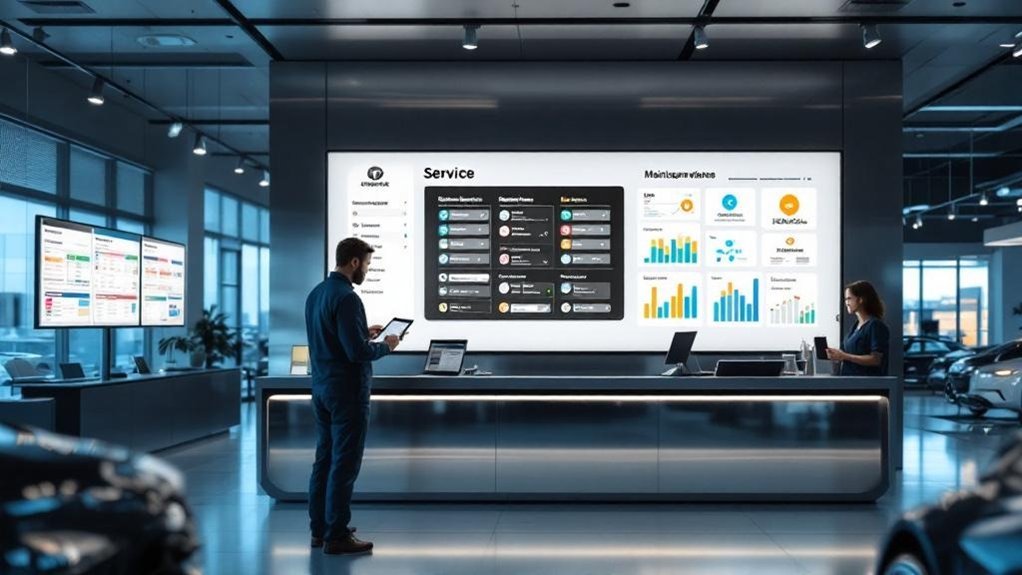
Start by tracking three core KPIs—retention, compliance, and repeat revenue—to quantify the impact of your digital service menus. You’ll measure improvements in customer experience and service accessibility by collecting baseline and ongoing metrics, then reporting changes monthly. Use the following targets to guide action:
- Retention: aim for an 80% uplift in return visits when menus show transparent pricing.
- Compliance: target a 25–30% increase in adherence to factory maintenance intervals via real-time recommendations.
- Revenue: expect ~20% growth from repeat service business as loyalty improves.
Run A/B tests on menu layouts, monitor complaint rates (should fall ~15%), and correlate real-time update usage with compliance. Close the loop by adjusting prompts and scheduling nudges to sustain gains.
Frequently Asked Questions
What Is the 30-60-90 Rule for Cars?
The 30-60-90 overview: you follow scheduled inspections at 30, 60, and 90 days. It’s maintenance significance: you’ll do basic checks, more thorough servicing, then extensive evaluation to guarantee compliance, reliability, and reduced repair risk.
Why Is It Important to Follow the Manufacturer’s Recommended Maintenance Schedule?
Absolutely essential — it’s like keeping your car immortal! You’ll get manufacturer benefits, avoid costly failures, guarantee vehicle longevity, follow a clear maintenance process, and stay compliant with warranty and safety requirements for predictable performance.
Why Is It Important to Follow a Maintenance Schedule?
You should follow a maintenance schedule because preventive maintenance preserves vehicle longevity, reduces breakdowns, and keeps warranty compliance. Stick to recommended intervals, document services, and promptly address alerts to maintain performance, safety, and cost control.
What Maintenance Intervals Are Recommended by Manufacturers?
Every 5,000 to 10,000 miles for routine items, every inspection at specified timeframes, and every major service per manufacturer guidelines; follow clear service intervals, keep records, and stay compliant to protect warranty and performance.
Conclusion
You’ll see how digital service menus keep factory maintenance schedules front and center, making it simple to follow manufacturer-recommended intervals, track recalls, and pull vehicle histories. By automating reminders, standardized pricing, and repair orders, they help advisors act consistently and customers approve electronically, reducing guesswork. Stick to the process and compliance improves—results show better retention, higher maintenance adherence, and boosted service revenue. It’s the whole package, no strings attached.