
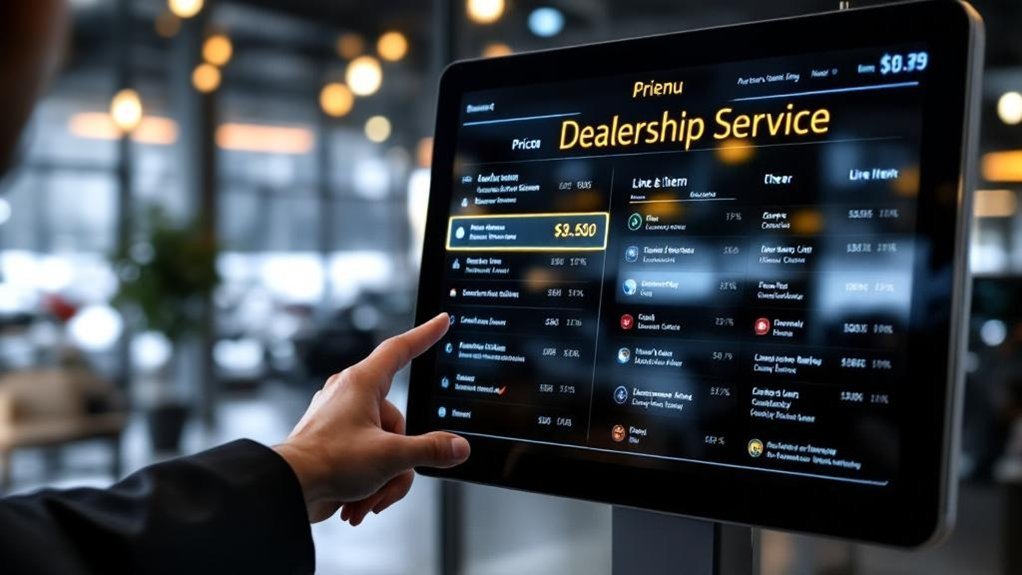
You trust a digital dealership service menu because it shows itemized labor, parts, taxes and total up front, which cuts surprise charges and disputes. Clear, standardized prices reduce perceived risk and drive loyalty—96% of buyers value consistent pricing and shops see repeat business rise about 20%. Tiered packages and visible discounts make value obvious and boost retention. Automated, data-driven updates keep costs accurate and competitive, and if you keep going you’ll see practical steps to apply these insights.
Key Takeaways
- Clear, itemized pricing for labor, parts, and taxes removes ambiguity and builds immediate trust.
- Digital menus display consistent menu-to-invoice pricing, preventing surprises and disputes.
- Visible package tiers and upfront discounts make value tangible and encourage repeat visits.
- Real-time price updates and automation reduce human errors and maintain credibility.
- Data-driven, regularly updated offers show fairness and keep prices competitive.
How Transparent Pricing Builds Customer Confidence
Many customers rely on clear, itemized pricing to decide where they’ll trust their vehicle — and digital service menus deliver that clarity by breaking costs down so you can compare options and anticipate final invoices. You’ll see data: 96% of customers value clear pricing, so presenting consistent figures across menu, quote, and invoice strengthens digital trust and reduces disputes. From a pricing psychology standpoint, itemization lowers perceived risk and prevents sticker shock, which increases loyalty and repeat visits. Highlighting service packages and loyalty rewards on the menu communicates value and simplifies decision paths, improving conversion rates. Strategically, transparent menus let you measure behavior, optimize offers, and standardize expectations, so trust becomes a measurable business metric rather than a vague aspiration.
Clear Breakdown of Services and Costs
When you see a digital service menu that itemizes labor, parts and taxes, it removes guesswork and aligns expectations—96% of customers say clear pricing matters, and dealerships that display standardized costs see fewer disputes and higher loyalty. You get service clarity when each line shows scope, unit price and time, so you can do quick cost comparison across services or providers. Presenting standardized charges reduces negotiation friction and supports predictable margins, while visible tax and parts breakdowns cut perceived hidden fees. Data show customers are 80% more likely to return when menus are clear, so you’ll boost retention by making comparisons and decisions effortless. Strategically, this transparency lowers dispute rates and strengthens long-term trust without adding complexity.
Consistent Pricing From Menu to Invoice
You’ve seen how a clear, itemized menu reduces disputes—now guarantee the prices on that menu match the final invoice to lock in trust and predictable outcomes. Consistent price alignment between menu and invoice meets customer expectations: 96% of buyers value clear, matching pricing, which reduces disputes and perceived unfairness. When digital quotes reflect final charges, misunderstandings drop and satisfaction rises, driving a measurable 20% increase in repeat business. To achieve this, focus on three tactical steps:
Ensure menu prices match final invoices—clear, itemized pricing reduces disputes, boosts satisfaction, and increases repeat business.
- Automate real-time price syncs between menu and billing systems to eliminate manual errors.
- Display tax, parts, and labor breakdowns upfront so customer expectations are set.
- Implement audit trails and alerts for any price adjustments, with approval workflows and customer notifications.
This strategic consistency builds loyalty and predictable revenue.
Service Packages and Loyalty Programs That Drive Repeat Visits
Because clear, tiered service packages and integrated loyalty rewards make value tangible, customers are 80% more likely to return when benefits are communicated upfront, and shops that pair menu-driven bundles with visible discounts can boost repeat-revenue by up to 30%. You’ll use digital service tiers (basic, standard, premium) to reduce decision friction and increase average repair order through strategic pricing and perceived value. Integrating customer incentives into the menu—points, tiered discounts, targeted offers—translates transparency into measurable retention. Displayed bundle savings and loyalty balances build trust and prompt add-on purchases you might otherwise miss. Strategically align package contents with common maintenance needs, track uptake by tier, and prioritize incentives that maximize lifetime value while keeping messaging simple and quantifiable.
Regular Updates and Data-Driven Improvements

Built service tiers and visible loyalty rewards give customers a clear value path, but keeping that value credible means updating menus regularly based on real behavior and market signals. You’ll use service menu optimization and customer feedback integration to turn signals into action: update pricing, refine packages, and remove low-value items. Routine, data-driven reviews keep prices accurate and competitive, addressing the 86% perception that repair costs are high and reducing distrust.
Keep service tiers and loyalty visible, then regularly update menus from real behavior and feedback to restore trust.
- Track purchase behavior and competitor rates monthly to recalibrate offers.
- Routinely ingest NPS, reviews, and direct feedback to prioritize adjustments.
- A/B test package bundles and loyalty incentives to measure retention impact.
Those steps let you maintain transparency, boost confidence, and drive repeat visits.
Frequently Asked Questions
What Is a Red Flag in a Dealership?
A red flag in a dealership is inconsistent pricing, opaque invoices, or frequent unexplained changes; these red flag indicators show poor dealership transparency, suggesting they prioritize profit over customers and undermining trust and long-term loyalty.
What Is the Four Square Trick at a Car Dealership?
The four square trick is a dealership tactics maneuver that juggles price, trade‑in, down payment, and monthly payment to confuse you, shifting focus from total cost so dealers can steer negotiations and maximize profit.
Can I Decline Dealer Add-Ons?
Yes — you can decline dealer add ons. You’ve got customer rights: you’ll see options, compare prices, reject extras, and save money. Data shows transparency reduces unnecessary purchases, so choose strategically and refuse what’s optional.
Can You Negotiate Dealer Service Fees?
You can try, but you’ll rarely succeed; price transparency and clear service value on digital menus make negotiated reductions uncommon. Use comparative quotes, ask about bundles or loyalty discounts, and focus on total cost versus line-item cuts.
Conclusion
You want predictable costs but hate surprise fees; a digital service menu gives both. By showing a clear, itemized price list that matches the invoice, you cut ambiguity and boost trust — studies show transparency increases repeat visits and average spend. When menus are updated with real-time data and tied to service packages and loyalty offers, you get consistency and incentives that work together. That strategic clarity turns first-timers into reliable, profitable customers.