
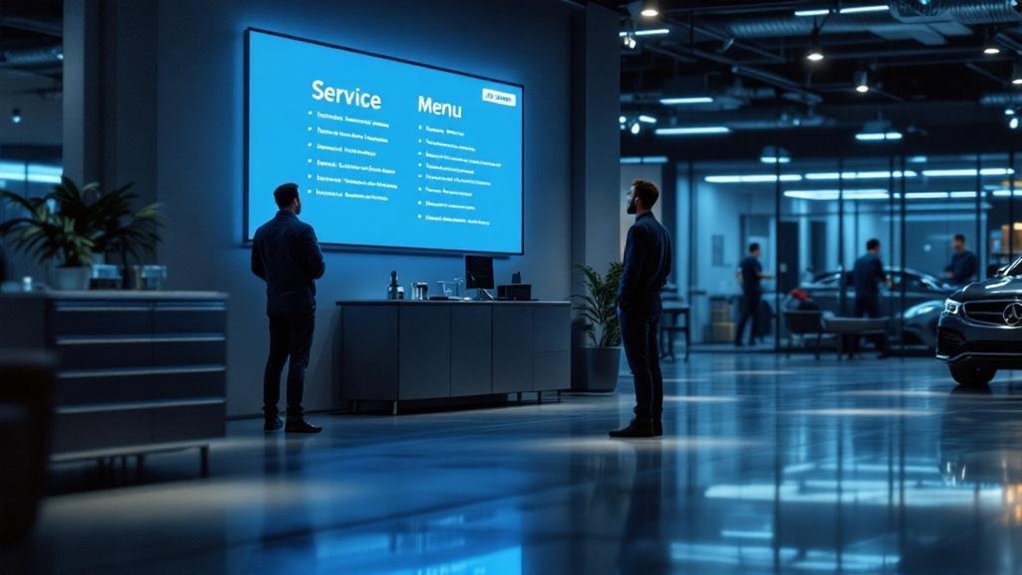
You’ll keep customers engaged by showing real-time service status, targeted promotions, and interactive menus that reduce perceived wait times by up to 33% and boost engagement nearly 48%. Clean visuals, tailored recommendations, and QR booking make downtime productive and drive add-on sales. High-res displays with live ETAs and concise alerts build trust and increase conversions. Track dwell time, scan-to-book ratios, and ticket lift to prove ROI — keep going to see practical setup and measurement steps.
Key Takeaways
- Real-time service status updates reduce uncertainty and perceived wait times by keeping customers informed about progress and accurate ETAs.
- Dynamic promotions and upsell prompts showcase relevant service specials, driving immediate bookings and increasing average ticket value.
- High-quality visuals and clean layouts present maintenance tips and tailored recommendations, making waiting time informative and actionable.
- QR-enabled touchpoints and booking links let customers schedule follow-up services or upgrades instantly from the waiting area.
- Interactive screens and progress markers encourage engagement, capture feedback, and position the dealership as tech-forward and customer-focused.
Key Takeaways and Business Impact
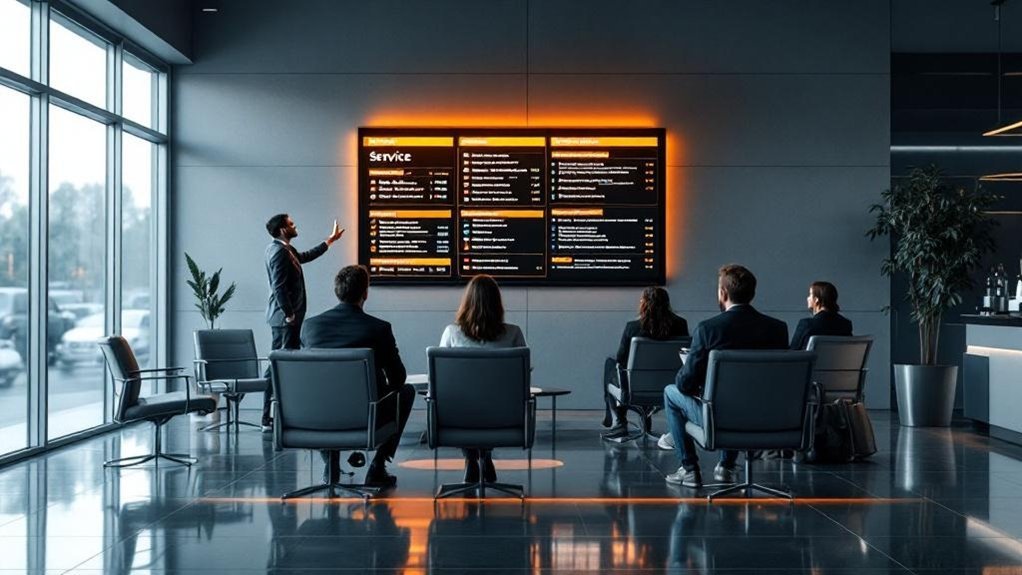
Because today’s customers expect transparency and efficiency, dynamic digital service menus can transform your service lane experience by reducing perceived wait times by up to 33% and boosting engagement as much as 48%. You’ll see measurable business impact: real-time status updates increase trust, while promoted service specials drive bookings and revenue. By highlighting service innovation on-screen, you position your dealership as tech-forward, improving loyalty and retention. Use customer feedback captured via menus to refine offerings and prioritize high-margin services. The result is a tighter feedback loop—better experiences, clearer expectations, and upsell opportunities that don’t feel pushy. For SEO and reporting, track engagement metrics, conversion from promotions, and satisfaction scores to quantify ROI and guide ongoing service innovation.
How Digital Service Menus Transform Waiting Rooms
When you step into a service lounge that uses dynamic digital menus, waiting suddenly feels productive — perceived wait times can drop by as much as 33% while customers stay engaged up to 48% longer with content like maintenance tips and package details. You’ll notice a waiting room redesign that shifts focus from passive time-killing to actionable engagement: real-time service status reduces uncertainty, QR codes let you book follow-ups, and promotions of service specials prompt on-the-spot decisions. This customer experience enhancement builds transparency and loyalty while increasing ancillary revenue. The data-backed setup keeps information clear and relevant, so you feel informed and empowered rather than idle, turning what used to be wasted minutes into measurable value for both you and the dealership.
Designing Engaging Menu Content for Customers
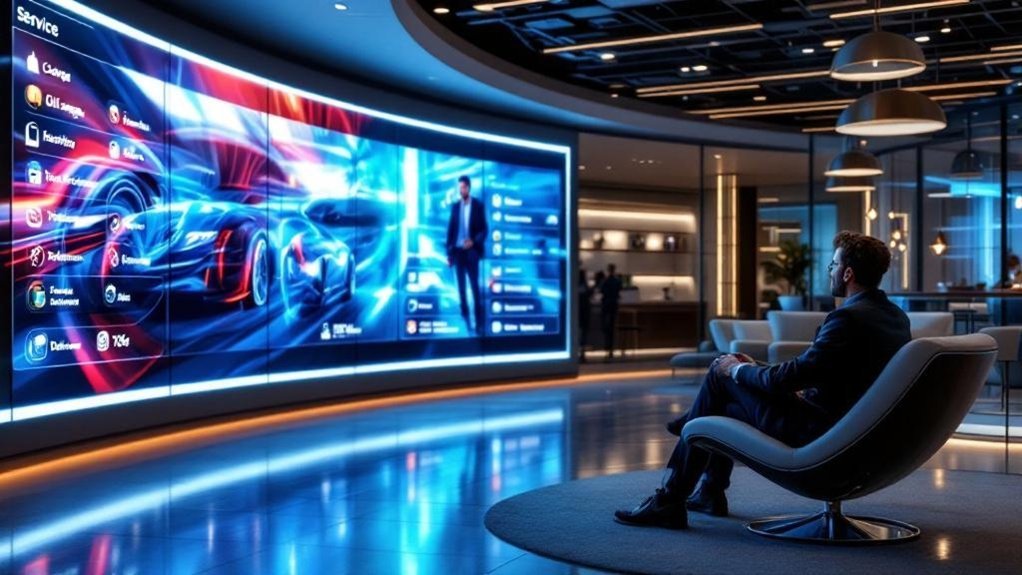
Whether you’re waiting for an oil change or exploring upgrade options, a well-designed digital service menu turns idle time into informed decisions by blending clear visuals, tailored recommendations, and bite-sized education. You’ll boost engagement—dynamic menus can raise interaction up to 48%—by prioritizing menu aesthetics: clean layouts, high-quality images, legible typography, and intuitive navigation. Offer content variety—maintenance tips, service specials, testimonials, seasonal offers, and add-on suggestions—to increase satisfaction (by 46%) and encourage bookings. Personalize recommendations using customer data and add interactive elements like QR codes for seamless scheduling. Track which modules drive clicks and conversions to optimize placements and messaging. Focus on concise, actionable items so customers feel informed, valued, and more likely to convert during their visit.
Real-Time Updates and Service Status Displays
You’ll keep customers informed with live service progress feeds, clear ETAs, and timely alerts that turn uncertainty into transparency. Data shows that real-time updates and wait-time displays can boost engagement by up to 48% and cut perceived waits by about 33%, so integrate digital signage that pushes status changes instantly. Prioritize concise, actionable alerts and accurate ETAs to build trust and make waiting time feel productive.
Live Service Progress
Curious how live service progress can change your customers’ experience? You’ll use live updates and customer feedback to create transparency: real-time service status lets customers track their vehicle’s progress, reducing perceived wait times by up to 33%. When you display live progress with advanced digital signage software, communication between your service team and customers is seamless, boosting trust and satisfaction. Data shows timely status streams manage expectations and lower anxiety, so patrons engage more while waiting. Integrate concise progress markers (arrival, inspection, repair, quality check) and prompt feedback prompts to close the loop. Focus on measurable outcomes—higher engagement, improved Net Promoter Scores, fewer in-person inquiries—so your digital menu becomes a performance and experience tool, not just signage.
ETA and Alerts
When service status and ETAs are shown on digital displays in real time, your customers feel informed and in control, which directly lowers anxiety and perceived wait times by as much as 33%. You’ll boost transparency by showing clear ETA notifications and Service updates on screens and mobile alerts, so customers can plan their time and trust your process. Real-time progress bars and timestamped milestones make completion times predictable, while instant alerts about delays or job completion keep engagement high and reduce front-desk inquiries. Data shows visible updates increase satisfaction and loyalty, signaling operational efficiency. Implementing automated ETA notifications and consistent Service updates turns waiting into a managed experience, improving perceived value and long-term retention.
Promoting Services, Specials, and Add-Ons
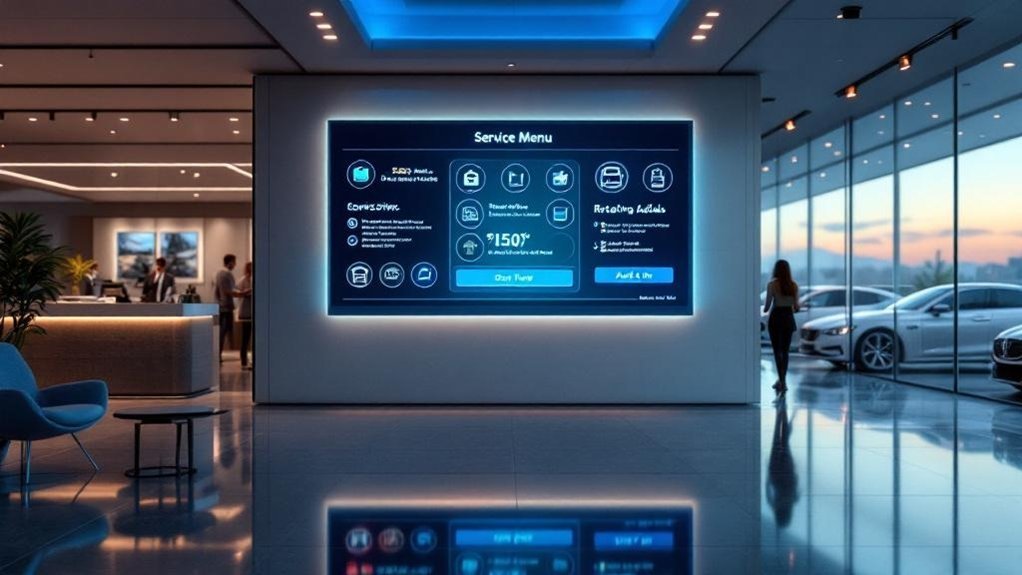
Because digital service menus let you showcase tailored deals and add-ons in real time, they’re a powerful way to boost customer awareness and bookings while customers wait; dealerships using dynamic displays can increase engagement by up to 48% and heighten uptake of service packages by highlighting seasonal, limited-time, and recommended maintenance options that drive immediate action and revenue. You can use these menus to improve service visibility and customer education by showcasing concise descriptions, pricing, and benefits of add-ons like tire protection or fluid flushes. Data-driven rotation of offers keeps content relevant, creates urgency for specials, and blocks competitors’ messages. By measuring click-throughs, inquiries, and redemptions, you’ll optimize promotions that convert attention into profitable bookings.
Interactive Features That Drive Conversions
You’ll boost bookings by offering touchscreen service selection that lets customers customize repairs and see real-time pricing and availability. QR-powered booking shortcuts turn interest into appointments with one tap, streamlining conversions and tracking attribution. Pairing these with interactive upsell prompts and on-screen testimonials can shorten perceived wait times and increase average ticket value.
Touchscreen Service Selection
Curious how a simple kiosk can boost your service revenue? You’ll see touchscreen service selection drives customer interaction and deeper service exploration, increasing bookings by up to 48%. It displays detailed descriptions, images, and videos so customers make informed choices and trust your offerings. Real-time status updates reduce perceived wait times by as much as 33%, while personalized prompts nudge targeted upsells. That mix of transparency and dynamic content projects a modern, tech-savvy image that improves satisfaction and conversion.
- Interactive menus showcasing service details
- Image and video-rich specials and packages
- Personalized recommendations for upsells
- Live status updates to reduce perceived wait
- Data capture for follow-up and optimization
Implement touchscreens to turn idle time into measurable revenue.
QR-Powered Booking
When customers scan a QR code on your digital service menu, they’re taken straight to a streamlined booking flow that turns curiosity into confirmed appointments — and that convenience drives measurable lift. You’ll use QR code integration to let guests schedule service, view pricing, and pick times without tying up staff, boosting customer convenience and shortening perceived wait times. Data shows interactive QR-powered booking raises interaction and conversion rates, and the system captures preference signals you can analyze to optimize offers. Present clear CTAs on screens, track scan-to-book metrics, and A/B test landing flows to drive continual improvement. That blend of UX and analytics turns idle browsing into actionable appointments and higher satisfaction.
Interactive Upsell Prompts
A well-designed interactive upsell prompt on your digital service menu turns passive browsing into targeted revenue by offering timely, data-backed recommendations that match a customer’s vehicle needs and preferences. You’ll boost interactive customer engagement and upsell effectiveness by surfacing relevant add-ons, using QR links for quick bookings, and displaying real-time offers that reduce perceived wait times. Data from clicks and conversions lets you refine messaging for higher conversion rates, while engaging visuals make optional services more appealing. Keep prompts concise, personalized, and easy to action so customers book additional work before they leave.
- Tailored suggestions based on vehicle history and intent
- QR-enabled service package in-depth explorations
- Real-time limited-time offers to drive urgency
- Visual, bite-sized content to hold attention
- Interaction analytics to optimize upsell effectiveness
Best Practices for Hardware and Software Setup
Because clear, up-to-date digital menus directly influence customer satisfaction and upsell rates, you should invest in a reliable hardware and software foundation: mount high-definition (1080p+) screens at eye level, use a stable internet connection for real-time updates, and deploy a media player or digital signage platform that supports segmentation and easy content scheduling—plus interactive elements like QR codes so customers can book services from the display. For hardware selection, choose commercial-grade 1080p+ displays and tamper-resistant mounts to maximize uptime and viewing comfort. For software integration, pick a platform that offers simple content scheduling, audience segmentation, and secure remote updates. Track load times and update success rates to validate choices and reduce downtime, keeping customers engaged and conversions measurable.
Measuring Engagement and Return on Investment
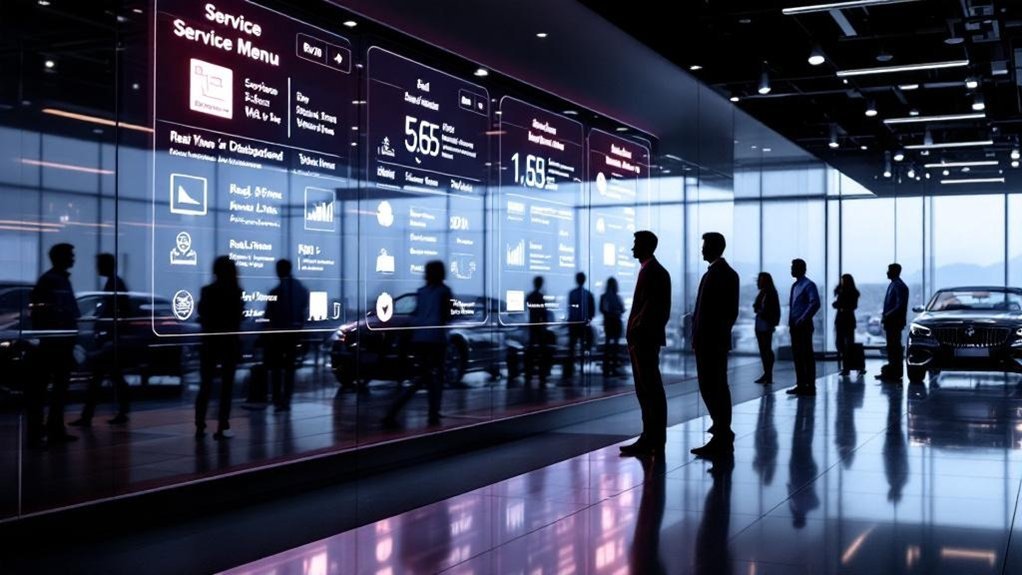
If you want to prove value, start by tracking the right metrics: engagement (dwell time, content interactions, QR scans), conversion (bookings attributed to displays), and business impact (average ticket lift, upsell rate, and revenue per visit). You’ll use engagement metrics to quantify how dynamic menus cut perceived wait times and keep customers informed, and then tie interactions to bookings and spend for clear investment analysis. Focus on data that shows content driving the 48% engagement lift and increases in loyalty from real-time updates. Regularly review interaction funnels, A/B test content, and report ROI in revenue-per-visit terms so stakeholders see tangible gains.
- Dwell time trends
- Content interaction rates
- QR scan-to-booking ratio
- Average ticket lift
- Revenue per visit
Implementation Roadmap and Next Steps
When you’re ready to deploy dynamic service menus, start with a clear, phased roadmap that ties display selection, content strategy, and interaction tracking to measurable business outcomes—choose high-resolution screens for visibility, define real-time content (service status, promos, maintenance tips), integrate QR-driven touchpoints for bookings, and set KPIs like dwell time, QR scan-to-booking ratio, and revenue-per-visit so you can iterate based on hard data.
| Phase | Focus |
|---|---|
| 1 | Hardware selection |
| 2 | Content strategy |
| 3 | QR & interaction setup |
| 4 | Analytics & KPIs |
| 5 | Continuous optimization |
Start small with pilot bays, gather customer feedback, track engagement, and enforce regular content refresh cycles. Use data to scale, reducing perceived wait times and boosting service uptake while aligning menus to sales goals.
Frequently Asked Questions
How Do Service Customers Increasingly Prefer to Communicate With Dealerships?
You increasingly prefer quick text messaging and online chat for updates, scheduling and real‑time status; dealerships that offer multi‑channel, personalized digital communication boost engagement, convenience and satisfaction backed by data showing strong customer preferences.
How to Increase Traffic to Your Car Dealership?
By jousting with old norms, you’ll boost dealership traffic: use social media, referral programs, dynamic signage, targeted offers and real-time updates; you’ll attract tech-savvy customers, drive bookings, and lift engagement by measurable percentages.
Why Is It Essential to Focus on Local SEO in Digital Marketing for Car Dealerships?
You should focus on local SEO because local search boosts dealership visibility, driving nearby traffic and conversions; data shows higher click-throughs and trust from reviews, so you’ll capture motivated buyers and increase walk-ins and service visits.
Which Emerging Technology Can Be Used in the Auto Industry to Enhance Customer Experience and Provide Interactive Visual Experiences?
You’ll find virtual reality and augmented reality are proven to boost engagement; they let you virtually test drives and customize vehicles, increasing dwell time and conversion rates with immersive, data-driven experiences that align with customer-focused, SEO-smart strategies.
Conclusion
You’ll see faster upsells and happier guests when your digital service menus work like a well-oiled storefront—clear, timely, and enticing. By showcasing real-time availability, targeted add-ons, and interactive promos, you’ll boost engagement metrics and revenue per repair order while cutting perceived wait times. Use data to A/B test content and hardware, then iterate. Start small, measure conversion lift, and scale what moves the needle to turn downtime into profit.