
You’re switching to digital service menus because they deliver real-time pricing, personalized promotions, and interactive content that boosts engagement and cuts perceived wait time. Digital displays let you update offers instantly, reduce printing and labor costs, and capture interaction data to refine messaging. They lower manual errors, speed workflows, and support targeted upsells that can lift sales considerably. Expect faster ROI and scalable, measurable showroom intelligence — keep going to see how it all ties together.
Key Takeaways
- Digital service menus allow instant real-time updates to pricing, promotions, and inventory without reprinting costs or delays.
- Interactive displays increase customer engagement and reduce perceived wait times through self-service vehicle info and financing tools.
- Remote content control and analytics enable targeted promotions, A/B testing, and data-driven marketing adjustments.
- Digital menus reduce manual errors and improve service workflow efficiency, speeding transactions and boosting customer satisfaction.
- Advanced features (AI, AR, connected-showroom) personalize experiences, drive conversions, and future-proof dealership marketing.
What Digital Service Menus Are and How They Work
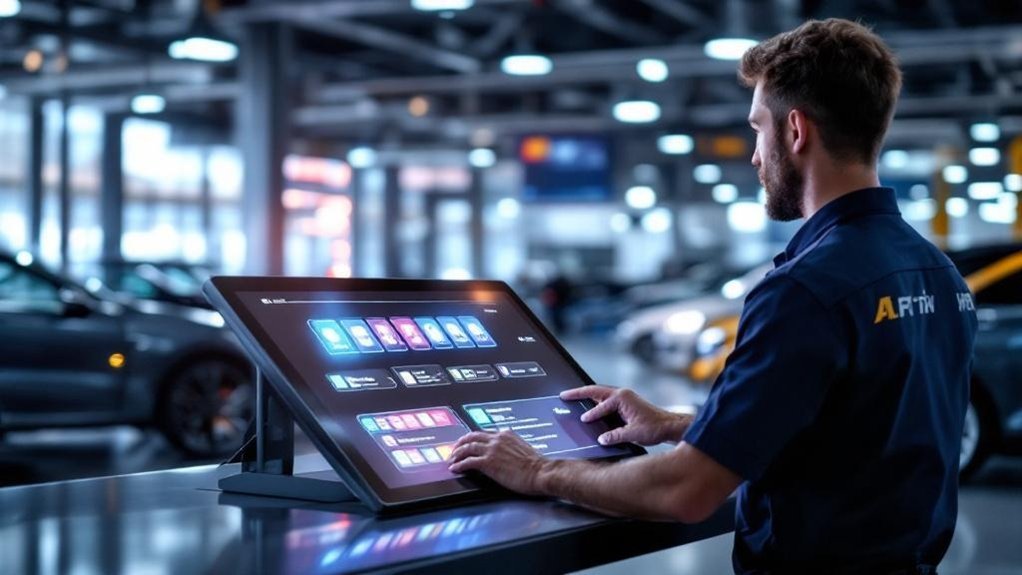
Think of a digital service menu as a dynamic storefront for your service department: high-resolution screens show real-time services, pricing, and promotions that you can update remotely at any moment. You’ll deploy digital engagement tools that display interactive content—service details, videos, and package comparisons—so customers self-educate without staff intervention. That reduces perceived wait times and boosts satisfaction, directly improving customer interaction metrics. Remote content control lets you push time-sensitive offers or seasonal pricing instantly, eliminating print lag and lowering operational costs. Data from screen interactions guides content optimization and promotion targeting, increasing service-department visits. Implemented strategically, these menus convert idle dwell time into measurable engagement, higher conversion rates, and stronger loyalty for your dealership.
The Limitations of Static Posters in Dealership Environments
Because static posters can’t be updated in real time, they quickly become a liability for dealerships that need to react to inventory shifts, seasonal offers, or service promos. You lose poster effectiveness as printed materials age, creating missed marketing opportunities and inconsistent messaging that harms conversion rates and brand perception. They underperform with younger, digital-first customers and slow service workflows when manual swaps are required in drive-thru or service lanes. Consider these limitations compared to signage alternatives:
- Rapid obsolescence: reprinting costs and lead times reduce campaign agility.
- Low engagement: static visuals attract fewer interactions from digital-native buyers.
- Operational drag: manual updates increase errors and slow throughput.
- Brand risk: outdated signage undermines perceived professionalism.
Digital menus address each gap with measurable ROI.
Real-Time Updates: Keeping Promotions and Pricing Accurate
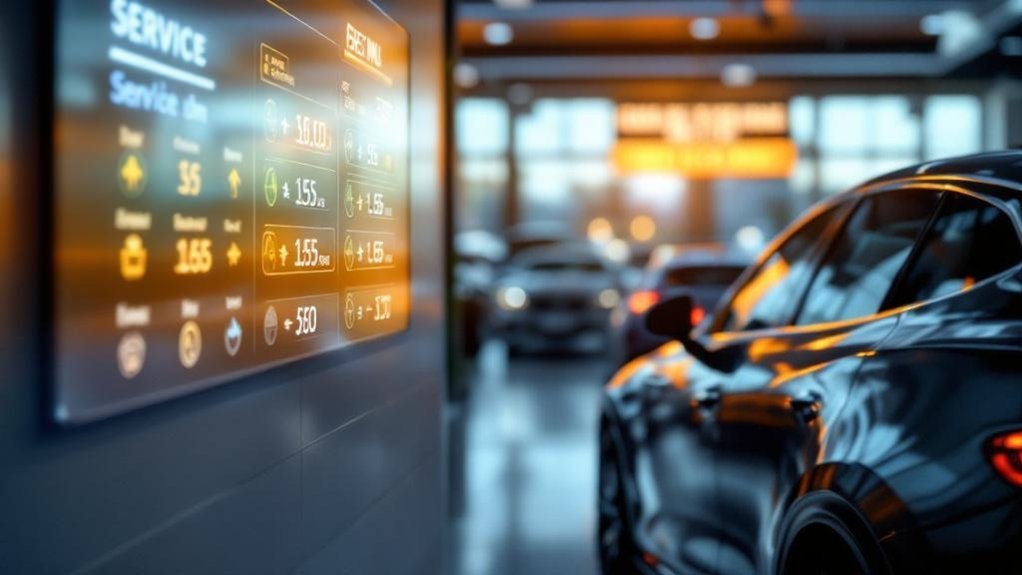
You can push instant price adjustments to digital menus the moment costs or margins change, preventing revenue leakage and customer confusion. Time-sensitive promotions can be scheduled and withdrawn automatically to match peak traffic windows or limited-time offers, improving conversion rates. Linking pricing to live inventory data lets you avoid selling promotions you can’t fulfill and drives smarter upsell opportunities.
Instant Price Adjustments
A digital service menu lets your dealership push real-time price and promotion changes instantly, so customers always see accurate offers that reflect inventory and market shifts. You’ll use dynamic pricing to react to supply, demand, and parts availability, which reduces discrepancies between advertised and at-counter prices and strengthens customer trust. Real-time adjustments cut reprint costs and compress decision-to-display time from days to minutes, improving operational efficiency and transparency.
- Update labor rates or part prices instantly to match inventory levels.
- Remove sold-out services to prevent misleading displays.
- Roll back prices immediately if market data warrants, keeping margins optimized.
- Publish same-day service offers to capitalize on immediate demand.
These capabilities translate into measurable engagement and fewer pricing disputes.
Time-Sensitive Promotions
Real-time price adjustments set the stage for time-sensitive promotions by ensuring the offers you push are accurate and actionable the moment they’re displayed. With digital service menus you can deploy dynamic discounts across locations from a central dashboard, eliminating outdated posters and lowering compliance risk. Data shows digital signage can lift sales up to 30% by spotlighting limited-time deals; you’ll convert more walk-ins when urgency marketing is obvious and credible. Automating updates ties promotions to market conditions and prevents price mismatches that erode trust. Strategically, you should schedule short windows for high-impact offers, measure engagement, and iterate quickly. The result: consistent, measurable promotional performance that boosts conversions while maintaining pricing integrity across your dealership network.
Inventory-Linked Pricing
Linking digital service menus to live inventory gives your dealership the ability to adjust prices and promotions instantly, so offers shown on screens always match what’s actually available. You can make dynamic adjustments based on stock levels, market signals and customer feedback, reducing disputes at the counter and boosting trust. Real-time price shifts let you highlight limited-time deals and retire offers when inventory runs low, driving urgency without manual errors. Analytics feed into pricing strategy, showing which promotions resonated and where margins can flex.
- Real-time pricing: sync inventory to avoid stale offers.
- Dynamic adjustments: automate markdowns as supply or demand changes.
- Promotion management: schedule seasonal or limited-time displays.
- Feedback-driven strategy: use customer feedback and interaction data to refine prices.
Enhancing Customer Experience With Interactive Displays
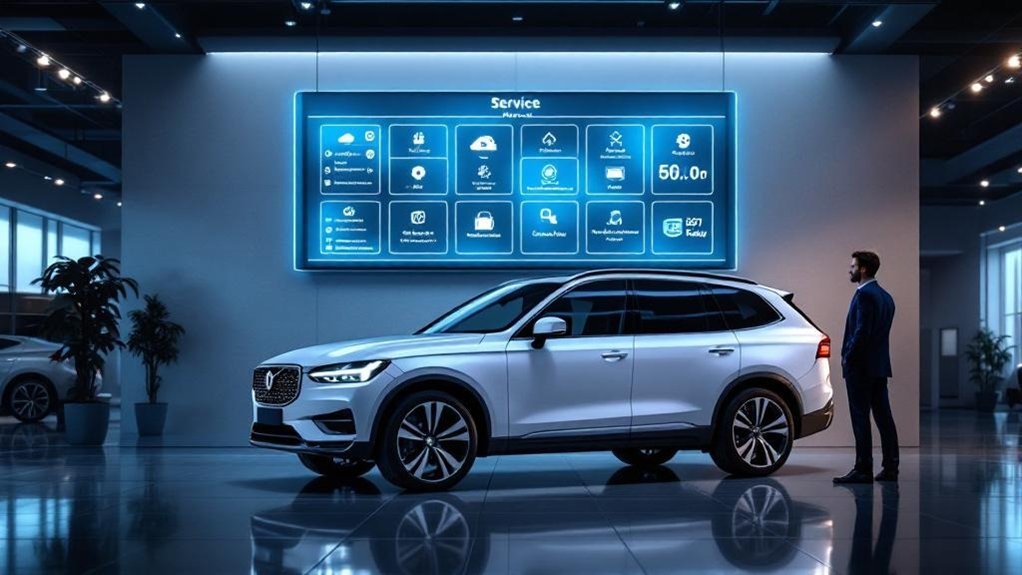
You can let customers self-serve detailed vehicle specs and financing scenarios via interactive displays, which increases engagement and speeds decision-making. Use dynamic content—product tours, comparison tools, and short videos—to occupy and inform visitors while they wait, reducing perceived wait times. Track interaction metrics to refine content and measure the impact on conversion and satisfaction.
Interactive Vehicle Exploration
How much more likely are customers to engage when they can tap, swipe, and customize a vehicle on an interactive display? You’ll see customer engagement strategies leverage interactive technology advancements to turn browsing into decision-making. Interactive vehicle exploration surfaces specs, features, financing and seasonal promotions in real time, increasing inquiries and site visits.
- Visualize personalized trims, colors, and packages with customization stations that deepen emotional connection.
- Access clear financing scenarios and loyalty offers on-demand, reducing friction in purchase decisions.
- Integrate promotions and inventory status to drive immediate test-drive bookings and upsell opportunities.
- Capture behavior data to refine messaging, measure engagement rates, and optimize in-dealership conversion funnels.
This strategic, data-driven approach boosts satisfaction and sales while keeping interactions concise and measurable.
Wait-Time Entertainment Options
Want to turn perceived downtime into measurable value? You can deploy interactive displays that provide wait-time entertainment options delivering both customer engagement and visual stimulation. Show curated videos and bite-sized informative content that lower perceived wait times, keep customers informed about real-time service updates and promotions, and increase satisfaction metrics. Data shows engaging content correlates with higher satisfaction scores and repeat visits, so prioritize content that’s concise, brand-relevant, and updated through your digital service menu. The technology-driven environment appeals to modern consumers who expect dynamic interactions; integrate touch and non-touch formats to serve varied preferences. Measure impact with NPS, dwell time, and return rates to quantify ROI and refine programming for maximum loyalty gain.
Operational Benefits for Service Departments and Staff
Efficiency gains are immediate when service departments adopt digital service menus: real-time updates cut reprint costs and let you reflect pricing, specials, and offerings instantly, while integrated digital signage keeps staff aligned on promotions and procedures for smoother coordination. You’ll see measurable improvements in staff collaboration and service efficiency as teams use consistent visuals to educate customers and reduce explanation time. Digital menus also lower perceived wait times, freeing staff to focus on revenue-generating tasks.
- Reduced admin overhead — instant updates remove manual poster management and reprint expenses.
- Faster customer throughput — clear visuals accelerate decision-making and repair approvals.
- Consistent training cues — displays reinforce procedures, improving technician and advisor alignment.
- Upsell enablement — targeted messaging supports staff-led promotions without extra effort.
Data-Driven Content: Personalization and Performance Tracking
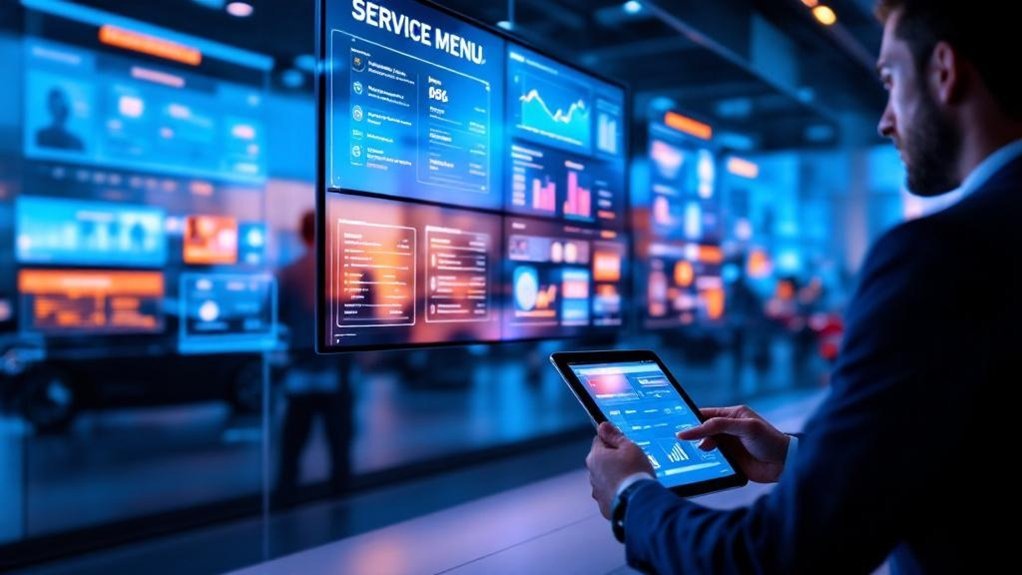
The operational gains from digital service menus are amplified when you pair them with analytics-driven content: by using customer demographics and real-time performance metrics, you can personalize displays to match visitor profiles and quickly test which messages move the needle. You’ll use tracking to measure ad performance, then iterate — AI-driven personalization can boost engagement as much as 56%, while machine learning speeds content creation by up to 60%. That lets you deploy tailored promotions, prioritize high-impact services, and update offers instantly based on live data. With disciplined content optimization, you’ll reduce wasted impressions and increase interactions. The result is a responsive, measurable signage strategy where decisions are guided by concrete metrics, not guesswork, improving relevance and engagement.
Cost Savings and ROI Compared to Printed Signage
Although digital service menus require an upfront investment, you’ll quickly recover costs through lower printing and labor expenses and faster, remote updates that eliminate reprints. A clear cost analysis shows savings on materials and staff time, while dynamic promotions can lift sales up to 30%, improving investment return. You also gain real-time accuracy that reduces lost revenue from outdated offers.
Digital menus pay back quickly—cut printing and labor, update remotely, and boost sales up to 30% with real-time offers.
- Reduced recurring printing and design costs — fewer materials, less vendor coordination.
- Labor savings — remote updates cut in-person installation and management time.
- Revenue uplift — engaging visuals and timely promotions drive higher conversions and repeat visits.
- Marketing efficiency — targeted content improves resource allocation and measurable ROI through analytics.
This strategic, data-driven approach shortens payback periods and enhances long-term profitability.
Future Trends: AI, AR, and Connected Showroom Experiences
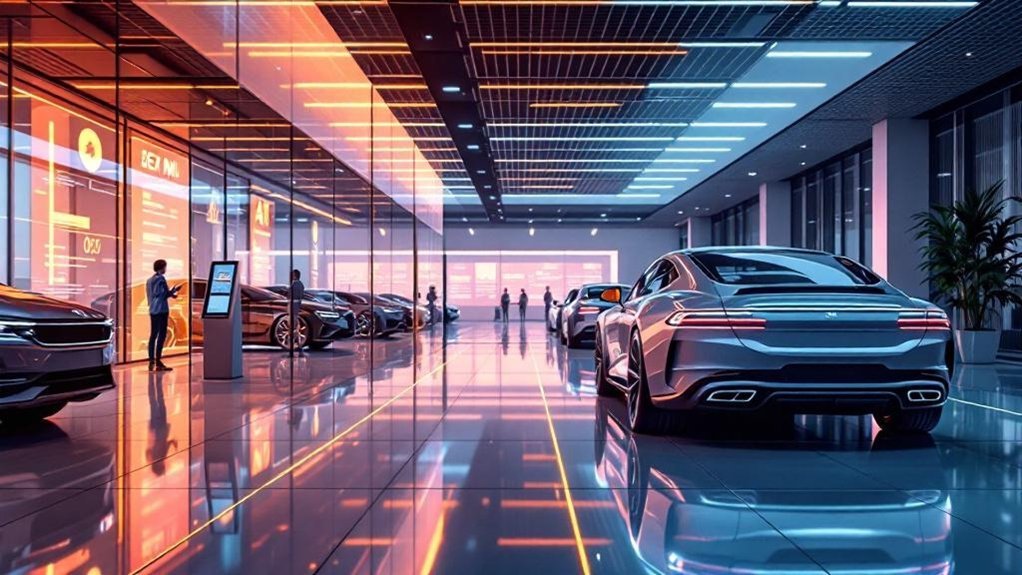
Because customer expectations keep shifting, dealerships that adopt AI, AR, and connected-showroom tech can turn data into personalized, revenue-driving experiences that shorten sales cycles and boost conversions. You’ll use AI advancements to tailor digital signage by demographics and behavior, raising relevance and engagement. AR applications let prospects virtually inspect trims, colors, and features, accelerating intent and reducing indecision. Connected showrooms fuse real-time analytics with displays to push targeted offers and financing options at the right moment, increasing conversion rates. Predictive models suggest ideal finance packages during interactions, streamlining checkout. With the automotive digital signage market projected to hit $31.7 billion by 2025, you should prioritize integrated AI, AR, and analytics to maximize revenue per visit and operational efficiency.
Frequently Asked Questions
What Are the Disadvantages of Digital Menus?
You’ll face higher cost implications upfront and ongoing, plus technical issues like outages, connectivity and maintenance demands; you’ll need trained staff and IT support, which raises complexity, downtime risk, and operational overhead.
Are Digital Menu Boards Effective?
Yes — think of digital menu boards as a lighthouse guiding ships; they boost digital engagement and improve customer experience, drive measurable conversions, streamline staff coordination, and use real-time updates to lift satisfaction and operational efficiency.
Why Is It Essential to Focus on Local SEO in Digital Marketing for Car Dealerships?
You should focus on local SEO because local search drives foot traffic and conversions; with keyword optimization and localized content you’ll rank higher, boost click-through rates, and capture motivated nearby buyers, producing measurable sales and service growth.
What Is a Digital Menu Board?
A digital menu board is an electronic display showing services, pricing and promotions in real time; you’ll leverage digital signage benefits and interactive displays to boost engagement, reduce costs, and deliver measurable, data-driven improvements in transparency and sales.
Conclusion
Think of your dealership as a smart harbor where static posters are old buoys — reliable but blind to tides. Digital service menus act like GPS-equipped beacons, sending real-time pricing, personalized offers, and performance metrics to guide each customer’s course. You’ll cut printing costs, boost service throughput, and track engagement data to refine strategy. Embracing this shift lets you navigate market currents with precision, turning every interaction into measurable ROI and competitive advantage.