
You’ll cut perceived wait times by about a third and raise satisfaction by delivering real-time service updates, ETAs, and targeted maintenance tips on screens in the service drive. Engaging content and touch kiosks reduce staff interruptions, speed communication, and keep customers informed about progress and completion times. Standardized templates and placement at eye level maximize engagement, while interaction metrics prove ROI. Keep going to see implementation steps, metric examples, and best practices that drive measurable improvement.
Key Takeaways
- Show real-time service status and ETAs so customers know progress and perceive shorter waits.
- Display queue positions and expected completion times to reduce anxiety and unnecessary staff check-ins.
- Provide interactive kiosks for self-service updates, payments, and appointment changes to speed communication.
- Rotate engaging content (maintenance tips, videos, promotions) to make wait feel shorter and reduce perceived time.
- Place standardized, eye-level screens in high-traffic areas and monitor interactions to optimize messaging and flow.
The Importance of Reducing Wait Times in Service Departments
Because customers are spending an average of 56 minutes for scheduled appointments—and up to 86 minutes for walk‑ins—you can’t ignore wait times if you want to keep business and boost profits. You’ll meet rising customer expectations by cutting those minutes: shorter waits directly improve satisfaction and perceived service quality, which increases sales and retention. McKinsey finds retaining customers can boost profitability by about 50%, so faster turnaround isn’t just nicer — it’s strategic. Long waits breed frustration and risk lost future purchases, so prioritize service efficiency across scheduling, staffing, and workflow. Measure wait metrics, set targets, and use real-time tools to monitor progress. When you reduce delays, you’ll see clearer feedback from customers, higher repurchase rates, and stronger dealer margins.
How Digital Signs Transform the Waiting Experience
While you wait, digital signs can cut perceived wait times by as much as 33% by keeping you engaged with relevant, changing content—real‑time service updates, interactive touchscreens for checking repair status, and short maintenance tips that both inform and distract. You get clearer expectations and fewer interruptions because dynamic displays use customer engagement tactics and visual storytelling to present concise maintenance tips, promotions, and status cues. Interactive kiosks let you self-serve for common questions, reducing staff inquiries and speeding communication. Measured satisfaction gains approach 46% when content is useful and updated regularly. The result: a calmer, more efficient waiting area where transparency and targeted content improve your experience and the service department’s throughput without adding friction.
Real-Time Service Status and Estimated Completion Times
Keeping you informed isn’t just about filling time — real-time service status and estimated completion times give you control and reduce anxiety. When digital signs show live repair progress and DMS-integrated ETA updates, uncertainty drops and perceived wait time falls by up to 33%. You see accurate status tied to actual shop capacity, so expectations match reality and staff don’t need constant check-ins.
This visible tracking boosts engagement and satisfaction — dealerships report a 25% lift after implementation — and reinforces service transparency, turning one-off visits into repeat business. For you, that means less waiting stress and more customer empowerment: clear timelines, dependable updates, and measurable improvements in trust and overall experience.
Interactive Features That Improve Customer Communication
If you want clearer, faster communication, interactive digital signs deliver: touchscreens let customers check repair status and ETAs in real time, cutting staff queries and lowering perceived wait by up to 33%, while schedule displays and personalized messages keep expectations accurate and drive engagement that can boost service retention by around 25%. You’ll use interactive technology to present real-time status, estimated wait times, service schedules and targeted promotions that prompt decisions and reduce uncertainty. Informative videos and maintenance tips educate customers, building trust and encouraging upsells. Personalization based on customer data increases relevance, capturing attention and improving customer engagement metrics. The result: fewer interruptions for staff, steadier perceived wait times, higher satisfaction scores and clearer communication across the service drive.
Case Studies: Measurable Results From Dealership Implementations
Many dealerships have seen measurable gains after rolling out digital signage: Friendly Honda reported an 80% jump in customer satisfaction after adding maintenance tips and promotions, proving digital innovation can directly boost customer engagement. Chevy Central noted a 25% satisfaction increase and shorter actual wait times when interactive touchscreens supplied real-time repair updates. Broad data indicates dynamic content can cut perceived wait times by up to 33%, improving experience and retention. Case studies also link promotional messaging on signs to increased service bookings and revenue growth. Post-implementation surveys show that informative, engaging displays correlate with higher repeat visits and Net Promoter Scores. These results suggest targeted digital signage delivers quantifiable operational and financial benefits while prioritizing the customer experience.
Best Practices for Deploying Service Drive Digital Signage
Because service drives are high-touch, high-visibility zones, you should deploy digital signs that combine real-time service updates, rotating maintenance tips, and timely promotions to cut perceived wait times (by as much as 33%) and boost satisfaction. You’ll prioritize clear content management workflows, automation for real-time status, and concise messaging that respects attention spans. Focus on signage placement that captures queues, payment areas, and waiting lounges. Use interactive screens where useful to let customers pull service status or book follow-ups, reducing staff interruptions.
- Standardize templates and update schedules for consistent messaging
- Place screens at eye level in high-traffic sightlines for maximum engagement
- Implement touch-enabled kiosks for self-service status checks
- Monitor interactions to refine content and timing
Measuring Impact: Metrics to Track Customer Satisfaction and ROI
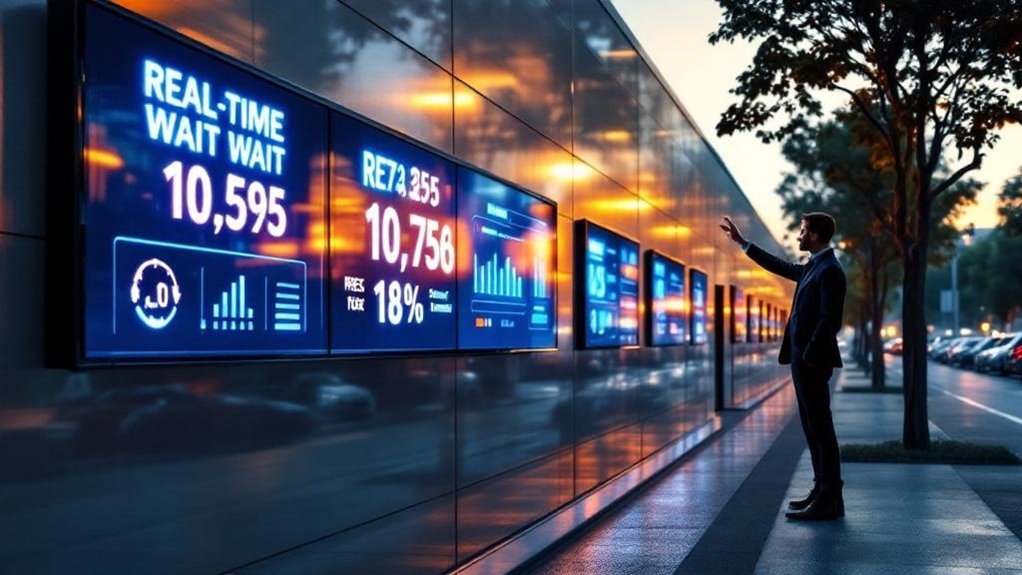
When you tie digital signage to measurable KPIs—like satisfaction scores, dwell/engagement rates, and revenue per service visit—you’ll see precisely how content and real-time updates cut perceived wait times and boost retention; studies show engaging displays can raise satisfaction by up to 46% and reduce perceived waits by about 33%, so track baseline metrics before rollout, then compare changes in average wait, survey responses, interaction rates, and service-driven revenue to quantify ROI. You’ll collect customer feedback via short post-visit surveys and monitor engagement metrics (dwell time, touch interactions, QR scans). Correlate spikes in inquiries or upsell conversions with specific content to prove value. Report monthly on satisfaction, average wait, interaction rate, and revenue per visit to justify investment and guide content optimization.
Frequently Asked Questions
What Is the Four Square Trick at a Car Dealership?
The four square is a negotiation strategies tool that breaks a deal into price, trade-in, down payment, and monthly payment; it’s direct, data-driven, and helps you compare figures, reducing confusion and accelerating decisions.
Why Do They Make You Wait so Long at a Car Dealership?
They make you wait so long because inefficient customer service processes and poor communication inflate wait time; you’re impacted by scheduling gaps, walk‑ins, and outdated updates, so dealerships lose time and customer satisfaction without real‑time systems.
What Is the Red Flag Rule for Car Dealers?
The Red Flag Rule requires you, as a dealer, to have a written program to spot, detect and respond to “red flag” indicators to guarantee customer protection, train staff, monitor accounts, and prevent identity theft or fraud.
What Is the Main Advantage of Digital Marketing in Automobile Sales?
Like Moses parting seas, you’ll gain broader reach and clearer insights: digital marketing boosts customer engagement and drives higher sales conversion by using real-time data to personalize outreach, optimize inventory, and improve buying experiences for measurable results.
Conclusion
You’ll get happier customers and faster throughput when you use service-drive digital signs — they cut perceived wait times by up to 35%. By giving real-time status, estimated completion, and quick interactive updates, you’ll reduce uncertainty, boost satisfaction, and free staff to handle more repairs. Track wait-time, ticket-resolution, and NPS to prove ROI. Start small, measure, and scale — the data show that visible communication converts patience into loyalty.