
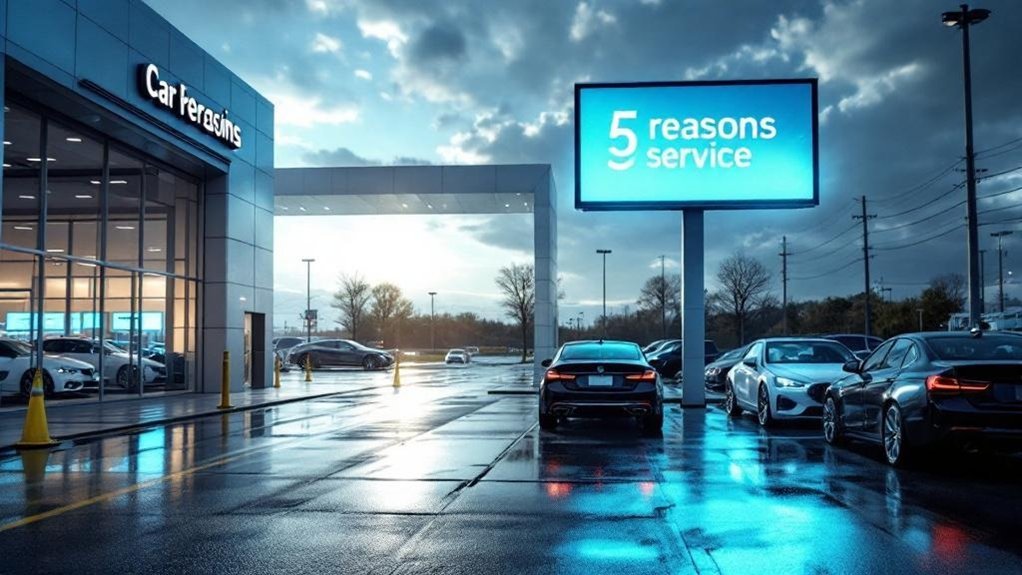
Replace static boards with service-drive digital signs to update messages instantly, cutting update labor by up to 90% and matching content to peak times. You’ll engage customers with high-quality visuals and interactive options that shorten perceived wait times and boost satisfaction. Targeted, real-time promotions raise service bookings by as much as 30% and improve conversion rates about 20%. Automation trims weekly board work and safety risks, while data-driven insights increase relevance and long-term revenue—keep going to see how.
Key Takeaways
- Instantly update service drive messages to reflect real-time wait times, recalls, and promotions, eliminating manual board changes.
- Use engaging images, video, and interactive content to improve customer satisfaction and perceived wait times.
- Deliver targeted, time-sensitive offers that increase service bookings and conversion rates.
- Automate content and centralize control to cut manual labor, reduce errors, and enforce brand consistency.
- Leverage analytics and CRM integration to personalize messaging and continuously optimize customer engagement.
Faster, More Flexible Messaging for Service Drive Operations
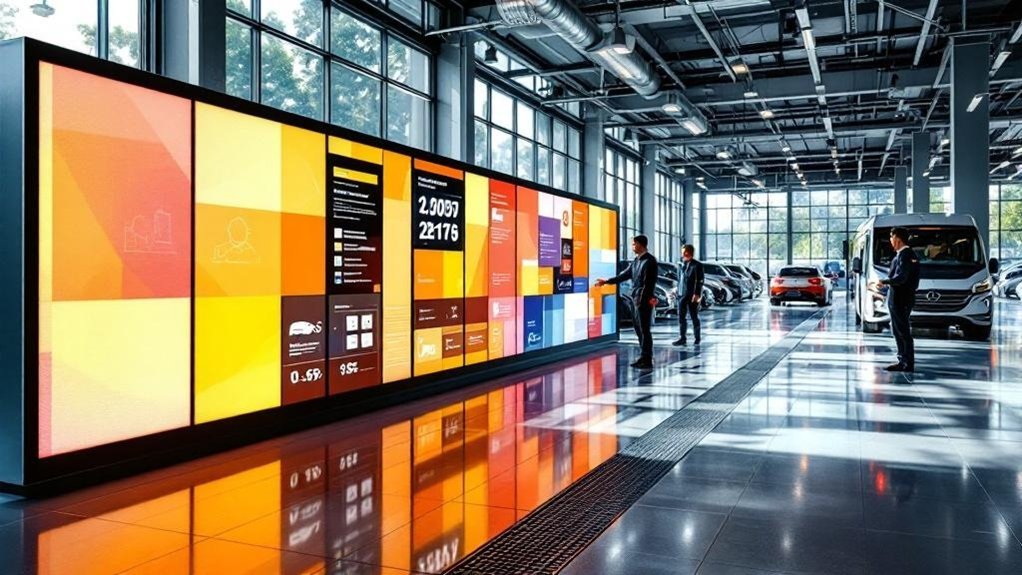
When wait times change or a new service promo launches, digital signs let you update your service drive instantly—no staff time or print costs wasted. You’ll gain real time updates that cut manual update labor by up to 90%, freeing staff for higher-value tasks. Schedule dynamic content to match peak hours, display rotating messages, and push targeted customer notifications for recalls, specials, or estimated wait times. That responsiveness keeps information accurate as inventory or service offerings shift, reducing miscommunication and follow-up calls. Measurable gains include faster messaging cycles, fewer print runs, and lower operational costs per announcement. By replacing static boards, you’ll streamline workflows, improve outreach efficiency, and guarantee critical service information reaches customers when it matters most.
Improve Customer Experience With Engaging Visuals
Switching static boards for digital signs doesn’t just cut costs and save staff time — it also transforms the customer experience by using engaging visuals that grab attention and drive action. You’ll boost recall and satisfaction with high-quality images and video that use visual storytelling to showcase services; studies show dynamic visuals are remembered far more than static ones, increasing message retention by measurable margins. Interactive displays create immersive experiences that let customers explore service options and wait-time updates, raising engagement rates and perceived value. Real-time content—service status, visuals of technicians, explanatory clips—creates relevance and urgency, shortening perceived wait and improving Net Promoter Scores. Quantify impact by tracking interaction clicks, dwell time, and post-visit satisfaction to prove ROI.
Boost Sales and Service Uptake With Targeted Promotions
Tap into real-time, targeted promotions on digital signs to drive immediate service uptake — displays that push limited-time offers can lift bookings by up to 30% and, when tailored by demographics and behavior, boost conversion rates by roughly 20%. You’ll use targeted advertising on-screen to promote time-sensitive maintenance, service packages, and financing options that convert faster than static boards. By leveraging customer demographics and on-site behavior, your displays present relevant offers that increase attention, foot traffic, and service sales. Interactive elements raise awareness of bundled services and financing, helping revenue climb as much as 25%. With analytics feeding content decisions, you’ll improve satisfaction and loyalty by over 15% while tracking campaign ROI in real time for continuous optimization.
Streamline Operations and Reduce Manual Labor
Because digital signs automate updates and centralize content, you’ll cut the manual labor tied to swapping static boards and free staff to focus on customers; real-time feeds and simultaneous multi-message displays mean fewer physical signs to manage, consistent messaging across service drives, and faster, more accurate information delivery that boosts operational efficiency. You’ll reallocate hours: replacing 10 weekly board changes with automated playlists saves ~5–8 staff hours/week, improving resource allocation and reducing errors. Centralized CMS enforces brand voice across locations, lowering rework by measurable percent. Less climbing, printing, and coordination means safer shifts and predictable schedules. Emotional clarity helps teams feel supported and valued.
| Save Time | Cut Errors | Improve Safety |
|---|---|---|
| 5–8 hrs/wk | -75% misprints | Fewer ladders |
Future-Proof Your Dealership With Data-Driven Signage
After cutting hours and errors with automated signage, you’ll want systems that learn and respond — data-driven digital signs do exactly that. You can use data analytics to tailor messages in real time based on customer behavior, increasing relevance and driving sales. Integrate signs with your CRM to serve personalized offers tied to past interactions, boosting conversion rates without extra staff. Monitor campaign performance instantly and adjust promotions to optimize ROI; dealerships report up to a 30% rise in customer interactions when messaging is dynamic and targeted. This measurable uplift in customer engagement lets you justify spend, iterate faster, and stay aligned with shifting market trends. Future-proofing means staying adaptable, competitive, and informed by actionable insights.
Frequently Asked Questions
What Is the Difference Between Static Signage and Digital Signage?
Static signage benefits include low upfront cost and simplicity, while digital signage advantages deliver dynamic updates, higher engagement, remote scheduling, and measurable ROI—boosting impressions, dwell time, and conversion rates for faster, data-driven marketing decisions.
What Are the Disadvantages of Digital Signage?
You’ll face higher cost considerations (equipment, energy, maintenance), tougher content management needs, visibility issues in bright light, potential streaming delays, and ongoing technical support demands — all raising operating costs and complicating reliable, measurable performance.
What Are the ADA Requirements for Digital Signage?
You must meet ADA compliance: include accessibility features like captions, audio descriptions, high-contrast text, readable sizing, and reachable placement; track metrics with regular audits and remediation to prove accessibility and reduce legal and customer-experience risks.
What Is the Difference Between Digital Signage and Traditional Signage?
Like a chameleon, digital signage adapts: you get interactive displays and superior visual engagement, measurable by dwell time and conversion rates, while traditional signage’s static nature limits updates, interactivity, and real-time analytics.
Conclusion
Switching static boards to digital service-drive signs delivers measurable gains: you’ll update offers instantly, cut staff time, and tailor messages by audience. Studies show digital signage can boost sales by up to 31%, so one screen can quickly pay for itself through higher service uptake. You’ll improve customer experience with engaging visuals, run targeted promotions, and use analytics to optimize campaigns — future-proofing operations while driving efficiency and revenue.