
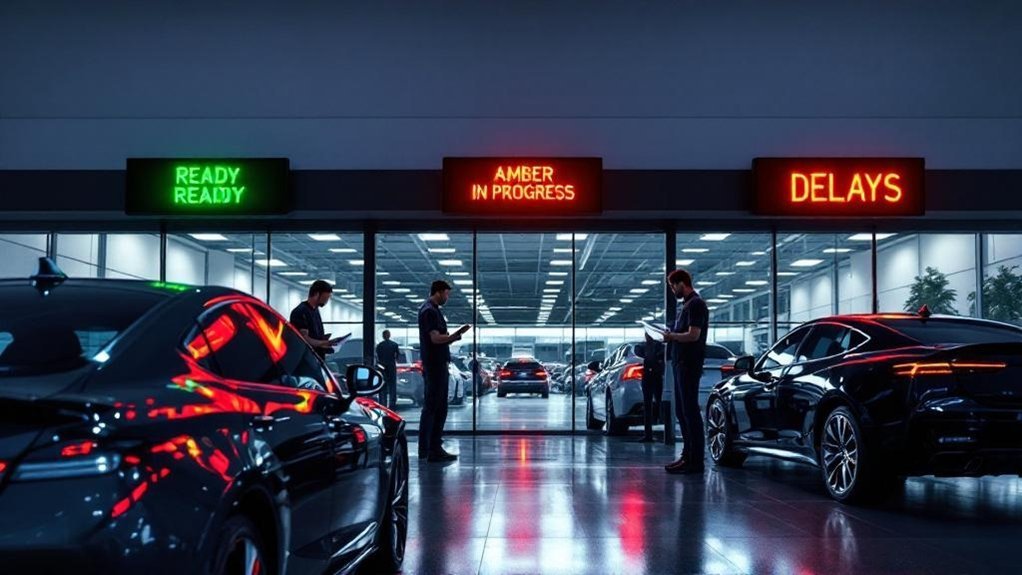
You’ll cut update time, reduce errors, and boost customer satisfaction by switching to real-time digital service drive signs that integrate with your DMS. Digital signs give instant, auditable status updates and ETA adjustments, replacing slow, error-prone handwriting and manual boards. Automated messaging frees staff for billable work and keeps customers informed, lowering perceived wait times and increasing upsell conversions. You’ll also get live KPIs and leaderboards for accountability — keep going and you’ll see how to implement it.
Key Takeaways
- Instant, automated updates remove manual delays and ensure repair status and ETAs are always current.
- Automated messaging and integrations with DMS reduce human error and provide a single auditable source of truth.
- Dynamic visuals and targeted content lower perceived wait times and drive relevant service upsell opportunities.
- Real-time KPIs and leaderboards improve staff accountability, throughput, and measurable operational performance.
- Cloud CMS, redundant networks, and weatherproof displays deliver reliable, remote control and faster ROI than manual boards.
The Limitations of Manual Service Drive Boards
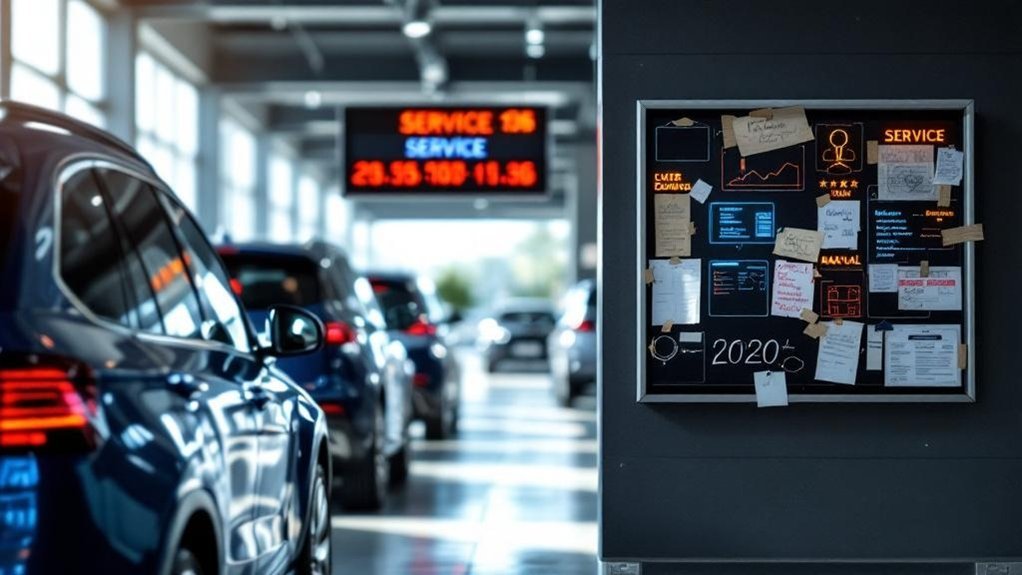
Because they rely on manual updates, service drive boards slow staff and slow communication: updating letters often means climbing ladders and taking time away from customers, which creates delays in relaying service status. You’ll face clear manual board inefficiencies—time-consuming physical edits, limited message space, and poor long-distance readability—that reduce throughput and frustrate customers. Data shows human error rates rise with repetitive manual tasks, so misspellings or missing letters erode credibility and create confusion. Outdated displays mislead customers and force staff to spend recovery time correcting expectations, harming satisfaction metrics. These communication challenges compound operational friction: staff spend minutes per update instead of serving vehicles, and promotions or multi-item messages simply won’t fit, limiting revenue and transparency.
Real-Time Service Status Updates That Improve Transparency
When you integrate digital signage into the service drive, you get instantaneous, error‑free status updates that let customers track their vehicle’s progress in real time and reduce uncertainty tied to wait times. You’ll cut customer anxiety by replacing guesswork with transparent estimated completion times and concise service details, which builds measurable trust. Because updates are instantaneous, you eliminate manual-entry delays and errors that skew expectations. Dealerships using this approach report higher service engagement and lower perceived wait times, backed by operational metrics like reduced follow-up inquiries and faster bay turnover. You’ll also gain a single, auditable source of truth for status history that improves accountability and staff coordination, driving both satisfaction scores and repeat business.
Enhancing Customer Experience With Dynamic Visuals
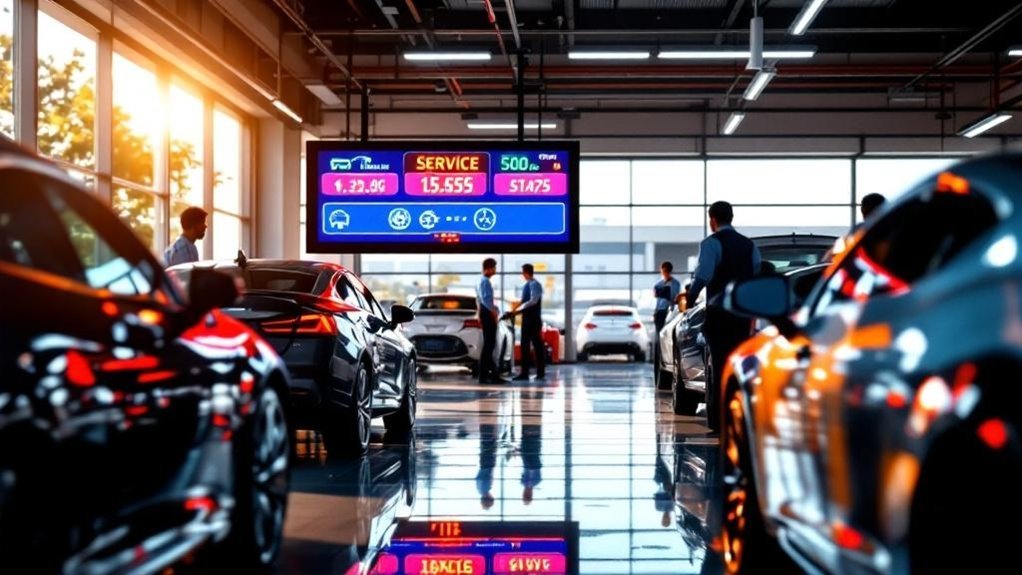
You’ll see real-time service updates on digital signs cut customer anxiety by keeping them informed about where their vehicle is in the workflow. Engaging waiting-room content — from estimated completion times to targeted service offers — lowers perceived wait time and drives upsell opportunities. Dealerships that use dynamic visuals report higher satisfaction scores and more efficient customer flow, so integrating both elements is a clear productivity and experience win.
Real-time Service Updates
Though waiting can heighten anxiety, real-time service updates on digital signs give customers immediate, accurate information—current wait times, service progress, and targeted offers—reducing uncertainty and improving satisfaction. You’ll get real time notifications that replace outdated manual boards, ensuring accuracy and cutting miscommunication. Dynamic visuals display progress stages and ETA changes instantly, so you know where your vehicle stands and why. Interactive elements let you request more details on services, boosting transparency and confidence in decisions. Measured outcomes show improved customer engagement, higher perceived value, and increased retention when dealerships adopt this tech. In short, digital real-time updates are a measurable operational improvement: they streamline communication, elevate the waiting experience, and deliver reliable, data-driven reassurance to customers.
Engaging Waiting-room Content
Because modern customers expect information and entertainment while they wait, dynamic digital signage turns idle time into a value-added experience by delivering real-time service status, targeted offers, and high-quality visuals that measurably reduce perceived wait times. You’ll boost customer engagement and digital interaction by replacing static boards with screens that adapt content by time, demographics, and service stage. That reduces uncertainty, highlights upsell opportunities, and builds loyalty through trust-building testimonials. Use focused content that’s visually rich and data-driven to maximize attention and satisfaction.
- Real-time status updates with motion graphics
- Time-of-day offers tailored to audience segments
- High-resolution visuals that command attention
- Interactive touch options for personalized offers
- Customer testimonials and success stories
These elements increase awareness, reduce frustration, and improve retention.
Reducing Errors and Labor With Automated Messaging
When you replace manual boards with automated messaging, you cut manual touchpoints dramatically and lower the risk of human error. Real-time digital updates keep status accuracy high and guarantee wait-times and service changes are reflected instantly. That efficiency translates to measurable reductions in staff time spent on updates, letting your team focus on higher-value customer tasks.
Fewer Manual Touchpoints
Many service departments cut manual tasks dramatically by switching to digital signs, which automate message updates and remove frequent human touchpoints that cause misspellings, outdated info, and inconsistent timing. You’ll see immediate gains in streamlined communication and operational efficiency as real-time feeds replace manual boards, cutting labor and error rates. Automated messaging routes information where it’s needed without staff intervention, so your team focuses on customers instead of updates.
- Technician finishes job — digital sign updates instantly
- Scheduled maintenance slot changes — message adapts automatically
- Rush repairs flagged in real time — customers alerted on arrival
- End-of-day summaries published without manual entry
- Reduced staffing for board management, reallocating labor to service
These changes reduce cost, boost accuracy, and tighten workflows.
Automated Status Accuracy
Although subtle, the switch to automated status messaging eliminates the common errors and delays that plague manual boards, ensuring service-drive updates are accurate, timely, and legible every time. You’ll see automated alerts replace handwriting and manual entry, cutting human error that causes misspellings, missing letters, or stale statuses. Real-time digital signs push consistent information accuracy across bays and waiting areas, and systems can auto-adjust messages based on wait times or customer flow. Integration with shop management lets you tailor alerts to service type or customer preference, improving relevance and reducing confusion. The result: fewer incorrect statuses, faster corrective action, and clearer customer communication — measurable gains in accuracy and operational reliability without constant manual intervention.
Reduced Staff Time
Because automated digital messaging cuts out the manual updates that eat into your team’s day, staff can redirect hours previously spent erasing, rewriting, or checking boards toward direct customer contact and higher-value tasks. You’ll see measurable gains in staff productivity and communication efficiency as errors drop and response times shorten. Real-time updates mean customers get accurate status without staff intervention, reducing repeat inquiries and rework. Automated messaging also trims labor costs by eliminating routine board maintenance and enabling quick operational shifts.
- A service advisor spends 30–60 minutes less per shift on updates
- Misspellings and outdated entries fall to near zero
- Customers get instant, accurate wait-time alerts
- Promotions and alerts push live in seconds
- Fewer manual touchpoints, lower labor overhead
Integrating Service Signs With Dealer Management Systems
When your service signs are integrated with the Dealer Management System (DMS), they deliver real-time repair order status, technician progress, and estimated completion times directly to customers and staff, cutting uncertainty and shortening perceived wait times. You’ll see measurable gains: fewer status inquiries, faster turnaround, and higher satisfaction. Service sign integration with dealer management automates scheduling and notifications, reducing manual updates and freeing staff to engage customers. Live RO feeds improve transparency and trust while technician metrics boost efficiency. Use DMS-driven data to display relevant messages without manual input, ensuring consistency and timeliness.
| Benefit | Impact |
|---|---|
| Real-time RO updates | Lower anxiety, fewer calls |
| Automated alerts | On-time customer notifications |
| Technician metrics | Increased throughput |
| Reduced manual work | Higher staff productivity |
Driving Sales and Service Upsell Opportunities
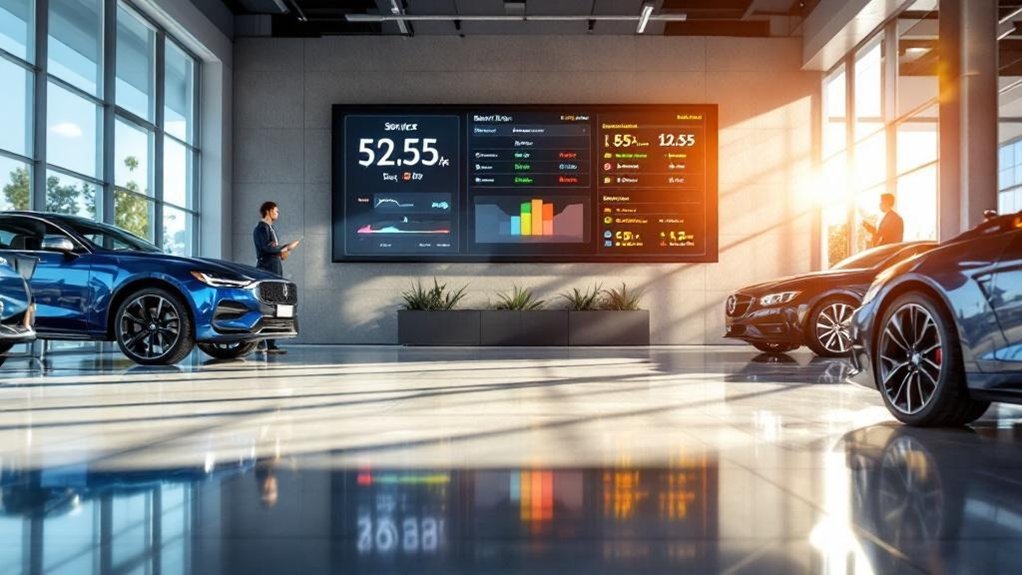
Linking your service signs to the DMS doesn’t just streamline operations — it creates a platform for targeted sales. You’ll use real-time status updates and dynamic content to boost customer engagement and deploy precise upsell strategies that convert. Studies show up to 15% service sales lifts when promotions are visible and timely. Interactive displays let customers explore add-ons while they wait, and weather- or time-triggered offers create urgency for immediate buys.
- Real-time status prompts a relevant complimentary service
- Dynamic imagery highlights high-margin add-ons
- Weather-triggered offers sell wipers/fluids at peak need
- Time-sensitive discounts drive immediate decisions
- Interactive kiosks let customers self-educate and accept upgrades
Measure outcomes, iterate, and prioritize offers that show the best ROI.
Measuring Impact: KPIs and Leaderboards for the Service Drive
Although it’s easy to focus on workflow improvements, the real value of digital signage in the service drive comes from measurable performance shifts — live KPIs and leaderboards give you clear visibility into repair orders, billed hours, and CSI so you can track productivity and profit in real time. You’ll get continuous KPI tracking that replaces slow spreadsheets with PULSE KPI Leaderboard’s dynamic, customized reports, letting you monitor service efficiency and productivity instantly. Leaderboard effectiveness is measurable: public, real-time rankings boost accountability, prompt immediate feedback, and recognize high performers, driving billed hours and RO throughput upward. That alignment of staff behavior with dealership goals increases service profits while giving managers precise data to coach, reward, and scale best practices across the team.
Technology Requirements and Reliability Considerations

You’ve just seen how live KPIs and leaderboards drive behavior and profits; now let’s look at the underlying tech that makes those gains reliable and repeatable. You’ll depend on rugged, high-brightness digital signage built for outdoor and variable lighting, not fading manual boards. Remote content management and dynamic scheduling automate timely messages, while tight technology integration with your DMS guarantees status accuracy. Expect enterprise SLAs targeting 99.999% uptime so information’s always available.
- Weatherproof displays readable in sunlight and rain
- Cloud-based CMS for instant, remote updates
- DMS APIs syncing real-time service status
- Automated dayparting and customer-segmented messaging
- Redundant networks and monitoring for constant uptime
These elements cut confusion, reduce wait friction, and sustain operational consistency.
Cost-Benefit Analysis: ROI of Digital vs. Manual Boards
When you compare lifetime costs and measurable gains, digital signage typically delivers a faster payback than manual boards: it eliminates recurring print and labor expenses, enables instant updates that cut perceived wait times and boost customer satisfaction, and drives higher conversion through targeted, real-time offers — all of which studies link to increased foot traffic and sales. You’ll perform a cost analysis weighing upfront hardware and software against eliminated printing, reduced staff time, and measurable revenue uplifts from dynamic promotions. Digital investment shows predictable depreciation but yields recurring operational savings and higher conversion rates. Quantify reduced labor hours, printing costs, and incremental sales to calculate ROI timelines; many dealerships recover digital investment within months to a few years, depending on scale and utilization.
Steps to Transition From Manual Boards to Digital Signage
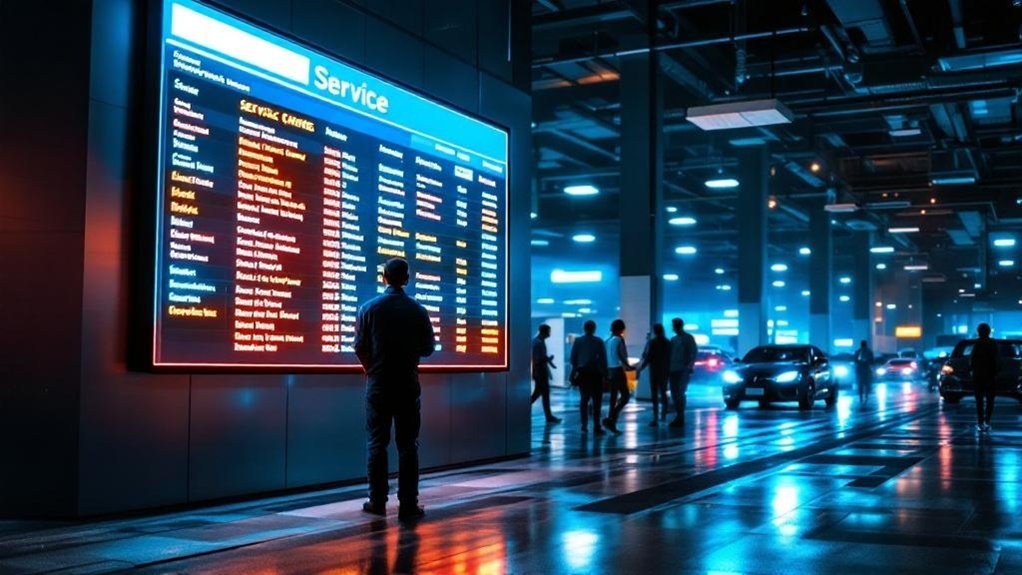
Start with a clear project brief that defines objectives, timelines, KPIs and budget so you can measure progress and ROI; include targets like reduced perceived wait time, upsell conversion lift, and staff-hours saved, and identify which service-drive statuses and promotions must update in real time. Next, plan digital signage implementation steps: select hardware, integrate with DMS, and choose managed-support options. Pilot in one bay, measure accuracy and engagement, then scale. Don’t skip staff training — it’s critical for adoption and error reduction. Use data to refine content and offers.
Start with a clear brief: define objectives, KPIs, timelines and budget; pilot, train staff, and use data to refine.
- Wall-mounted screen showing live bay status
- Promotional loops timed to service completion
- DMS-driven accuracy checks every minute
- Training session with hands-on dashboards
- Monthly KPI dashboard for continuous improvement
Frequently Asked Questions
Why Is Dealership Service so Slow?
You’re experiencing slow dealership service because poor service efficiency and inconsistent customer communication create bottlenecks, manual errors, and delays; without real-time updates staff misprioritize tasks, extending wait times and degrading overall throughput and satisfaction.
Why Is It Essential to Focus on Local SEO in Digital Marketing for Car Dealerships?
Imagine customers finding your lot like headlights cutting fog — you need local search dominance. You’ll boost digital visibility, capture the 88% researching online, drive foot traffic, and convert searches into measurable service and sales revenue.
Conclusion
You’ll see faster, clearer communication with digital service-drive signs — they cut manual-update errors, save labor, and give real-time status that boosts throughput and customer satisfaction. Think of them as a GPS for your service lane: they guide every vehicle efficiently. With measurable KPIs, DMS integration, and reliable hardware, the ROI becomes provable. Move methodically through pilot, integration, and training phases to capture the operational and financial gains.