

You’ll trust service pricing more when digital price comparison boards show exact labor, parts, fees and discounts side‑by‑side in real time, cutting negotiation time and post‑service regret. They pull MSRP, incentives and service packages into a clear, updateable display so you can compare offers instantly and see final costs. That clarity boosts satisfaction, reduces CPL and speeds decisions, and if you keep going you’ll find design, placement and measurement tips to maximize impact.
Key Takeaways
- Real-time display of service prices, fees, and promotions removes hidden costs and sets clear customer expectations.
- Side-by-side comparisons of packages and add-ons let customers quickly evaluate value and avoid surprise charges.
- Consistent synchronization with online pricing ensures in-store prices match digital listings, reducing discrepancies.
- Interactive boards let customers customize services and instantly view price adjustments for transparent decision-making.
- Tracking engagement and conversions measures trust impact, enabling data-driven improvements to pricing clarity.
Why Transparent Pricing Matters to Modern Car Buyers
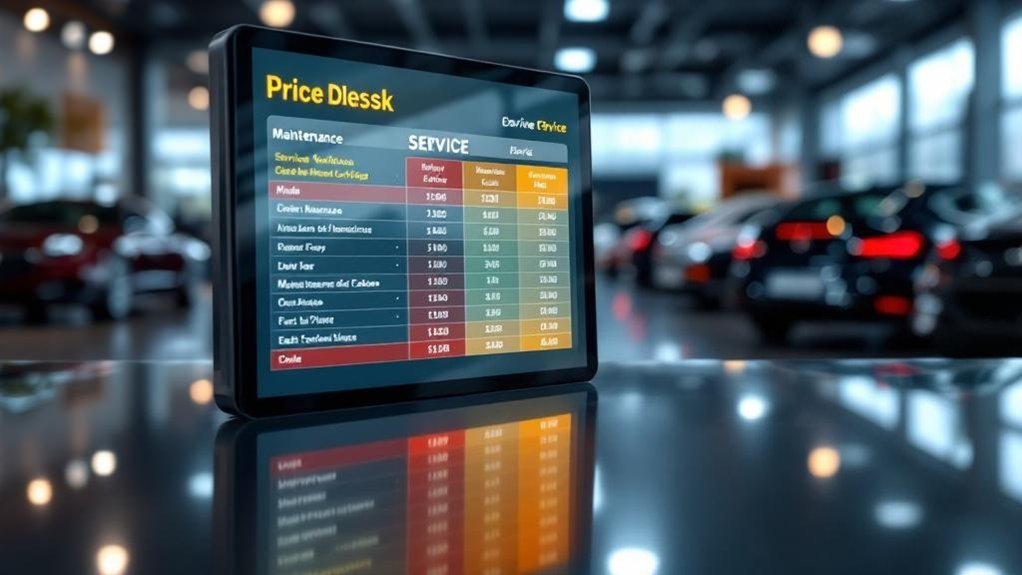
Because trust drives buying decisions, transparent pricing matters: 88% of modern car buyers say trust is a top priority, yet only 21% feel the process is fully transparent. You’ll notice that consumer trust collapses quickly when pricing feels opaque, increasing anxiety and post-purchase regret. Clear, upfront numbers give you the context to compare options and decide confidently, which boosts satisfaction and lowers returns. Dealerships that adopt pricing clarity meet evolving expectations and regulatory pressures, aligning with the 86% of consumers who demand transparency. That alignment strengthens reputation, attracts referrals, and builds loyalty. In short, when you see straightforward prices, you’re more likely to buy, advocate, and return — a measurable business advantage.
How Digital Price Comparison Boards Work on the Lot
When you walk onto a lot, digital price comparison boards instantly show real-time prices, promotions, and vehicle details so you can compare options at a glance and avoid surprises. You’ll see up-to-date MSRP, discounts, and service packages pulled from the dealership’s DMS and CRM via digital signage technology, so online and in-store numbers match. Pricing algorithms adjust displayed figures for incentives, regional fees, and time-limited offers, and managers can push updates live to reflect market changes. Boards are placed in high-traffic zones to maximize visibility and let you scan multiple vehicles quickly. Customized layouts highlight special promotions and unique services, helping you prioritize choices and make informed, data-driven decisions without waiting for a salesperson.
Key Benefits for Dealerships and Sales Teams

You’ll speed up customer decisions by offering side-by-side price comparisons that update in real time, cutting negotiation time and reducing sticker shock. Data shows 86% of U.S. consumers value transparency, and clear digital pricing boosts satisfaction and trust—key drivers of higher conversion rates. Plus, customizable boards let your sales team spotlight promotions and services consistently, strengthening your brand while improving sales efficiency.
Faster Price Comparisons
How quickly could your customers decide if they can instantly compare prices? You’ll cut research time dramatically when digital tools display real-time pricing and specs side-by-side, letting shoppers evaluate options in minutes rather than hours. That speed improves customer experience and boosts conversions: transparent, up-to-date boards reduce hesitation and build trust through visible price accuracy. Your sales team spends less time chasing numbers and more time advising, highlighting promotions and services that matter to each buyer. Clear, fast comparisons also drive foot traffic—people enter dealerships that openly show competitive offers. In a tight market, faster comparisons become a differentiator that shortens sales cycles, increases satisfaction scores, and reinforces loyalty by making informed decisions simple and immediate.
Boosted Sales Transparency
Faster comparisons naturally lead into improved transparency, because showing real-time, side-by-side prices makes what used to be opaque immediately visible to buyers. You’ll boost customer trust by presenting consistent, verifiable pricing that minimizes post-purchase regret and supports pricing integrity across models and services. With competitive rates displayed prominently, you can attract new shoppers and clearly differentiate your dealership from local rivals. Sales teams use the boards to spotlight promotions and unique services, increasing engagement and conversion rates through targeted, timely messaging. Given that 88% of buyers prioritize trust, this transparency directly influences sales outcomes and repeat business. Overall, digital comparison boards streamline decisions, reinforce your reputation for fairness, and encourage referrals from satisfied customers.
Designing Effective Pricing Displays That Build Trust
When dealership pricing is shown clearly and consistently, shoppers are far more likely to trust your team—88% of buyers cite trust as a top priority—so displays should put headline prices, fees, and promotions front and center. You’ll use trust building elements and clear visual communication to reduce perceived opacity: consistent layouts, bold headline prices, and line-item fees. Tailor boards with customizable comparisons and short videos to highlight unique services and promotions while analytics track interactions so you can iterate.
- Use bold headline pricing, fee breakdowns, and limited-time promotions.
- Add graphics or short explainer videos to improve retention and clarity.
- Track views and engagement to refine content sequencing and messaging.
This data-driven approach boosts transparency and customer confidence without overwhelming shoppers.
Best Placement Strategies for Maximum Customer Impact

Placement matters: putting digital price comparison boards in high-traffic zones like entrances, waiting lounges, and near service desks guarantees shoppers see transparent pricing as soon as they arrive, increases dwell-time engagement, and nudges passersby into the showroom. You should apply placement techniques that prioritize sightlines and flow: mount displays at varied heights, angle them toward seating clusters, and use outdoor boards visible from the curb to capture drive-by traffic. Visibility strategies include contrast, legible fonts, and ensuring readability from multiple distances and angles so all customers can compare prices quickly. Position boards by service lanes to inform waiting patrons about promotions. Finally, keep content current—frequent updates maintain relevance, encourage return visits, and reinforce trust through consistent transparency.
Measuring Performance: Metrics That Prove ROI
You’ll want to track engagement and clicks on your price boards to quantify interest and optimize messaging. Compare conversion and sales rates before and after implementation to attribute revenue uplift to increased transparency. Measure cost per lead by tying sign-driven inquiries to CRM records so you can calculate true ROI.
Engagement and Clicks
How do you prove a digital price board is driving revenue? You measure customer engagement directly — tracking click through rates and interactions gives you objective, actionable data. Use analytics to see which messages prompt inquiries and where engagement peaks.
- Track click-through rates by board, message, and time of day to identify high-performing content.
- Count inquiries and assisted visits originating from board interactions to link engagement to downstream activity.
- A/B test content and placement in high-traffic zones, then iterate based on performance metrics.
This approach keeps decisions customer-focused: you’ll know what customers respond to, when, and where. Continuous analysis highlights winning pricing strategies and content adjustments, so you can optimize boards for maximum visibility and measurable engagement.
Conversion and Sales
Now that you’re tracking engagement, the next step is proving those interactions translate to sales. You’ll measure conversion strategies by linking click-throughs and on-floor exposure to purchase behavior: studies show dynamic boards boost interaction up to 50% and inquiries can rise up to 30% after implementation. Track customers exposed to transparent pricing — they’re about 20% more likely to buy on-site — and combine that with survey data (75% report greater confidence) to validate sales tactics. Set clear KPIs: inquiry-to-sale rate, time-to-purchase, and goal-based sales performance. When these metrics show consistent uplifts, you can attribute up to a 200% ROI to effectively integrated price comparison boards, justifying further investment and optimization.
Cost per Lead
One of the clearest ways to prove digital price boards’ value is Cost per Lead (CPL): it tells you exactly how much you’re spending to acquire each prospective buyer and lets you compare signage to other channels. You’ll use CPL for rigorous cost analysis and smarter lead generation planning. Digital boards typically cut CPL by ~30% by boosting engagement with transparent pricing, so you’ll see faster payback and higher-quality inquiries.
- Measure CPL against baseline channels to quantify ROI.
- Track CPL with conversion rates to refine messaging and placement.
- Use CPL trends to allocate budget toward the most efficient touchpoints.
Overcoming Operational and Staff Adoption Challenges
Although staff may resist shifting from familiar pricing routines, a clear strategy that includes training, involvement, and measurable feedback will speed adoption and reduce operational hiccups. You’ll prioritize staff training and employee engagement from day one, setting measurable KPIs (usage rates, time-to-update, customer queries resolved) to track progress. Train reps on system operation, troubleshooting, and how to use boards to build trust with customers; shorter, role-specific modules boost retention by 40% versus one-off sessions. Involve technicians and sales in pilot phases so their input shapes workflows, increasing buy-in. Establish regular feedback loops — weekly check-ins, quick surveys, and a support desk — to surface issues early and refine processes. Successful adoption raises customer trust, conversion, and repeat business.
Future Trends: AI, Personalization, and Interactive Pricing
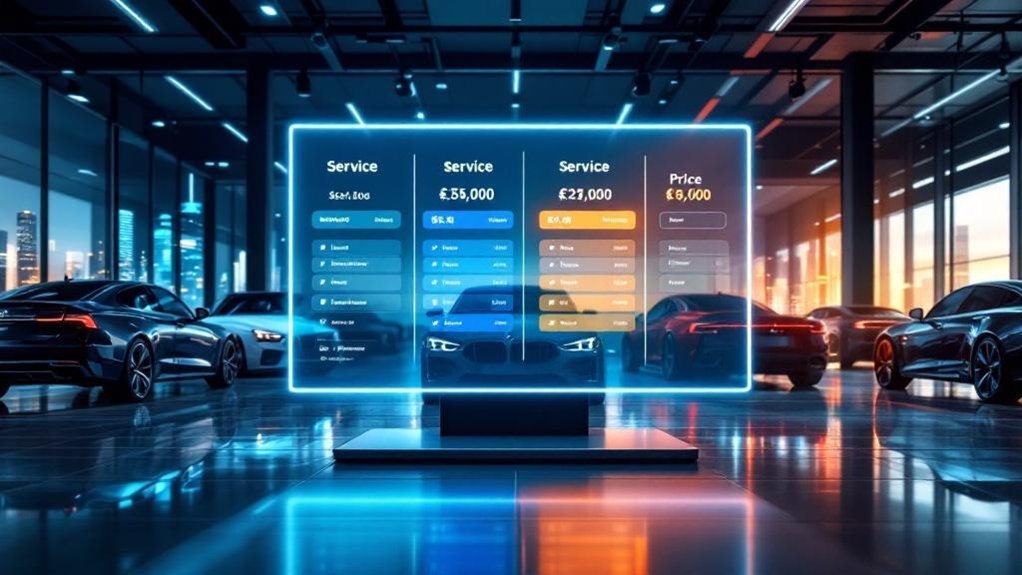
As AI-driven algorithms get smarter, you’ll see pricing move from static lists to personalized, real-time offers that reflect individual preferences and shopping behavior, improving conversion and trust; interactive boards will let customers tweak options and watch prices update instantly, while backend AI keeps online and in-store prices synchronized to guarantee transparency. You’ll benefit from data analytics-driven pricing strategies that enable personalized pricing, transparency building, and informed decision making. Interactive features boost customer engagement and let you compare configurations side-by-side. Seamless integration across systems reduces discrepancies and speeds transactions.
- AI algorithms calculate tailored offers using behavior and inventory signals.
- Interactive features display instant cost impacts of option changes.
- Data analytics inform pricing strategies to optimize margin and satisfaction.
You’ll get clearer choices and higher conversion.
Frequently Asked Questions
Why Should You Always Be Transparent With Vehicle Pricing?
You should always be transparent with vehicle pricing because pricing ethics build consumer trust, reducing complaints and legal risk; transparent, data-driven pricing boosts satisfaction, reputation, referrals, and competitive advantage, so you retain customers and increase long-term sales.
What Is the Four Square Trick at a Car Dealership?
The four square trick’s a pricing strategy where you’re shown vehicle price, trade‑in value, down payment, and monthly payment; it can obscure true costs, letting dealers manipulate figures, so you’ll demand clearer, data-driven transparency.
Why Is It Essential to Focus on Local SEO in Digital Marketing for Car Dealerships?
Like a beacon in fog, you need local SEO because local search drives nearby buyers; keyword optimization boosts visibility, increases foot traffic, improves conversions, and leverages reviews and landing pages to turn mobile searches into offline sales.
Why Is Transparent Pricing Important?
Transparent pricing matters because it boosts customer trust and enhances value perception, reducing purchase anxiety and complaints; you’ll see higher satisfaction, repeat business, better reviews, and compliance benefits that drive measurable sales and loyalty.
Conclusion
You’re giving customers clarity without the bluntness of bare numbers — a kinder transparency that still tells the whole story. Digital price boards shave average decision time, boost service uptakes, and cut dispute rates, so your team works smarter and customers leave satisfied. When deployed with clear design and measured KPIs, these displays quietly transform perceptions into measurable revenue gains, helping you maintain trust while nudging profitability upward.