

You need consistent, real-time pricing across all stores because mismatched online boards and in-store offers erode trust, increase abandonment, and cost measurable revenue. Fragmented data makes shoppers repeat info and lose confidence; consistent quotes cut abandonment by up to 75% and boost conversions. Real-time sync reduces surprises at pickup and shortens sales cycles. Implement audits, KPIs, and unified retail tools to standardize pricing — keep going to see practical steps and ROI metrics.
Key Takeaways
- Consistent boards prevent customer confusion by matching online quotes with in-store offers in real time.
- Uniform pricing across locations builds trust and reduces deal abandonment during purchase.
- Synchronized data avoids repeated customer inputs and shortens the sales cycle.
- Standardized comparison boards reduce pricing disputes and hidden-fee perceptions at pickup.
- Real-time consistency enables measurable ROI through lower abandonment, faster conversions, and better retention.
The Expectation Gap: When Online Promises Meet In-Store Reality

When online quotes, trade-in estimates, or advertised payments don’t match what you see in the dealership, deals fall apart—most lost sales trace back to that expectation gap. You’re facing a systemic mismatch: 75% of buyers hate repeating information, and only 9% leave highly satisfied, so fragmented data and overpromises erode trust. Expectation alignment is nonnegotiable — consistent pricing, real-time trade values, and truthful payment displays cut friction. Online transparency tied to in-store systems reduces wait times and prevents surprise adjustments that cause abandonment. Deploying integrated digital retail tools lets you synchronize offers, surface accurate incentives, and measure variance across touchpoints. Do that, and you’ll convert curiosity into closed deals instead of avoidable walkaways.
Common Deal-Breakers That Kill Price-Comparison Trust
Because fragmented systems and mismatched information erode confidence fast, buyers who compare prices expect seamless accuracy across every touchpoint. You lose trust when data discrepancies appear between online listings and in-store offers—research shows even small mismatches trigger abandonment. Disconnected tools that don’t transfer customer or trade-in data cause repeated entries, longer waits, and visible customer frustration. Overpromised prices adjusted at pickup create disappointment and signal poor process control. Gaps in digital price comparison tools produce inconsistent totals, hidden fees, and uneven trade valuations that undercut perceived transparency. To stop deal leakage, you need to quantify how often discrepancies occur, prioritize fixes where abandonment spikes, and eliminate manual handoffs that amplify customer frustration and erode credibility.
How Unified Data Flow Prevents Lost Leads

Although fragmented data can quietly sabotage deals, a unified data flow makes pricing and trade-in values consistent across every touchpoint so you don’t lose leads to avoidable surprises. When online quotes match in-store offers, you reduce expectation gaps that cause drop-offs and protect lead conversion rates. Real-time synchronization cuts friction—75% of consumers hate repeating information—so customers move smoothly from research to appointment. Integrations like Autovance MyDeal create transparent, accurate deal-building that boosts buyer confidence and minimizes surprises at pickup. That predictability improves customer retention by fostering trust and satisfaction; in a market where 56% prioritize convenience and personalization, consistent data flow becomes a competitive lever rather than just a technical fix.
Practical Steps to Standardize Pricing Across Platforms
You’ve seen how unified data flow keeps online quotes and in-store offers aligned to prevent lost leads; now let’s map practical steps you can take to standardize pricing across every platform. First, run routine pricing audits across Google Business Profile, AutoTrader and your DMS to find discrepancies — 75% of buyers hate repeating info, so close gaps fast. Second, adopt a unified digital retail platform that pushes real-time prices to all channels; this reduces surprise adjustments and abandonment. Third, integrate digital tools like Autovance MyDeal to sync offers between online and in-store, ensuring consistency and speed. Finally, set KPIs for audit frequency, sync latency and error rates so you can iterate and keep customer expectations met.
Measuring ROI: Why Consistency Boosts Sales and Reputation
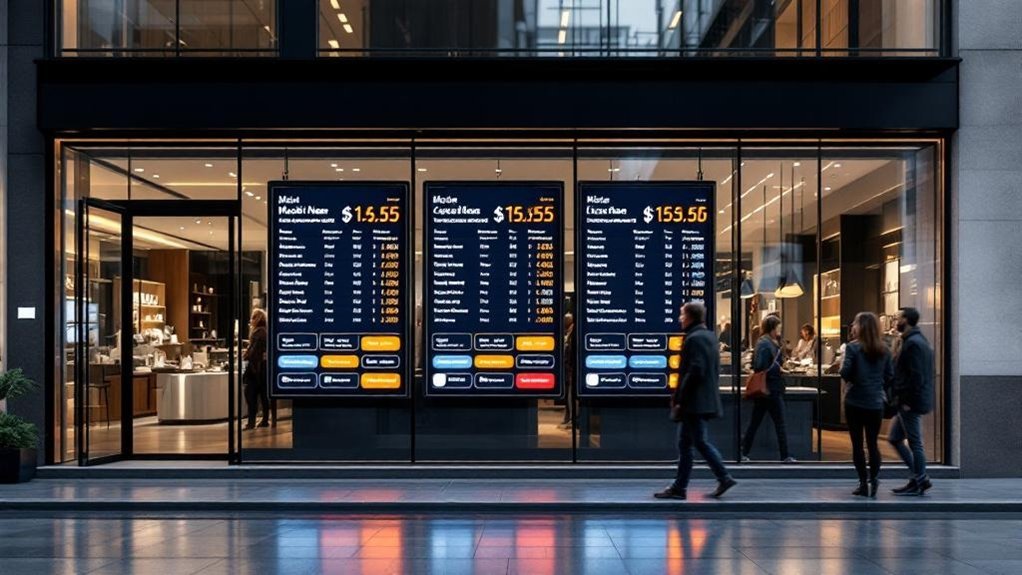
When pricing is consistent across every digital touchpoint, you’ll see measurable gains in both sales and reputation: customers who trust the accuracy of listings are 56% more likely to value convenience and personalization over chasing lower prices, and consistent boards reduce deal abandonment driven by repeated information requests by roughly 75%. You can quantify ROI by tracking reduced abandonment rates, shorter sales cycles, and increased conversion from digital leads. Combine reputation metrics — NPS, review sentiment, and referral volume — with revenue measures to attribute sales growth to consistency efforts. Regular pricing audits protect margins and trade-in values while sustaining customer loyalty; tie audit cadence to competitive moves and inventory shifts. Present these metrics monthly to justify platform investments and guide pricing governance.
Frequently Asked Questions
How to Compare Car Prices at Different Dealerships?
Use aggregation sites and dealer listings to perform price transparency checks and competitive analysis: standardize make/model/trim, include taxes/fees and trade-in, filter by location, compare financing offers, and document results for data-driven negotiation.
Why Is It Essential to Focus on Local SEO in Digital Marketing for Car Dealerships?
You’ve got to dominate local searches like your dealership’s life depends on it: local visibility drives foot traffic, increases trust, and boosts conversions. Focused search optimization lifts rankings, attracts serious buyers, and delivers measurable, data-driven results.
What Is a Red Flag in a Car Dealership Used For?
A red flag in a dealership warns you of potential vehicle issues or irregularities; it helps protect you and signals concerns that can undermine dealership integrity, so you’ll prioritize inspections, history reports, and data-driven negotiation.
Why Is It Important to Compare Prices From Different Dealers When Buying a New Car?
You should compare prices to get price transparency and boost consumer confidence, since data shows shoppers who compare find better deals, avoid inconsistent offers, and save time by targeting dealers with clear, competitive, and trustworthy pricing.
Conclusion
If your online price board and the showroom whisper different numbers, you might as well be handing leads to your competitors on a silver platter. Consistent, unified pricing stops leakages, keeps prospects engaged, and turns curiosity into measurable sales — not just promises. Treat data consistency like your most aggressive salesperson: it scales, converts, and protects reputation. Invest in it, measure it, and watch small fixes produce outsized returns.