

You should show OEM value by clearly labeling genuine parts, fit-specs, and warranty next to MSRP so buyers see compatibility and long‑term cost at a glance. Use concise tags (OEM/Aftermarket), short tooltips for material and test standards, and a visible warranty summary with coverage and claims steps. Include provenance data and verified price sources to build trust. Place OEM pricing near part entries and filters so customers can choose confidently — more implementation details follow.
Key Takeaways
- Clearly label items as “OEM” or “Aftermarket” with bold icons so shoppers instantly recognize authenticity and warranty differences.
- Show side-by-side specs (material, fit tolerances, testing standards) to demonstrate measurable OEM performance advantages.
- Display OEM warranty duration and key coverage points near price to link cost with protection and claims process.
- Include provenance info (manufacturer, serial/batch, timestamp) to reinforce traceability and build trust.
- Place OEM price next to MSRP and an estimated total cost-of-ownership line to highlight long-term value over initial savings.
What OEM Value Means on a Dealership Price Board

When you see “OEM value” on a dealership price board, it means the vehicle uses parts made by the original equipment manufacturer, so fit, function, and material specs match the factory standards. You’ll know OEM part benefits include guaranteed compatibility, adherence to tight quality controls, and warranty coverage that preserves performance expectations. That reliability often supports higher resale value, so pricing reflects both component cost and market perception. As a buyer, Consumer awareness matters: you’ll weigh long-term reliability and retained value against the typically higher upfront cost versus aftermarket alternatives. Read the board as a technical indicator of vehicle integrity; OEM value signals the manufacturer’s specifications were maintained, which reduces risk of premature wear and helps you make a fact-based purchase decision.
How MSRP and OEM Value Are Calculated
Although it looks straightforward on a price board, MSRP and OEM value are calculated from different inputs: MSRP blends production costs, standard features, optional packages and targeted profit margins based on market research, while OEM value is tied to the presence and specification of genuine manufacturer parts that guarantee fit, function and warranty compliance. You’ll read MSRP calculations as the vehicle’s base price plus options and dealer adjustments reflecting brand positioning. OEM value is assessed by checking OEM specifications, part authenticity, and how those parts affect reliability and warranty scopes. Use the table to compare inputs quickly:
| MSRP calculations | OEM specifications |
|---|---|
| Production costs | Part authenticity |
| Market research | Fit & function |
| Optional packages | Warranty compliance |
| Targeted margins | Long-term reliability |
Visual Design Best Practices for Showing OEM Value
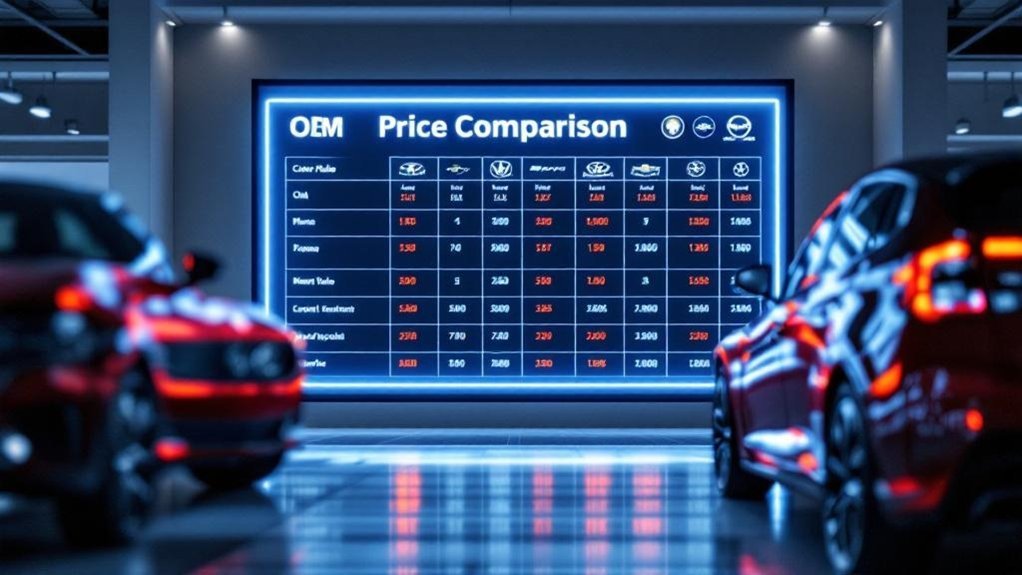
1 clear visual hierarchy makes it easy for customers to spot OEM components and understand their value at a glance. You should use bold, concise labels and consistent icon design to distinguish OEM parts from aftermarket options, pairing color coding with icons for immediate recognition. Place OEM labels and price comparisons near each part entry so visual hierarchy guides the eye from name to price to benefit. Add brief tooltips or microcopy that explain compatibility, warranty, and reliability without cluttering the layout. Include compact charts or sparkline graphs to show comparative reliability and performance metrics, reinforcing long-term value. Guarantee contrast, spacing, and scalable icons so the board remains readable across screens and supports quick, confident purchasing decisions.
Communicating Quality and Warranty Through OEM Labels
Trust signals matter: clear OEM labels should tell you at a glance that parts come from the original manufacturer, fit precisely, and meet the vehicle’s safety and performance specs. You’ll want the board to highlight OEM Labeling Benefits: direct manufacturer origin, engineered compatibility, and documented quality checks. Display concise warranty icons and brief text noting manufacturer warranty length and coverage so users immediately see protection terms. Emphasize that OEM parts preserve vehicle warranty eligibility and are tested to original specifications, reinforcing Consumer Trust. Use consistent label placement, machine-readable codes linking to warranty details, and short verification copy to reduce doubt. That technical clarity helps you convert comparison browsing into confident purchase decisions.
Comparing OEM Value to Aftermarket and Genuine Parts

When you compare OEM to aftermarket parts, focus on fit, materials, and documented performance—OEM parts match original specifications while aftermarket quality can vary. Consider total cost, not just sticker price: OEM often gives better value than branded genuine parts because it avoids premium logo and distribution markups. Also check warranty terms, since OEM warranties from the original manufacturer usually offer clearer coverage than the mixed warranties you’ll find with many aftermarket options.
OEM Vs Aftermarket Quality
Anyone weighing OEM against aftermarket parts wants clarity on fit, performance, and long-term value, so start by knowing OEM components are engineered to the manufacturer’s exact specifications for precise fit and predictable performance, usually backed by the original maker’s warranty; aftermarket options can save money but vary widely in quality and compatibility, while “genuine” branded parts may match OEM performance yet carry a premium for branding rather than added engineering. You’ll highlight OEM advantages: engineered tolerances, consistent materials, and predictable integration with vehicle systems, reducing diagnostic time and repeat repairs. You’ll also call out Aftermarket risks: variable manufacturing standards, unclear material specs, and fitment deviation that can affect system performance. Position OEM as the reliable baseline for critical systems; aftermarkets as cost-variable alternatives.
Cost and Warranty Differences
One clear tradeoff you’ll face is upfront cost versus long-term protection: OEM parts typically cost more because they meet original specs and are backed by consistent warranty coverage, while aftermarket pieces vary widely in price and warranty terms, creating more risk for future failures or added labor. You’ll use cost justification to explain why higher OEM pricing can reduce total cost of ownership through fit, function, and predictable warranty implications.
| Item | Impact |
|---|---|
| Price | OEM higher, aftermarket lower |
| Fit | OEM exact, aftermarket variable |
| Quality | OEM consistent, aftermarket mixed |
| Warranty | OEM standardized, aftermarket varied |
| Risk | OEM lower, aftermarket higher |
Frame choices by lifecycle cost and warranty clarity so customers decide confidently.
Using Filters and Comparison Tools to Highlight OEM Features
Filters and comparison tools on a digital price board let you quickly pinpoint vehicles fitted with OEM components, so you can evaluate fit, manufacturer specifications, warranty coverage and long-term reliability at a glance. Use OEM filters to isolate listings with factory parts and eliminate ambiguity about compatibility. Comparison tools should display side-by-side specs: part origin, conformity to manufacturer tolerances, and warranty length and exclusions. Add visual indicators — badges or icons — that flag OEM items, and sortable columns for warranty term, customer ratings, and repair-history impact. Integrate aggregated customer reviews for specific OEM parts so you can gauge real-world satisfaction. These features let you make technically informed, warranty-conscious choices fast, focusing on reliability and total ownership value.
Language and Messaging That Build Trust With Buyers

You should label OEM parts clearly versus aftermarket options so buyers immediately see provenance and original-engineering benefits. State warranty terms up front to answer reliability questions and reduce purchase friction. Use standardized icons and concise benefit lines (performance, durability, spec compliance) plus ratings to reinforce trust.
Clear OEM Versus Aftermarket
Trust starts with clarity: label OEM and aftermarket parts plainly on your price board so buyers immediately see that OEM components are made by the vehicle’s manufacturer to exact specs, backed by manufacturer warranties, and often required to preserve the vehicle’s warranty. You’ll communicate OEM advantages — precise fit, stricter quality control, consistent performance and manufacturer-backed assurance — versus aftermarket risks like variable quality and compatibility issues. Present side-by-side technical bullets: material spec, fit tolerance, testing standards, and warranty status. Use concise tags (OEM / Aftermarket), icons, and short tooltips to reduce confusion and build credibility. By showing measurable differences, you help buyers make informed choices fast, reinforcing trust and protecting perceived vehicle value.
Warranty and Provenance
After labeling OEM vs aftermarket on your price board, make warranty and provenance just as visible—buyers want to know who stands behind a part and where it came from. Show warranty significance clearly: length, coverage, and claim process so customers see manufacturer-backed protection against defects and premature failure. Display provenance importance with traceable serials, batch data, and test certifications proving parts meet original specs. You’ll reduce doubt and increase perceived value by linking coverage to compatibility and performance. Use concise labels and tooltips that explain rigorous OEM quality checks and documented supply chain origin. Below is a quick reference you can place alongside listings to reinforce trust and simplify buyer decisions.
| Warranty | Provenance |
|---|---|
| Duration | Serial trace |
| Coverage | Batch data |
| Claims | Test certs |
| Exclusions | Supplier ID |
Data Sources and Verification for Accurate OEM Pricing
When assembling OEM prices for your dealership’s digital comparison board, start with manufacturer websites and trusted industry databases as primary sources, then cross-reference parts retailers, suppliers, and market reports to verify accuracy and reflect current demand; incorporate real-time OEM feeds for updates and promotions to keep listings transparent and competitive. You’ll want to document sources, timestamp updates, and apply industry standards to maintain data accuracy and auditability. Automate feeds where possible and flag discrepancies for manual review to prevent pricing errors. Use validation rules that reject outlier quotes and prefer supplier consensus. Train staff on verification workflows so consumers see reliable OEM pricing tied to provenance and warranty terms.
- Manufacturer SRPs and OEM feeds
- Trusted industry databases
- Parts retailers and distributor quotes
- Market reports and demand signals
Assessing ROI: When to Prioritize OEM Value in Promotions

Now that you’ve got verified OEM pricing flowing into your comparison board, you should weigh promotion choices against measurable returns: prioritize OEM-focused offers when warranty protection, exact-fit performance, and documented longevity will reduce service costs, lower return rates, and boost resale value for your customers. Use ROI thresholds: run OEM advantages campaigns when predicted reduction in service claims and parts returns outweigh promotional spend within 12–24 months. Highlight warranty compliance to prevent voids and quantify long-term cost savings from fewer repairs and replacements. Surface testimonials and resale-value data on the board to justify choice. Prioritize OEM messaging for high-mileage, certified-preowned, or warranty-period vehicles to maximize customer loyalty and lower total cost of ownership, tracking outcomes against baseline aftermarket promotions.
Frequently Asked Questions
What Is the Meaning of Original Equipment Manufacturer?
An original equipment manufacturer (OEM) makes vehicle parts used by the carmaker; you’ll see OEM significance in compatibility and warranty compliance, and OEM advantages include engineered fit, tested quality, and consistent performance that preserves reliability and resale value.
Is OEM Considered Original?
Absolutely original: OEM terminology confirms OEM parts are original, matching manufacturer specs. You’ll get OEM benefits — precise fit, proven performance, warranty preservation — so you can trust technical compatibility and consistent quality for your vehicle.
What Is Original Equipment Manufacturer OEM Coverage?
OEM coverage is the manufacturer’s warranty guaranteeing OEM parts used in repairs meet original specs and performance. You’ll get OEM warranties protecting against defects, preserving vehicle integrity, and maintaining compliance with original warranty terms.
What Is OEM in Automotive Industry?
You probably think OEM’s just fancy labels, but it’s the maker of original parts you’ll trust: OEM standards guarantee exact fit and durability, and OEM advantages include warranty compliance, consistent performance, and reduced repair risk for your vehicle.
Conclusion
You’ll want to highlight OEM value clearly so buyers can compare apples to apples: show MSRP, explain OEM inclusions (warranty, specs), and flag certified parts with concise icons and tooltips. Use accurate data feeds and transparent calculations, so customers trust the board like a well-tuned engine. Prioritize OEM messaging when durability, warranty, or resale matter most, and offer filters that let shoppers surface OEM advantages instantly.