
You can modernize your fixed ops by installing real-time digital signs in high-dwell spots like arrival lanes, check-in counters, and lounges to cut perceived wait times and boost transparency. Use durable, high-res hardware and CMS that integrates with your DMS and CRM for live wait estimates, bay status, and targeted upsell promos. Track KPIs—show rates, RO, parts sell-through—and train staff to own content and uptime. Keep going to uncover placement, content and measurement tactics.
Key Takeaways
- Install high-resolution, weather-resistant screens at arrival lanes, check-in counters, and waiting areas for clear visibility and durability.
- Integrate digital signs with dealership systems to display real-time wait times, bay availability, and appointment status.
- Use dynamic content—countdown promotions, service tips, and featured inventory—to engage customers and drive incremental sales.
- Choose CMS software supporting remote scheduling, system integrations, analytics, and easy content updates by staff.
- Train staff on content workflows, uptime protocols, and KPI monitoring to ensure ownership and measurable performance improvements.
Key Benefits of Service Drive Digital Signs for Fixed Ops
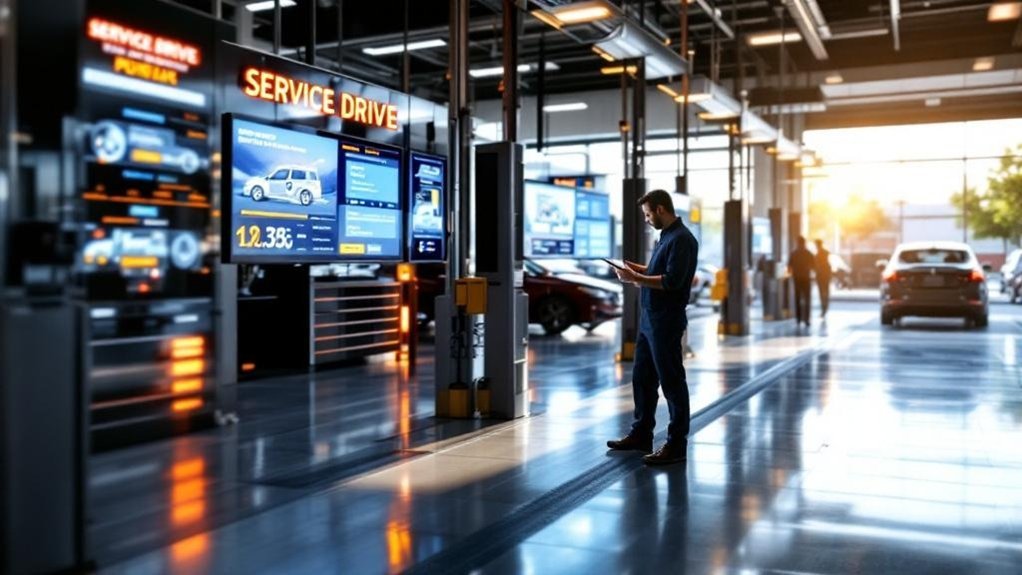
When you place digital signs in the service drive, they do more than look modern—they deliver measurable value by cutting perceived wait times with real-time updates, boosting customer satisfaction and repeat visits (91% of customers want a blend of digital tools and staff support), and driving transparency through clear pricing and promotion displays; that combination reduces stress, increases service uptake, and strengthens brand visibility while improving operational efficiency. You’ll see improved customer engagement as dynamic content communicates wait estimates, pricing, and targeted maintenance promotions that prompt informed decisions. Digital signage streamlines staff conversations, reduces inquiry volume, and highlights upsell opportunities with measurable conversion rates. Adopt a data-driven content strategy to optimize messaging cadence, A/B test promotions, and track ROI through engagement and sales metrics.
How Digital Signage Improves Customer Experience and Reduces Perceived Wait Times
Moving from operational benefits to the customer perspective, digital signage in the service drive directly improves experience by cutting perceived wait times through real-time updates and engaging content. You’ll reduce uncertainty by displaying live wait time estimates and service-status alerts, which studies link to higher satisfaction. Dynamic videos and animations keep visitors occupied, increasing customer engagement and lowering perceived boredom during actual wait time. Targeted promotions and clear service-package information help customers make informed decisions while they wait, boosting revenue per visit. Visual clarity and consistent messaging create a modern, welcoming atmosphere that encourages loyalty. Finally, you should gather feedback on signage effectiveness and iterate content to align with customer needs, refining engagement metrics and measured reductions in perceived wait time.
Strategic Placement: Where to Install Digital Signs in the Service Drive and Lounge
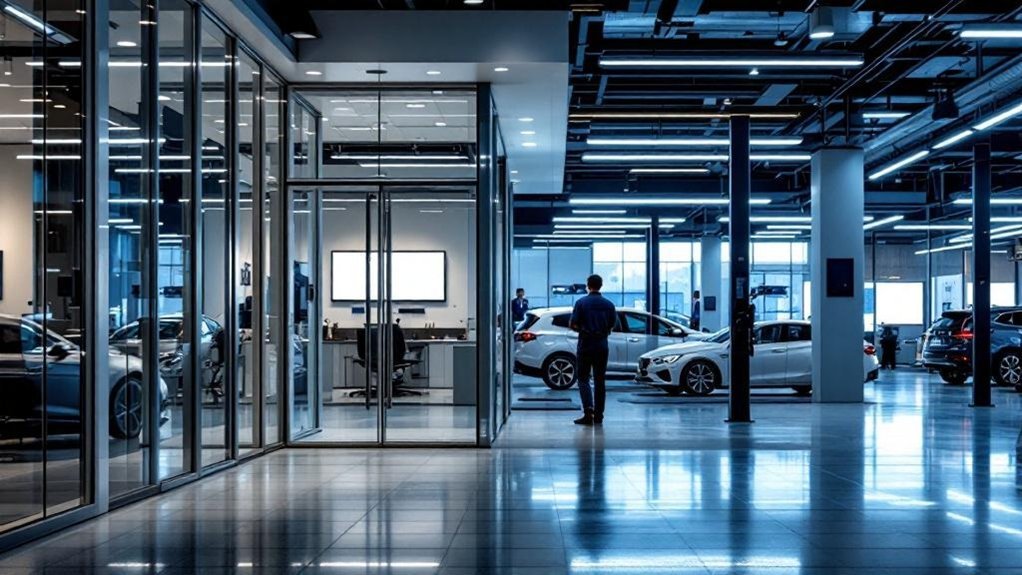
Visibility is everything: place digital signs where customers naturally pause—arrival lanes, check-in counters, and seating areas—to maximize impressions and action. Map customer flow to identify high-dwell nodes: arrival, valet/drop-off, check-in, and seating clusters. Prioritize sign visibility at eye level and along sightlines from queues to reduce missed messages. Use large lounge screens to present service status, maintenance tips, and targeted offers that extend dwell engagement metrics. At check-in, deploy concise boards showing wait times and options to lower perceived waits and call-to-action uptake. Integrate interactive kiosks at scheduling pinch points to capture future bookings and upsell services. Measure engagement by impressions, time-on-content, and conversion rates, then iterate placements to optimize ROI and operational efficiency.
Choosing the Right Hardware and Software for Dealership Environments
Because clear visuals and reliable updates directly influence customer perception and conversion, you should prioritize high-resolution, durable hardware paired with content management software that supports real-time updates and integrations with your dealership systems; this combo guarantees accurate wait times, targeted promotions, and measurable engagement while optimizing total cost of ownership and uptime. Choose hardware specifications that match placement: bright, weather-resistant kiosks or displays for service drive; high-contrast indoor panels for lounges. Assess software functionality for easy scheduling, remote publishing, API integrations with DMS/CRM, and analytics. Measure ROI by uptime, engagement rates, and service throughput. Factor in vendor support, warranty, and total lifecycle cost so your tech investment boosts operational efficiency and customer satisfaction without hidden expenses.
Creating Compelling Content: Promotions, Service Updates, and Vehicle Highlights
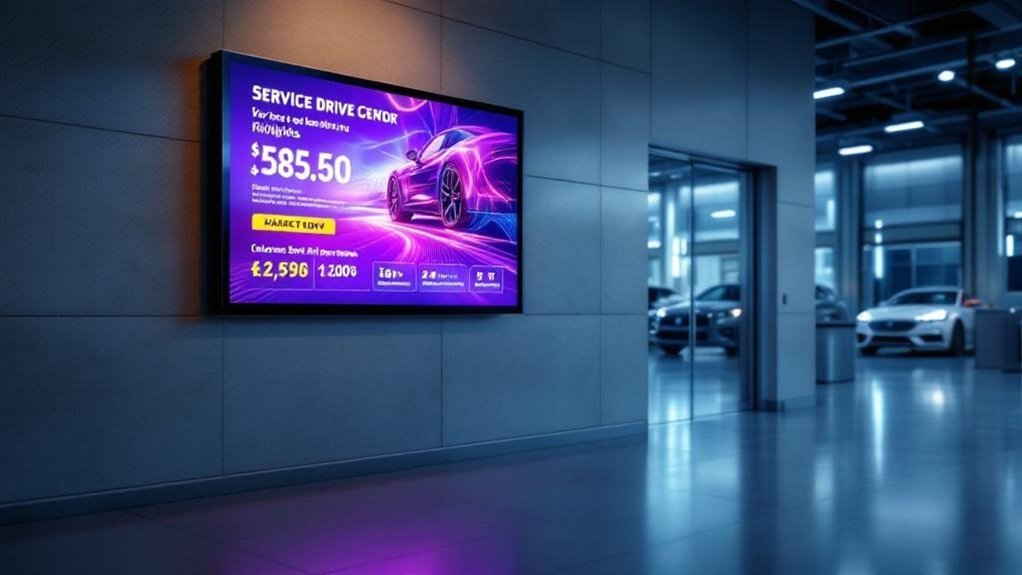
Use digital signs to push timely service announcements like current wait times and bay availability so customers get clear, actionable information the moment they arrive. Pair limited-time service promos with countdown visuals and A/B-tested calls-to-action to drive immediate bookings and measurable upticks in upsell conversion. Spotlight featured vehicles with short, data-backed clips of key benefits and local inventory availability to educate shoppers and shorten decision cycles.
Timely Service Announcements
Although customers expect fast, transparent service, digital signs let you deliver timely announcements that cut perceived wait times and drive action — show current bay availability, real-time wait estimates, and targeted promotions for maintenance packages or seasonal discounts. Use service alerts and customer notifications to push concise updates: when a vehicle moves to inspection, when parts arrive, or when a bay frees up. Pair those alerts with data-driven content — wait-time averages, conversion lifts from highlighted service benefits, and testimonial snippets — so customers see relevance and trust. Include interactive touchpoints for personalized recommendations based on vehicle make and mileage, helping customers self-educate and opt into additional services. Measure engagement and iterate content to maximize appointment conversion and satisfaction.
Limited-Time Service Promos
How can you turn idle wait time into immediate bookings? Use digital signs to display limited-time service promos that create measurable promotion urgency — real-time updates push customers to act before offers expire. Pair high-quality visuals with concise messaging and a clear CTA; you’ll see higher engagement and lift in same-day bookings. Schedule seasonal highlights for peak maintenance windows (winter checks, summer A/C service) to capture demand when it’s highest. Rotate dynamic content frequently and track clicks or QR scans to quantify which promos convert best. Tie offers to inventory and service capacity to avoid overbooking. In short, deploy time-bound, data-informed promos on your signs to convert waiting customers into confirmed appointments and to improve service drive throughput.
Featured Vehicle Spotlights
A featured vehicle spotlight should grab attention and drive action by combining high-quality visuals, concise specs, and a clear offer tied to real-time availability — when you show a car’s standout features alongside financing or service incentives, you increase the likelihood of an on-site inquiry or appointment. Use data to pick models that match service-visit demographics, then display vehicle features, mileage, and certified-preowned status succinctly. Pair visuals with promotional highlights like discounted maintenance bundles or limited-term APR to convert waiting customers. Update availability in real time so prospects don’t see sold inventory. Add interactive touchpoints for virtual walkarounds and financing calculators to shorten decision cycles. Measure engagement and appointment lift to refine content cadence and maximize ROI.
Integrating Digital Signs With CRM, Service Lane, and Performance Metrics

When you connect digital signs to your CRM, service scheduling, and performance dashboards, they stop being passive displays and become live operational tools that push real-time customer history, targeted offers, wait times, and technician availability to the service lane. You’ll use customer interaction data to drive service personalization—showing relevant promotions, past-service reminders, and VIP messaging that increase engagement. Integrating with scheduling systems gives customers live status updates, reducing perceived wait and smoothing throughput. Feeding performance metrics to signs empowers advisors to set expectations and redeploy resources when technician availability or wait-time thresholds shift. Combine signage analytics with CRM KPIs to test offers, quantify lift, and refine targeting. This creates a tight feedback loop where data guides service decisions and boosts operational efficiency.
Measuring Impact: KPIs and Methods to Track Digital Sign Effectiveness
Although digital signs are visible to every customer, their true value shows up in measurable KPIs—appointment completion and show rates, customer retention, average repair order, and parts sell-through—because these metrics tell you whether signage actually changes behavior and revenue. You should pair KPI analysis with data visualization dashboards to spot trends, correlate campaigns with upsells, and isolate what moves the needle. Combine quantitative metrics with targeted customer feedback to refine content.
- Monitor appointment show rates and appointment completion to gauge reminder effectiveness.
- Track average repair order and parts sell-through to measure upsell impact and inventory promotion.
- Use retention rates and survey responses for lifetime value insights and message resonance.
Set clear baselines, run controlled tests, and iterate based on analytics.
Best Practices for Deployment, Maintenance, and Staff Adoption

Start by mapping high-traffic touchpoints and place signs where dwell time and visibility are highest so you capture the most impressions and influence customer decisions. Train technicians and service advisors on content workflows, simple editing tools, and performance metrics so updates stay accurate and staff feel accountable for outcomes. Combine this placement and ownership approach with routine hardware/software checks to protect uptime and guarantee the signs continuously drive engagement and conversions.
Strategic Placement Planning
1 clear rule guides strategic placement planning: put digital signs where customers naturally pause and staff workflows intersect — service drives, reception counters, and waiting rooms — so messages reach the right audience at the right time. You’ll optimize customer flow and signage visibility by prioritizing high-traffic pause points, sizing screens for line-of-sight, and allocating content by location (promotions at reception, detailed offers in waiting areas).
- Map peak movement patterns and install screens where dwell time is highest.
- Use large-format displays for product/service detail; smaller screens for transactional updates.
- Schedule automated content refresh and routine tech checks tied to performance metrics.
You’ll monitor feedback and engagement data to refine placements, improving satisfaction and operational efficiency without disrupting service workflows.
Staff Training & Ownership
Train your team to own the digital signage ecosystem so it becomes an operational asset, not an afterthought. You’ll use data-driven training programs to boost staff empowerment: with 91% of customers favoring blended digital-plus-staff interactions, structured modules on content creation, troubleshooting, and real-time inventory updates cut errors and speed service. Establish clear protocols, scheduled maintenance, and KPIs (uptime, content freshness, engagement) so staff see measurable impact. Foster ownership with leaderboards and recognition to raise motivation and adoption. Below is a quick operational checklist:
| Role | Training Focus | KPI |
|---|---|---|
| Technician | Troubleshooting basics | Uptime % |
| Service Advisor | Content updates | Accuracy % |
| Manager | Analytics review | Engagement |
| Marketing | Creative templates | Refresh rate |
| Trainer | Onboarding modules | Adoption % |
Frequently Asked Questions
What Is the Four Square Trick at a Car Dealership?
The four square trick is a sales strategy where you’ll compare vehicle price, trade value, down payment and monthly payment in a four-quadrant layout, letting you adjust variables strategically to evaluate financing trade-offs and negotiate from informed data.
What Is the Highest Paid Position at a Car Dealership?
The highest paid position is the General Manager; it’s strategic, revenue-focused, and leadership-driven. You’ll see highest paying roles in dealership management, with Sales Managers, Service Managers, and Finance Managers trailing based on performance and location.
What Are Fixed Ops in a Car Dealership?
Fixed ops are your dealership’s service, parts, and body shop operations that drive profitability; they rely on the service drive for customer flow, delivering recurring revenue, loyalty, and efficient service with lower marketing spend and measurable ROI.
What Are the Four P’s of Car Sales?
The four P’s are Product, Price, Place, and Promotion. You’ll use sales strategies and customer engagement tactics to optimize offerings, pricing, location, and promotional channels, driving measurable conversions and higher retention through data-driven decisions.
Conclusion
You’re ready to quietly upgrade your fixed ops with service drive digital signs that do the heavy lifting. By gently nudging wait perceptions, boosting upsell visibility, and syncing with your CRM and metrics, you’ll see smarter throughput and healthier revenue per repair order. Start with strategic placement, reliable hardware, and crisp, data-driven content; monitor KPIs and iterate. With a light touch and disciplined tracking, you’ll modernize operations without disrupting the customer calm.