

Give customers and staff real-time, DMS-synced service status boards so everyone sees technician assignments, job milestones, and expected completion at a glance. That transparency cuts perceived wait times, lowers status calls, and helps you rebalance workloads to reduce idle time. You’ll get cleaner data, fewer manual errors, and measurable rises in CSI from faster turnaround and clearer communication. Track trends, tie updates to ratings, and use the insights to keep improving — more tactical steps follow.
Key Takeaways
- Display real-time job progress and technician assignments so customers and staff always know current status.
- Auto-sync the status board with your DMS to eliminate manual updates and reduce information delays.
- Use boards to balance technician workloads, reassign tasks quickly, and cut idle time.
- Provide continuous customer updates via screens or mobile messages to lower perceived wait times.
- Track board logs and CSI feedback to identify bottlenecks and make targeted process improvements.
Key Benefits of Service Status Boards for Dealerships

Because real-time visibility cuts uncertainty, service status boards let your team see progress, technician assignments, and estimated completion times instantly — so workloads get balanced, customer wait times drop, and CSI scores rise. You’ll get measurable gains: fewer status calls, faster throughput, and higher staff productivity because everyone knows priorities and job locations. Transparent, data-driven updates boost customer engagement by keeping owners informed and reducing anxiety about timelines, which directly lifts satisfaction metrics. Universal access guarantees your staff can act from the shop floor or remotely, improving operational efficiency and minimizing delays. Continuous updates foster trust and reduce repeat inquiries, letting you reallocate personnel to value-added tasks while strengthening long-term relationships and CSI performance.
How Real-Time Visibility Reduces Perceived Wait Times
Now that you’ve seen the operational gains service status boards deliver, consider how real-time visibility changes customer perception of wait time: by giving instant, ongoing updates about progress, technician assignments, and estimated completion, customers feel informed and in control — which lowers anxiety and makes waits seem shorter. When you provide real time updates on service milestones and technician allocation, uncertainty drops and perceived wait time shrinks. Data show continuous, transparent communication reduces customer inquiries and increases satisfaction. Accessible status boards let staff balance workloads faster, cutting actual turnaround and preventing bottlenecks that lengthen perceived waits. That steady flow of information boosts customer engagement and trust, fostering repeat business and higher CSI without adding extra staffing or process complexity.
Integrating Service Boards With Your DMS for Seamless Updates
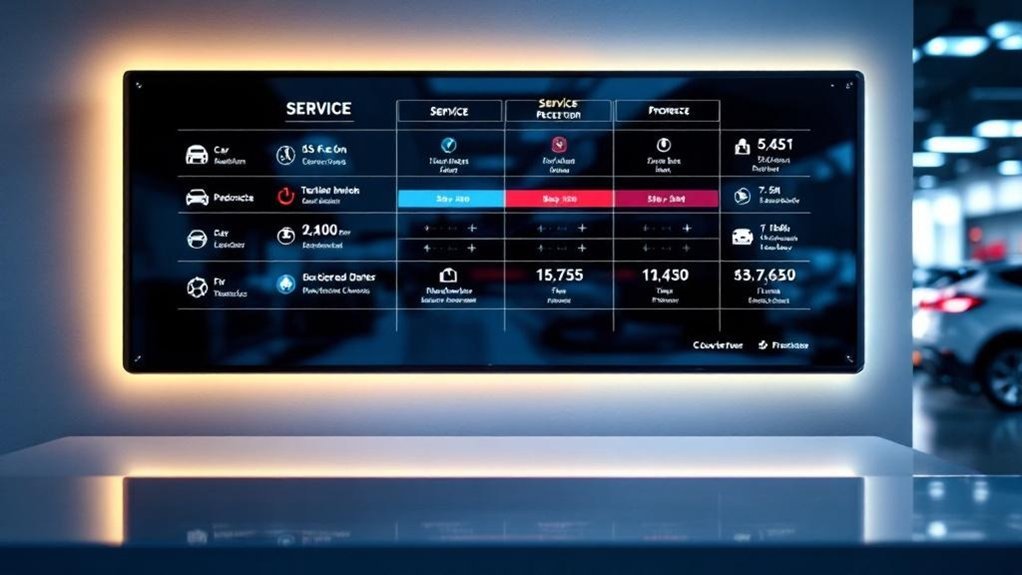
When you link your service status board to the dealership management system (DMS), updates flow automatically so technician assignments, ETA changes, and job milestones are synchronized in real time—cutting manual entry errors and ensuring everyone from advisors to customers sees the same, current information. You’ll get reliable data synchronization that streamlines workflows: technician tracking updates propagate instantly, estimated completion times adjust as jobs progress, and dashboard metrics reflect true shop capacity. That real-time accuracy reduces perceived and actual wait times, helps you reassign work to avoid bottlenecks, and improves throughput. Customers receive transparent status notifications, lowering anxiety and boosting trust. Measurably, integrated boards shorten turnaround, reduce errors, and raise CSI by aligning staff actions with customer expectations.
Using Service Boards to Improve Communication and Staff Workflow
Although service boards are often thought of as display tools, they’re actually operational hubs that give you real-time technician assignments, ETAs, and job milestones so staff can make faster, data-driven decisions. You’ll use DMS-connected boards to synchronize on-site and remote teams, improving staff collaboration and reducing response lag. With instant visibility into workloads and bottlenecks, supervisors reassign tasks quickly, cutting idle time and shortening customer wait cycles. Transparent updates increase customer engagement by keeping drivers informed, which lowers inquiry volume and boosts perceived reliability. Continuous monitoring highlights recurring delays so you can optimize routing and staffing. Implementing clear board protocols — who updates what and when — guarantees consistency, measurable throughput gains, and a smoother service experience for customers.
Measuring CSI Impact and Continuous Improvement

Having real-time visibility and clear board protocols sets you up to measure how service status boards move the needle on CSI, so the next step is quantifying impact and continuously improving. Track key CSI Metrics—average wait time, time-to-completion, and repeat inquiries—directly from board logs to prove value and spot bottlenecks. Use Continuous Feedback loops: solicit quick post-service ratings and tie them to status updates that preceded the score. Analyze trends weekly to identify process gaps and test targeted fixes (update cadence, staff assignments, communication templates). Present concise dashboards to technicians and managers so everyone knows what to improve. Repeat measurements after changes; if CSI rises, scale the change. If not, iterate until metrics show consistent customer satisfaction gains.
Frequently Asked Questions
How to Increase CSI Scores?
Boost CSI by collecting customer feedback regularly, measuring service efficiency, acting on pain points, and tracking metrics like wait times and resolution rates; you’ll prioritize transparency, staff training, and process tweaks that raise satisfaction and loyalty.
How to Increase Traffic to Your Car Dealership?
You boost traffic by using digital marketing and targeted ads, tracking conversions, offering promotions, partnering locally, hosting events, optimizing SEO, and improving customer engagement; measure ROI and CSI gains to refine tactics and prioritize high-impact channels.
What Is CSI in a Car Dealership?
CSI in a car dealership is the customer satisfaction metric (0–100) measuring service experience, communication, and likelihood to recommend; it’s a key indicator of dealership performance, directly impacting retention, referrals, and manufacturer incentives.
What Is the Turnover Rate for Automotive Service Advisors?
You’re looking at roughly a 30–40% turnover rate for automotive service advisors, reflecting turnover challenges; improving advisor retention with training, support and career pathways directly boosts customer satisfaction and reduces service disruptions.
Conclusion
You’ll see measurable gains when you use service status boards: reduced perceived wait times, smoother tech workflows, and higher CSI scores — often by double-digit percentages when implemented right. Integrate boards with your DMS, push real-time updates, and train staff to use them as the single source of truth. Customers feel informed and valued, complaints drop, and throughput rises. It’s a game-changer for efficiency and customer satisfaction — practically magic for your dealership.