
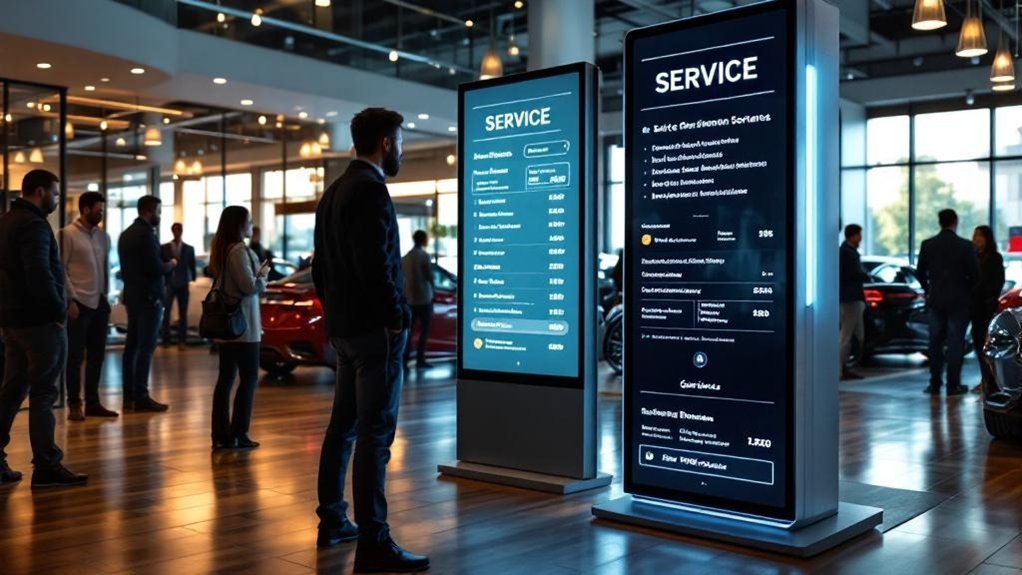
Use a clear digital service menu to show line-item pricing, package tiers, and loyalty perks so customers won’t face surprises. Keep options grouped and benefits highlighted to make comparisons easy. Sync menus with your CRM and POS for consistent quotes, invoices, and online listings. Update pricing regularly based on market data and feedback, and track redemptions to refine offers. This builds transparency, reduces disputes, and increases repeat visits — continue and you’ll find practical steps to implement it.
Key Takeaways
- Display clear, itemized pricing for services and parts to eliminate surprises and build credibility.
- Group services into tiered packages with benefits to simplify choices and demonstrate value.
- Integrate visible loyalty rewards and discounts directly in the menu to encourage repeat business.
- Keep menus synchronized with CRM/POS and update prices regularly to ensure consistency across channels.
- Use user-friendly layout and concise descriptions to make options transparent and easy to compare.
Key Takeaways for Dealerships and Customers
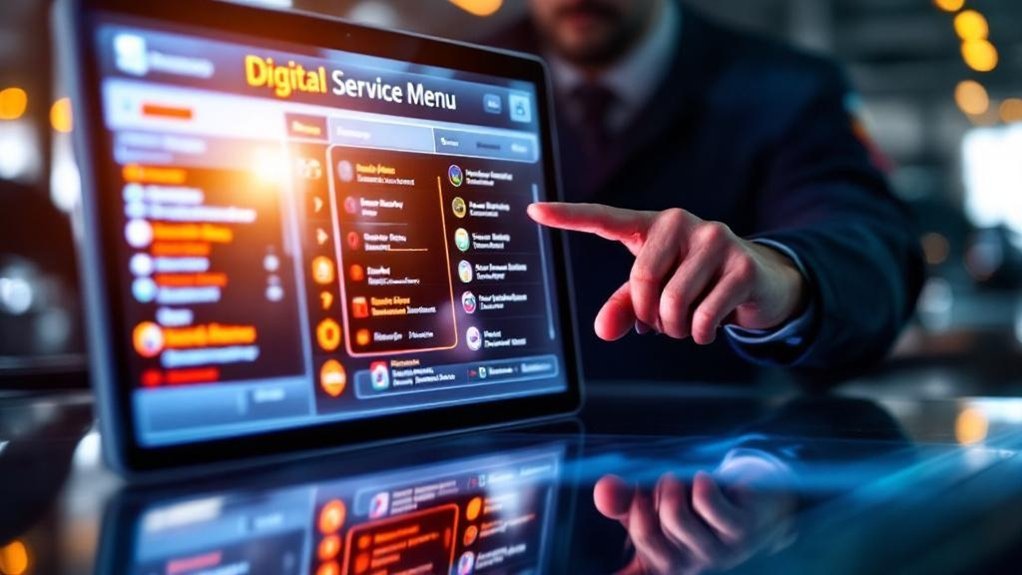
Because clear pricing builds trust, digital service menus give you transparent, consistent costs across platforms so customers know what to expect and why, which boosts loyalty and repeat visits. You’ll use organized service packages to let customers compare options and see bundled value, which simplifies decisions and improves customer experience. Integrate loyalty programs in the menu to drive repeat patronage — a measurable 20% lift — and reinforce satisfaction. Keep pricing strategies tied to regular updates so menus stay relevant and reflect service quality. Eliminating discrepancies across touchpoints reduces disputes and builds reliability. Overall, you’ll deliver a repeatable, customer-centered process that strengthens trust, supports informed choices, and aligns operational pricing with measurable loyalty gains.
How Transparent Pricing Builds Confidence
When customers can see exactly what they’re paying for, they’ll trust your shop more and make better decisions; digital service menus present clear line-item pricing and package options so people know costs up front and aren’t surprised at the counter. You’ll boost customer satisfaction by showing transparent costs across channels, which 96% of customers say strengthens loyalty. Clear breakdowns reduce disputes and misunderstandings about repairs, driving a documented 20% rise in repeat business. Consistent, visible pricing also makes customers 80% more likely to return, reinforcing perceptions of fairness. When you communicate costs effectively, confidence grows and customers choose recommended services more often—helping your dealership increase revenue by up to 30% while building long-term relationships.
Designing Service Menus That Improve Communication

Clear, well-structured service menus do more than list prices—they shape the way your customers understand options and make choices. Design a clean user interface that groups services, shows transparent pricing breakdowns, and highlights comparisons so customers can decide without staff help. Consistent pricing across menu, quotes, and invoices removes surprises and sets clear expectations. Organize service packages so the value of each option is obvious—features, benefits, and cost side-by-side—improving decision speed and reducing back-and-forth. Update the menu regularly to reflect current offerings and customer preferences, signaling responsiveness and quality. Every layout and label should prioritize the customer experience: reduce cognitive load, surface relevant info quickly, and build trust through clarity and consistency.
Loyalty Programs, Service Packages, and Retention Strategies
If you want customers to come back, integrate loyalty programs and service packages directly into your digital service menu so benefits are visible at every decision point; doing so can lift repeat business by about 20% and boost overall revenue up to 30%. You’ll present clear service offerings and transparent pricing that 96% of customers value, so they trust estimates and choose you again. Use visible loyalty incentives—discounts, priority scheduling, bundled maintenance—to increase average repair orders and signal appreciation. Offer tiered service packages with explicit benefits and renewal reminders so clients feel secure in maintenance choices. Track usage and redemption to refine packages, but keep menu presentation simple and focused on value to maximize retention and long-term relationships.
Implementing and Updating Your Digital Service Menu
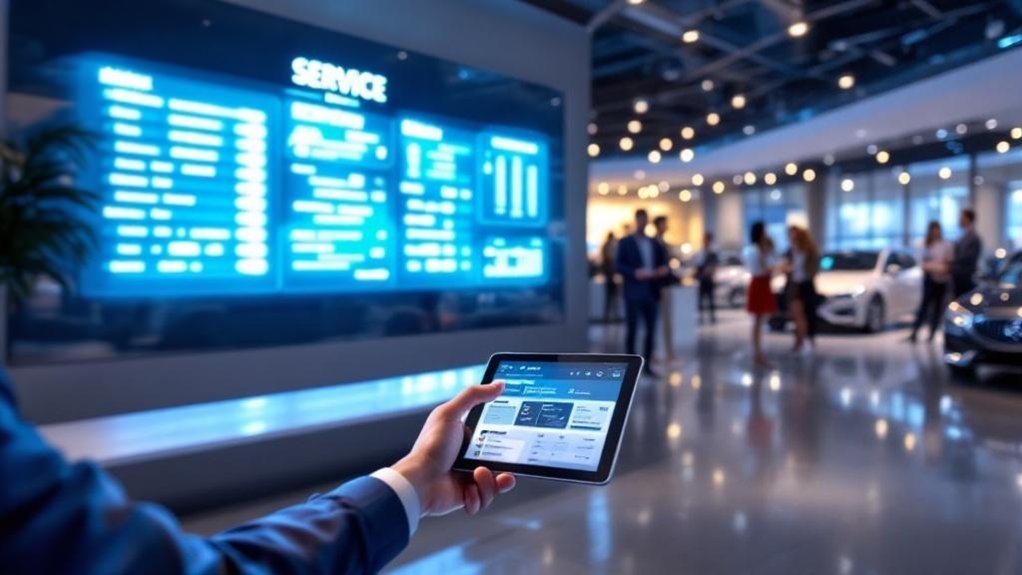
Because your digital service menu is the primary touchpoint for customers, you should make implementing and updating it a regular, data-driven process that keeps pricing, packages, and perks accurate and easy to understand. You’ll start with digital menu integration into your CRM and point-of-sale so changes propagate in real time and staff see the same offers customers do. Schedule routine reviews that use market data, service costs, and customer feedback to guide pricing strategy adjustments and package redesigns. Communicate changes clearly on the menu and via email or app notifications to preserve transparency. Track metrics — repeat business, conversion rate, revenue lift — to validate updates. Consistent, customer-focused maintenance builds trust, improves satisfaction, and can drive measurable gains in retention and revenue.
Frequently Asked Questions
What Is the Four Square Trick at a Car Dealership?
The four square trick’s a dealership tactics method where they juggle vehicle price, trade‑in, down payment and monthly payment to steer focus to monthly cost, often obscuring true price and hiding unfavorable fees or financing adjustments.
What Are the 3 C’s of Automotive Repair?
The 3 C’s are Clarity, Consistency, and Communication. You’ll use transparent pricing and clear service descriptions, maintain uniform policies, and prioritize customer communication to guarantee trust building, repeat business, and confident service decisions.
What Is a Red Flag in a Dealership?
A red flag in a dealership is any sign of dishonesty or opaque practices. You’ll spot red flag examples like hidden fees, inconsistent pricing, vague service breakdowns, aggressive sales tactics, or missing customer reviews that undermine dealership honesty.
How to Get More Customers in a Car Dealership?
You’ll attract more customers by using customer engagement strategies: optimize digital menus, offer organized packages, run referral programs with incentives, promote loyalty rewards, update offerings regularly, and prioritize transparent pricing to build confidence and repeat visits.
Conclusion
You’ll build trust by making pricing and services clear, easy to find, and regularly updated. Studies show 72% of customers are more likely to return after a transparent online experience, so a digital service menu isn’t optional — it’s a retention tool. Design concise menus, highlight package savings, and use loyalty perks to keep communication consistent. Keep data current, solicit feedback, and you’ll turn one-time visitors into repeat, satisfied customers.