
You can boost service-drive conversions by up to 30% using weather-aware digital signs that auto-trigger timely offers, wait-time updates, and safety alerts based on local conditions. Integrate current conditions, short-term forecasts, precipitation and wind data to surface relevant bundles and limited-time discounts. Automate scheduling with cloud-based rules tied to temperature and storms, use high-brightness, weatherproof displays at eye level, and track conversions to prove ROI — keep going to see implementation specifics and templates.
Key Takeaways
- Trigger weather-aware promotions automatically (e.g., wiper discounts during rain) using real-time temperature and precipitation data.
- Tie short-term forecasts to time-limited offers and countdowns to create urgency during specific weather windows.
- Use high-brightness, weatherproof displays placed at eye level in the service drive for visibility and durability.
- Track conversions with appointment bookings, foot traffic comparisons, and post-visit surveys to measure promotion impact.
- Employ AI and predictive weather analytics to personalize offers and schedule campaigns aligned with peak service demand.
Why Weather-Aware Signage Matters for Service Drives
Because weather directly affects vehicle needs, weather-aware digital signs let your service drive push the right offer at the right moment — for example, promoting winter tire installs during snowfall or A/C checks in heatwaves. You’ll use digital signage to present contextually relevant promotions and real-time service info, which studies show boosts response: 70% of consumers react more to timely, relevant offers. That increases customer engagement and shortens decision time, improving throughput and revenue per bay. You’ll also display wait times and specials dynamically, keeping patrons informed regardless of conditions. For a brand, this precision reinforces trust and positions your dealership as proactive and customer-centric, turning weather-driven needs into measurable service opportunities.
Types of Weather Data to Integrate With Displays
When you integrate the right weather feeds into your service-drive displays, you’ll turn raw meteorology into targeted, revenue-driving messages—start with current conditions (temperature, precipitation type/intensity, wind) and short-term forecasts to trigger offers like winter tire installs, A/C checks, or wiper replacements; add hourly updates and radar for real-time prompts and arrival-time advisories; and include local alerts (flood, severe-thunderstorm, heat advisory) so you can warn customers of disruptions and protect brand trust. Focus on discrete data layers: live temperature and temperature trends for day-parting promotions, precipitation patterns and intensity to trigger wiper or alignment offers, wind speed for towing/inspection advisories, and short-term forecast windows for same-day slots. Local alerts maintain transparency and reduce no-shows during severe events.
Designing Timely, Weather-Driven Promotions
You’ll design weather-triggered special offers that automatically display when conditions indicate need — for example, A/C checks during heat spikes or winterization packages as temps fall. Time-sensitive service bundles should show countdowns or limited windows to create urgency and drive immediate bookings. Use location-based timing so promotions align with local forecasts and peak shopping hours, maximizing relevance and service drive traffic.
Weather-Triggered Special Offers
If your dealership ties digital signs to live weather data, you can serve instantly relevant offers—think convertible discounts on sunny days or winter tire specials when temperatures drop—to boost engagement and foot traffic. You’ll use seasonal adjustments and targeted promotional strategies to align inventory and messaging with local conditions, increasing conversion. Research shows 73% of consumers favor context-relevant deals, so weather-triggered specials create measurable lift. Integrate real-time feeds to push limited-time pricing, service bookings, or maintenance tips (e.g., tire pressure reminders) that drive urgency and appointments. Keep creative concise, brand-consistent, and automated so offers update without manual input. Track redemption rates and foot traffic to refine triggers and maximize ROI on your digital-sign campaigns.
Time-Sensitive Service Bundles
A smart, time-sensitive service bundle turns weather signals into immediate offers—think A/C checks triggered by heat alerts or winter tire installs pushed at first snowfall—to drive urgency and lift service bookings. You’ll use local forecasts to create bundles that match immediate needs: wiper blade replacements before a rainy week, coolant inspections ahead of heat spikes. Digital signage makes dynamic adjustments in real time, updating promotions to reflect current conditions and inventory. That responsiveness boosts customer engagement and converts drive-by attention into appointments. Track performance metrics—click-through via QR codes, appointment rate lift, walk-ins attributed to specific messages—to optimize pricing and timing. Branded messaging should be concise and confidence-building, reinforcing value and improving overall satisfaction through proactive, weather-aware service offers.
Location-Based Promotion Timing
When local forecasts show a heat spike or incoming snow, you can automatically push weather-driven offers—like A/C checks or winter tire installs—to nearby customers via digital signs and geotargeted alerts, increasing relevance and urgency. You’ll use location relevance and promotion timing to match services to immediate needs, boosting trust and conversions. Weather-triggered messaging on digital signs adjusts in real time, driving a measurable 10–30% lift in service drive traffic by highlighting timely items: tire swaps, anti-freeze checks, A/C inspections. Your campaigns should tie neighborhood data to inventory and staffing so offers are fulfillable. Below is a quick reference:
| Trigger | Service |
|---|---|
| Heat spike | A/C check |
| Incoming snow | Winter tire install |
| Freeze warning | Anti-freeze check |
Scheduling and Automation for Real-Time Updates

Because weather patterns and peak service hours shift rapidly, dealerships need scheduling and automation that update digital signs in real time to keep messaging relevant and drive conversions. You’ll use automated updates and dynamic content to trigger weather-specific offers—winter tire installs during cold snaps or A/C checks in heatwaves—without manual edits. Cloud-based content management ties forecasts to campaign calendars so time-sensitive promotions surface during peak service-drive windows, increasing immediacy and uptake. Data shows real-time messaging raises engagement and foot traffic; you can schedule layered rotations that prioritize urgent offers and brand messages. Integrations let you set rules (temperature, precipitation, time-of-day) and measure conversions to refine cadence. This approach keeps your signage brand-consistent, timely, and optimized for sales.
Hardware and Placement Considerations for Service Drive Screens
Durability and visibility should drive your hardware choices for service-drive screens: pick commercial-grade displays rated over 50,000 hours in sizes from 32″ to 75″, with high-brightness, weatherproof models for outdoor installs so messages stay legible in direct sun and bad weather. You’ll choose screen technology that supports touch and rugged mounting; prioritize IP-rated enclosures and anti-glare coatings. For display positioning, mount at eye-level in high-traffic zones near service entrances and waiting areas to maximize impressions and interaction. Use touch-enabled units where workflow benefits scheduling or upsell flows.
| Feature | Spec | Benefit |
|---|---|---|
| Lifespan | >50,000 hrs | Lower TCO |
| Brightness | High nit | Sun legibility |
| Mount | Eye-level | Improved engagement |
| Touch | Optional | Interactive services |
Content Templates That Convert During Different Conditions
Weather-triggered templates help you convert by serving highly relevant, timely offers—think winter tire rotations or summer A/C checks—based on real-time forecasts and local conditions. You’ll use weather responsive content to auto-populate messages that match current temperature, precipitation, or alerts, prioritizing seasonal service promotions like winterizing packages or rain-ready inspections. Design templates with clear CTAs, urgency lines (“Limited-Time Offers for Rainy Days”), and localized timing to boost immediate action. Interactive templates let customers explore tailored specials on-screen, improving experience and driving service-drive visits during peak need windows. Schedule and trigger content to align with forecasts so your brand stays top-of-mind when demand spikes, keeping messaging consistent, measurable, and focused on conversion.
Measuring Impact: Metrics and Attribution Techniques
Now that you’re using weather-responsive templates to serve timely offers, you’ll need a rigorous way to quantify their impact. You’ll combine quantitative signals and qualitative insights to validate creative, timing, and placement decisions. Use conversion tracking to tie displayed promotions to booked service appointments and revenue uplift, and compare foot traffic before/after deployments to spot real shifts.
Measure impact with conversion tracking, foot-traffic comparisons, and customer feedback to validate weather-driven creative, timing, and placement.
- Track appointment conversion rates from sign-driven promotions and correlate with service-package sales.
- Compare foot-traffic counts pre/post implementation to measure visit frequency change.
- Collect customer feedback via short post-visit surveys to attribute influence and capture reasons for conversion.
- Analyze weather-to-promotion correlation, isolating conditions that maximize response for future targeting.
This approach keeps measurement brand-focused, repeatable, and tied to ROI.
Compliance, Safety, and Accessibility for Outdoor Displays
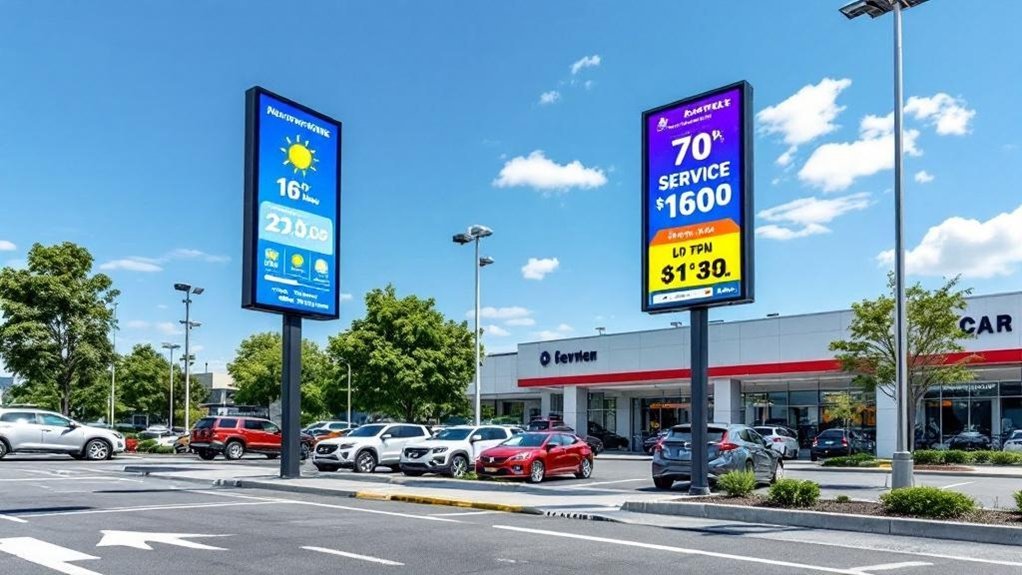
You’ll need weatherproof mounting standards that meet local codes and IP ratings to keep displays running through rain, snow, and temperature swings while protecting customers and your brand reputation. Specify reinforced mounts, tamper-resistant fasteners, and scheduled inspections to maintain structural and electrical safety. Also prioritize ADA-compliant visibility—high-brightness screens, proper mounting heights, and clear contrast—to guarantee readable, inclusive messaging for all visitors.
Weatherproof Mounting Standards
Because outdoor displays face rain, snow, UV exposure and temperature swings, you need mounting systems that meet strict weatherproofing and safety standards to keep signs visible and operational year-round. You’ll select mounting materials rated for corrosion resistance and UV stability, pair them with UL/CE‑compliant hardware, and apply installation techniques that secure electrical interfaces and prevent water ingress. Secure anchoring resists wind loads, reducing downtime and maintenance costs. Regular inspections and adherence to local building codes sustain longevity and liability protection.
- Choose corrosion‑resistant mounting materials with documented load ratings.
- Use UL/CE‑certified components and weatherproof electrical enclosures.
- Apply installation techniques that guarantee proper drainage and sealed joints.
- Schedule code‑compliant inspections to confirm structural integrity and safety.
ADA-Compliant Visibility Features
Having secured weatherproof mounts and code‑compliant anchoring, you should next confirm your outdoor displays meet ADA visibility requirements so every customer can read and use them. Design around measurable accessibility features: maintain contrast ratios of at least 4.5:1 for standard text, use high‑brightness panels to confirm legibility in direct sunlight, and add audio or tactile options where appropriate. Optimize display placement for height and angle to serve wheelchair users and avoid obstructing pathways per ADA guidelines. Specify lumen output, contrast, mounting height, and tilt in procurement specs so vendors deliver compliant hardware. Track compliance with periodic audits and customer feedback metrics. This confirms safety, accessibility, and a brand experience that’s inclusive and legally defensible.
Future Trends: AI, Predictive Weather, and Personalized Offers
When AI-driven content systems combine predictive weather analytics and customer behavior data, your service drive signage can deliver hyper-relevant, real-time offers—like winter inspections before an incoming storm or tire deals when road conditions worsen—boosting engagement and conversions by up to 50% while improving customer satisfaction and retention. You’ll leverage AI integration and customer analytics to automate promotions that match foot traffic, forecasted conditions, and individual preferences. That means fewer wasted impressions and measurable KPI lifts: higher conversion, shorter decision time, better loyalty.
- Real-time triggers: weather + behavior = timely offers.
- Automated scheduling: aligns promos with peak traffic.
- Personalization: tailored messages increase conversions.
- Measurable ROI: analytics prove impact on sales.
Frequently Asked Questions
What Is the Four Square Trick at a Car Dealership?
The four square trick’s a visual negotiation tool showing price, trade-in, down payment and monthly payment so you’ll compare options clearly; it’s a four square strategy used in dealership marketing to streamline decisions and boost conversions.
Why Is It Essential to Focus on Local SEO in Digital Marketing for Car Dealerships?
Local visibility drives foot traffic and boosts search rankings, so you’ll capture the 76% who visit after local searches. You’ll convert trust from reviews, optimize Google My Business, and focus on actionable, brand-focused SEO moves.
What Are the Four P’s of Car Sales?
The four P’s are Product, Price, Place, and Promotion. You’ll optimize car pricing under Price, align Product features with demand, choose Place for visibility, and use Promotion to boost customer engagement and measurable sales outcomes.
How Does Weather Affect Car Sales?
Weather impacts car sales by shifting demand and traffic; you’ll see seasonal trends like lower sales in rain, higher showroom visits in sun, more AWD/SUV interest in cold, and targeted promotions boosting conversions by ~15%.
Conclusion
You think weather and promos are just background noise? Ironically, they’re the twin levers that lift your service drive KPIs — increasing same-day bookings, boosting parts attach and cutting no-shows. Use real-time forecasts, automated triggers and location-specific creative to deliver offers people actually act on. Track conversion rates, dwell time and attribution paths. Keep displays compliant, visible and brand-consistent. Do this, and the forecast won’t just predict demand — it’ll drive it.