
You’ll want seven targeted zones to turn browsers into buyers: a Featured Model Spotlight with AR and dynamic visuals, an Interactive Spec & Configurator for real-time custom builds, Current Inventory & Pricing with live updates, a Promotional Offers & Call-to-Action area, clear Directional & Wayfinding signage, a Customer Lounge Engagement zone to reduce perceived wait, and a Feedback & Social Proof section to boost trust. Each zone uses analytics to drive engagement and measurable conversions — keep going to see how to implement them.
Key Takeaways
- Feature a Vehicle Presentation & Customization Zone with high-res images, AR configurators, and real-time inventory to boost engagement and personalization.
- Include a Current Inventory & Offers Zone showing live pricing, availability, and urgent CTAs to accelerate decision-making and test drives.
- Add a Navigation & Wayfinding Zone with bold, high-contrast directional signage and interactive maps to reduce search time and improve flow.
- Provide a Customer Engagement & Experience Zone with lounges, real-time service updates, and interactive content to reduce perceived wait and increase satisfaction.
- Implement a Measurable Engagement & Optimization Zone using analytics, feedback displays, and targeted content to track performance and optimize conversions.
Featured Model Spotlight Zone
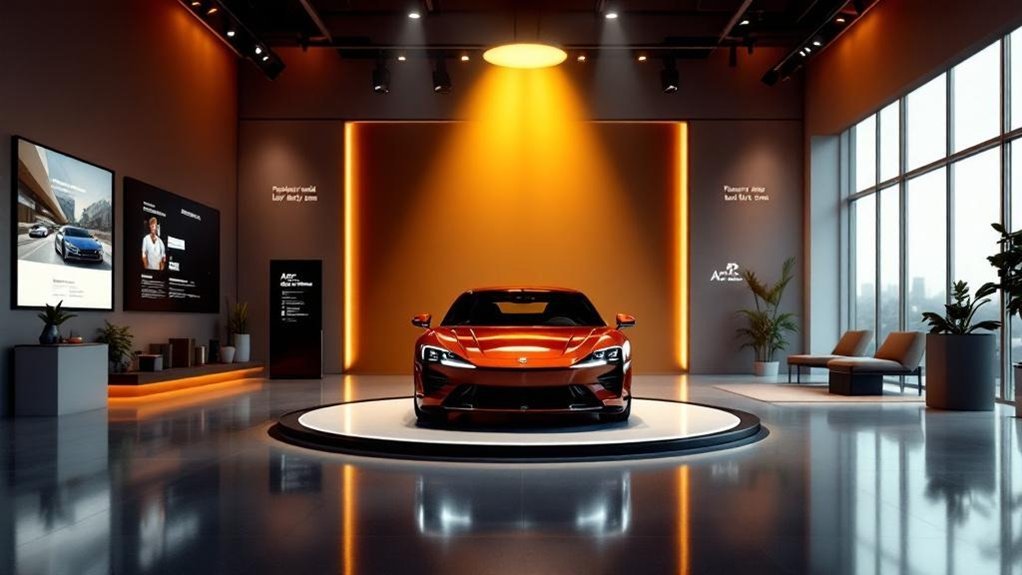
When you walk into the showroom, the Featured Model Spotlight Zone should grab attention with high-resolution images and videos at eye level (58–62 inches), using dynamic content and AR-driven customization previews to showcase new and popular vehicles; paired with real-time inventory updates and regularly rotated micro-campaigns, this setup boosts transparency, engagement, and foot traffic—optimized signage like this can capture up to 400% more views than static displays. You’ll place the featured model spotlight zone in high-traffic areas to maximize visibility and engagement, combining dynamic content with interactive elements that highlight unique features and special offers. Real-time inventory updates reduce uncertainty, improving conversion rates. Measured customer engagement (dwell time, click-throughs) guides micro-campaign rotation, sustaining interest and driving showroom visits.
Interactive Spec & Configurator Zone
After the Featured Model Spotlight grabs attention, the Interactive Spec & Configurator Zone lets customers take control by customizing features, colors, and accessories on high-resolution touchscreens and AR views at eye level. You’ll offer interactive features that let shoppers customize vehicle options in real-time, increasing customer engagement and shortening decision cycles. High-resolution touchscreens present dynamic visuals of trims, wheels, and interiors while Augmented Reality overlays let buyers visualize choices in the showroom context. Data analytics capture popular configurations, feeding sales and marketing with actionable insights to prioritize inventory and promotions. Smartphone compatibility and QR codes let customers save or share builds, creating seamless follow-ups and higher conversion probability. This zone turns passive browsing into measurable, personalized buying intent.
Current Inventory & Pricing Zone
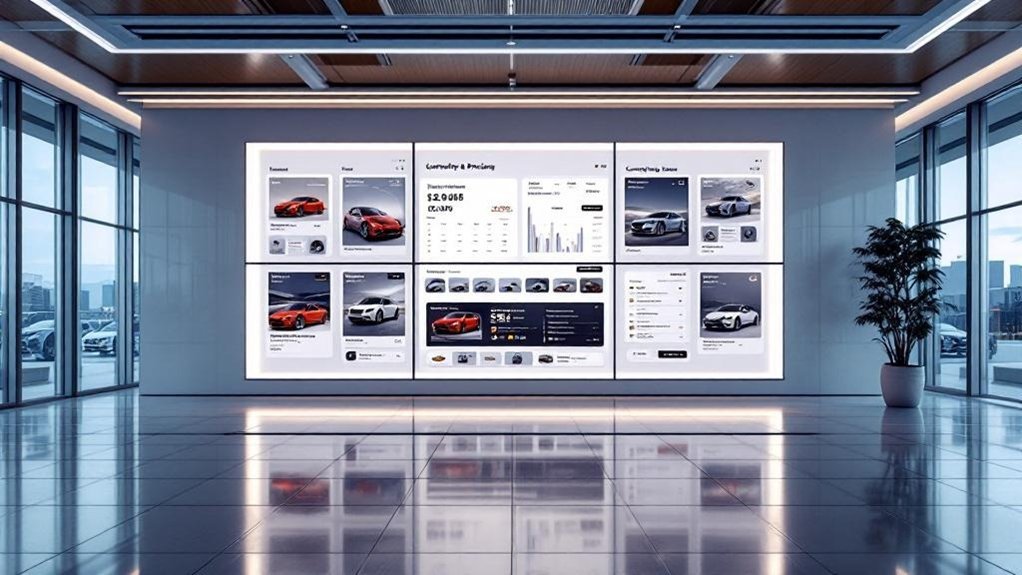
You’ll want screens that show real-time inventory with dynamic price updates so customers see current availability and discounts the moment they walk in. Include clear availability and location tags (lot, aisle, hold status) to reduce friction and speed decision-making. High-res displays with QR codes let shoppers pull full specs and time-limited offers on their phones for immediate engagement.
Real-time Inventory Display
Because customers expect up-to-the-minute accuracy, a Real-time Inventory Display gives them instant visibility into current vehicles and pricing, reducing guesswork and building trust. You’ll use real-time inventory display backed by IoT to automate updates, improving customer experience and transparency. High-quality visuals on digital signage grab attention, highlight features, and enhance customer engagement. Place the screen at primary touchpoints to guide decisions and boost foot traffic to featured cars. Studies show these displays increase customer trust and satisfaction by minimizing misinformation. Below is a concise snapshot of operational priorities and outcomes:
| Priority | Impact |
|---|---|
| IoT sync | Accurate, automated updates |
| Visuals | Higher engagement rates |
| Placement | Increased foot traffic |
| Transparency | Greater customer trust |
Dynamic Price Updates
Building on real-time inventory screens, dynamic price updates give customers live visibility into current offers and availability so they can make confident decisions on the spot. You’ll use showroom screens tied to inventory management to push real-time pricing and transparent discounts, which research links to higher customer engagement. High-resolution displays increase attention—studies show up to 400% more engagement versus static signs—so you’ll prioritize clarity and legibility. Strategic placement in high-traffic zones guarantees potential buyers see updates when they’re deciding.
- Sync: automated feeds from inventory management to guarantee accuracy.
- Visuals: high-resolution displays that highlight price movements and savings.
- Trust: real-time pricing that reduces friction and boosts conversion.
These dynamic price updates improve transparency and buyer confidence.
Availability & Location Tags
Clear Availability & Location Tags give customers up-to-the-minute visibility into which vehicles are on the lot, where they’re located, and what they cost, with zone analytics showing a 20% lift in inquiries when inventory details are prominently displayed. You’ll use digital signage in high-traffic areas to surface real-time updates on availability and pricing details, driving faster decisions and higher customer engagement. Place tags at entrances and near popular models; rotate pricing updates and special offers to create urgency. Data-driven layout and clear inventory cues reduce search time and boost transparency in the showroom. Below is a simple reference for deployment priorities and expected impact.
| Element | Purpose |
|---|---|
| Availability tag | Shows current stock |
| Location tag | Pinpoints vehicle on lot |
| Pricing details | Displays real-time price |
| Digital signage | Broadcasts updates |
| Placement | High-traffic areas |
Promotional Offers & Call-to-Action Zone
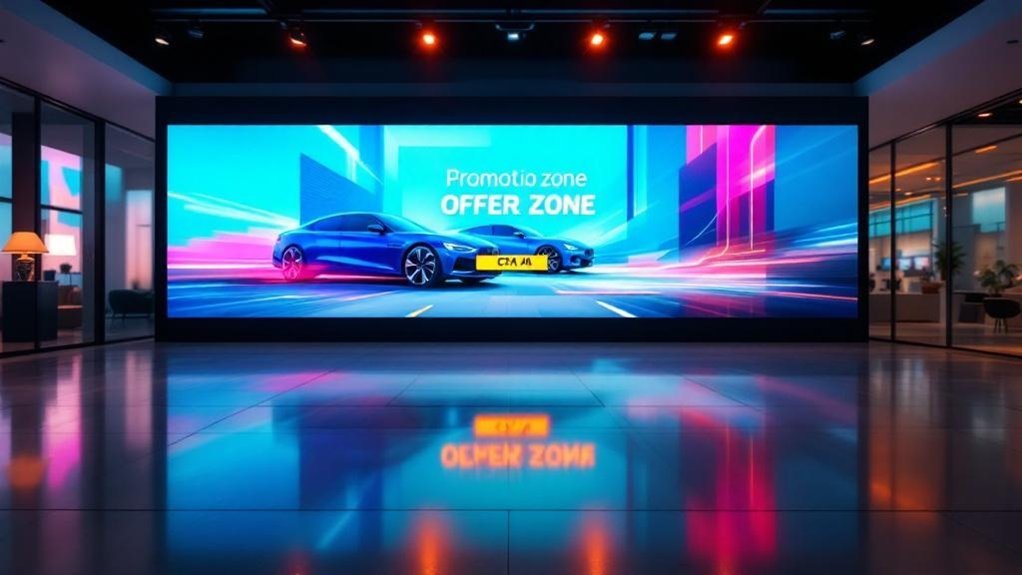
When you place a high-brightness, anti-glare screen at eye level (58–62 inches) in high-traffic spots, it can showcase limited-time offers with urgent CTAs that have been shown to boost test drives by up to 30% at dealers like Paragon Honda and Acura; use scarcity cues and rapid content updates to keep messages relevant and trustworthy so customers act now rather than later. You’ll rely on digital signage to present promotional offers with maximum visibility, driving customer engagement and measurable test drives. Keep content fresh with automated content updates reflecting current promotions and inventory. Key elements to include:
High-brightness, eye-level screens in traffic spots drive urgency and boosts—fresh, synced offers can increase test drives up to 30%.
- Clear, urgent CTA (book test drive now) with scarcity language.
- High-brightness visuals + anti-glare for showroom lighting.
- Real-time sync to maintain offer accuracy and trust.
Directional & Wayfinding Zone
You’ll want entrance and flow guidance that uses prominent digital signage to cut average wayfinding time and steer visitors toward high-interest vehicles and service areas. In-showroom navigation cues should combine clear typography, bold visuals, and interactive touchscreens so customers find cars and info quickly and with less frustration. Use zone analytics to place signs where traffic is highest and maintain consistent branding to reinforce trust and a cohesive experience.
Entrance & Flow Guidance
Because first impressions shape visit length and intent, the entrance should feature prominent, slightly off-axis digital signs that catch peripheral vision and deliver bold, high-contrast directional prompts and promotion highlights—so customers immediately know where to go and what’s on offer. You’ll use entrance screens to boost visibility, present timely promotions, and set clear wayfinding to streamline customer flow and enhance customer experience. Data shows quick orientation increases dwell time and foot traffic.
- Place digital signs slightly off-axis to capture peripheral attention and reduce decision friction.
- Use high-contrast typography and concise messaging for instant readability and action on promotions.
- Integrate simple wayfinding cues at entry to distribute visitors efficiently, raising engagement and sales opportunities.
In-Showroom Navigation Cues
Having set the tone at the entrance, bring that clarity deeper into the showroom with a directional and wayfinding zone that uses bold typography, high-contrast visuals, and concise prompts to move customers smoothly between displays. You’ll deploy digital signage at entrances and intersections to reduce confusion and measurably improve the customer experience; studies show clear wayfinding cuts search time and increases dwell time in high-interest areas. Add interactive elements—touchscreen maps, QR codes linked to vehicle pages—to personalize routes and boost customer engagement. Use psychological cues (arrows, prompts) to nudge foot traffic toward promotions and new models. Maintain trust with real-time updates so signs reflect current stock, events, and staff availability. This data-driven approach optimizes navigation and satisfaction.
Customer Lounge Engagement Zone
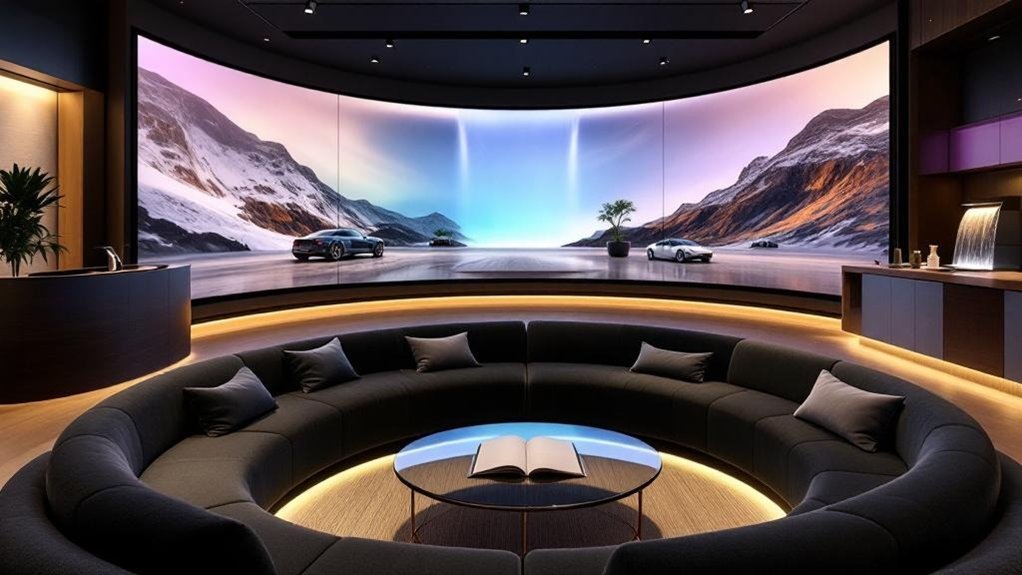
While customers wait, a well-designed lounge should use digital signage to deliver real-time maintenance updates and estimated wait times, reducing perceived wait by up to 35% and improving satisfaction scores. You’ll enhance customer experience by combining informative screens with engaging content that shortens perceived wait times and builds trust. Use high-quality videos of new models and curated entertainment to keep attention, and place interactive displays for self-service exploration.
- Showcase real-time updates and estimated completion times to reduce anxiety and increase transparency.
- Offer interactive displays and touchscreen kiosks so customers can research options and promotions during downtime.
- Rotate positive customer reviews and targeted offers on screens to reinforce credibility and stimulate interest.
This data-driven lounge drives engagement and measurable satisfaction gains.
Feedback & Social Proof Zone
A Feedback & Social Proof Zone turns real customer voices into measurable trust signals by displaying star ratings, testimonials, and live social feeds that can lift conversions by up to 30% and drive a 79% boost in purchase intent through user-generated content. You’ll use digital displays to showcase verified reviews, ratings, and short testimonial videos so prospective buyers instantly see quality and service excellence. Interactive review stations invite customers to leave feedback, increasing engagement and creating a sense of community that nudges undecided shoppers toward test drives. Integrating real-time social media streams reinforces authenticity and broadens reach, directly impacting sales and foot traffic. Measured strategically, this zone amplifies credibility and turns customer advocacy into predictable revenue.
Frequently Asked Questions
Why Is the Showroom Layout Important for Car Dealerships?
Showroom layout matters because it shapes showroom flow and traffic patterns, improving customer experience through strategic product placement, visual merchandising, lighting design, interactive displays, and space optimization, which boosts engagement, decision speed, and measurable sales outcomes.
How to Increase Traffic to Your Car Dealership?
Think of nudging folks gently: you’ll use data-driven traffic strategies — targeted ads, online marketing, social media, seasonal promotions, customer incentives, referral programs and community events — to boost visits, engagement and measurable showroom conversions.
How to Get the Most for Your Car at a Dealership?
You’ll maximize offers by following car appraisal tips: document vehicle condition, track pricing trends and market demand, use customer research, leverage dealership incentives, compare trade in value across dealers, and apply firm negotiation strategies to get top results.
How to Design a Car Dealership?
You’ll start by mapping showroom flow to guide traffic patterns; then optimize customer experience with lighting design, product placement, display technology and interactive features, while embedding branding elements—use data to measure, iterate, and boost conversions.
Conclusion
You’ve designed a showroom screen that’s data-backed and customer-first, and coincidentally the seven zones map exactly to buyers’ decision moments: spotlighting hero models, letting prospects configure specs, showing live inventory and pricing, pushing timely offers, guiding traffic, engaging loungers, and collecting social proof. That overlap isn’t accidental — it’s efficient design meeting shopper behavior. Implementing these zones will measurably raise engagement, shorten sales cycles, and drive clearer next steps for every visitor.