
Use TV content to distract and entertain with short, family-friendly videos and promos so guests focus less on the clock. Display personalized, real-time service updates and estimated completion times to reduce uncertainty and increase trust. Add simple interactive options—touch menus, polls, queue tracking—to give customers a sense of control and agency. These tactics are proven to lower perceived waits and boost satisfaction; keep going to see implementation tips, metrics to track, and content ideas.
Key Takeaways
- Show short, engaging videos (30–90 seconds) to distract attention and make time feel shorter.
- Display personalized wait updates and customer names to increase transparency and reduce uncertainty.
- Use interactive TV menus and quick polls to give guests control and increase perceived agency.
- Rotate family-friendly content and dealership promos to maintain positive mood and perceived value.
- Measure dwell time and interaction rates to iterate content and shorten felt wait times.
Use Engaging, Relevant Content to Distract and Entertain
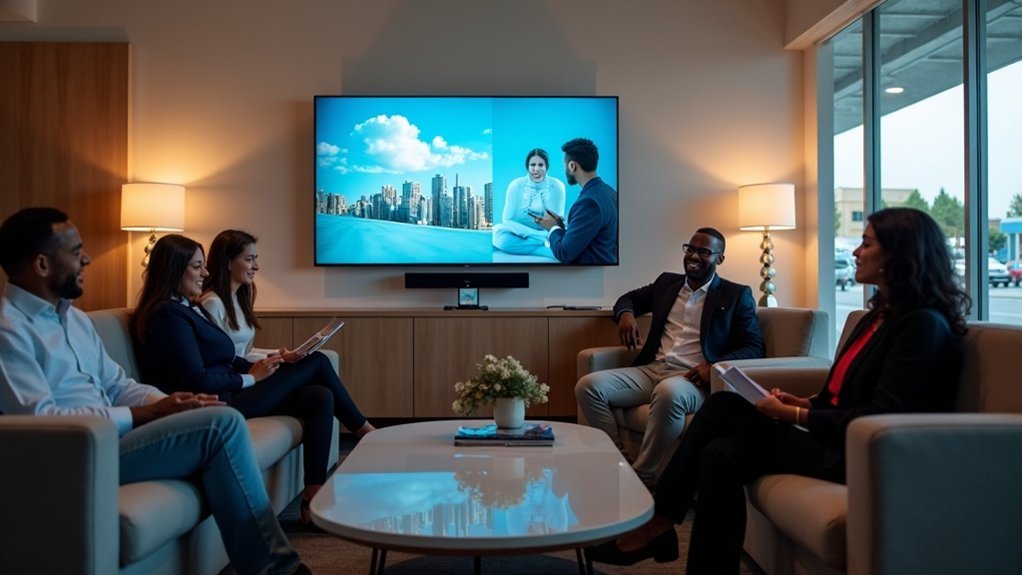
When customers walk into your lounge, engaging, relevant content on TVs can turn idle wait time into a positive part of the visit by reducing perceived delays and boosting satisfaction. You’ll want a focused content strategy that blends short-form videos on vehicle maintenance, dealership promotions, and automotive news to capture attention and lower boredom metrics. Prioritize family-friendly, pre-screened programming so every visitor feels welcome, which improves net promoter scores. Include selective interactive elements on screens to increase customer engagement without overwhelming the experience — for example, clickable menus or prompts that invite feedback. Measure performance with dwell-time analytics and engagement rates, then iterate. This data-driven, customer-centric approach converts passive waiting into an opportunity to inform, reassure, and strengthen brand perception.
Personalize Wait-Time Information and Service Updates
Because customers feel calmer and more respected when they’re personally acknowledged, showing names and real-time service estimates on lounge screens turns passive waiting into transparent communication. You’ll use customer acknowledgment to lower perceived wait times and boost satisfaction by displaying concise, relevant updates tied to each vehicle and service. Service transparency reduces uncertainty, and data shows personalized updates and messages increase engagement and loyalty. Implement quick, accurate feeds that update estimated completion times and short notes about progress to keep guests informed without overwhelming them.
| Element | Benefit |
|---|---|
| Named updates | Reduced anxiety |
| Real-time ETA | Increased trust |
| Service notes | Higher perceived value |
Incorporate Interactive Elements to Increase Perceived Control
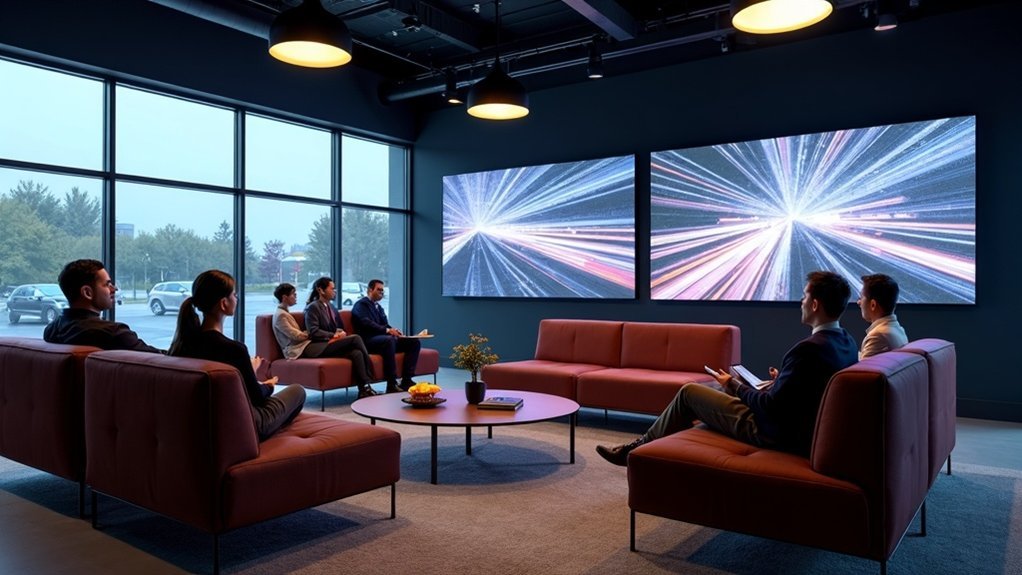
If you give customers hands-on options—touchscreen kiosks, tablets, or customizable lounge TVs—they’ll feel more in control of both their time and the service process, which lowers anxiety and boosts satisfaction. Use touchscreen kiosks to let customers browse inventory, schedule services, and access real-time wait updates; measurable clarity reduces perceived wait. Integrate queue-tracking displays so patrons can visually monitor position and expected time, cutting uncertainty. Add short interactive polls and automotive quizzes on lounge TVs to increase engagement and collect preference data you can act on. Track participation rates and satisfaction scores to quantify impact. Prioritize intuitive interfaces and brief, optional interactions so control grows without creating extra tasks, driving faster perceived throughput and higher NPS.
Frequently Asked Questions
How Do You Measure Reduction in Perceived Wait Time Effectiveness?
You’ll measure effectiveness by combining perceived time surveys, objective wait timestamps, and customer satisfaction scores, then analyzing pre/post differences and correlations, tracking NPS and repeat visits, and running A/B tests to quantify impact and statistical significance.
Can TV Content Be Customized for Different Customer Demographics?
Yes — you can tailor TV feeds by target audience and content preferences; you’ll segment customers, A/B test programming, track engagement metrics, and iterate so content’s data-driven, aligned with preferences, and reduces perceived wait times effectively.
What Hardware and Software Are Required for the Lounge TV Setup?
72% of customers prefer visual updates; you’ll need a smart 4K display, media player or PC, CMS software, networked streaming, mounting, sound system, and analytics tools—lounge tv technology that drives customer experience enhancements.
How Do You Keep Content Legally Compliant and Avoid Copyright Issues?
You’ll secure content licensing, follow copyright considerations by using licensed stock, in-house creations, or public-domain/media-with-CC0, track rights metadata, keep contracts and logs, and audit regularly to mitigate risk and protect customer experience.
What Is the Estimated Cost and ROI of Implementing This System?
Yes—you’ll likely spend $5k–$25k upfront and $500–$2k/year; cost analysis shows payback in 6–18 months for many dealers. Use roi calculation with reduced walkouts, higher F&I uptake, and service retention metrics.
Conclusion
You’ve seen how engaging content, personalized updates and interactive features shorten perceived waits — and it actually works: studies show distraction can reduce perceived wait time by up to 30%. Use targeted TV programming to entertain, real-time service updates to reduce uncertainty, and touchscreens or mobile prompts to give customers control. That triad boosts satisfaction and retention while lowering complaints. Focus on measurable KPIs (dwell time, satisfaction scores, repeat visits) and iterate based on customer data.