
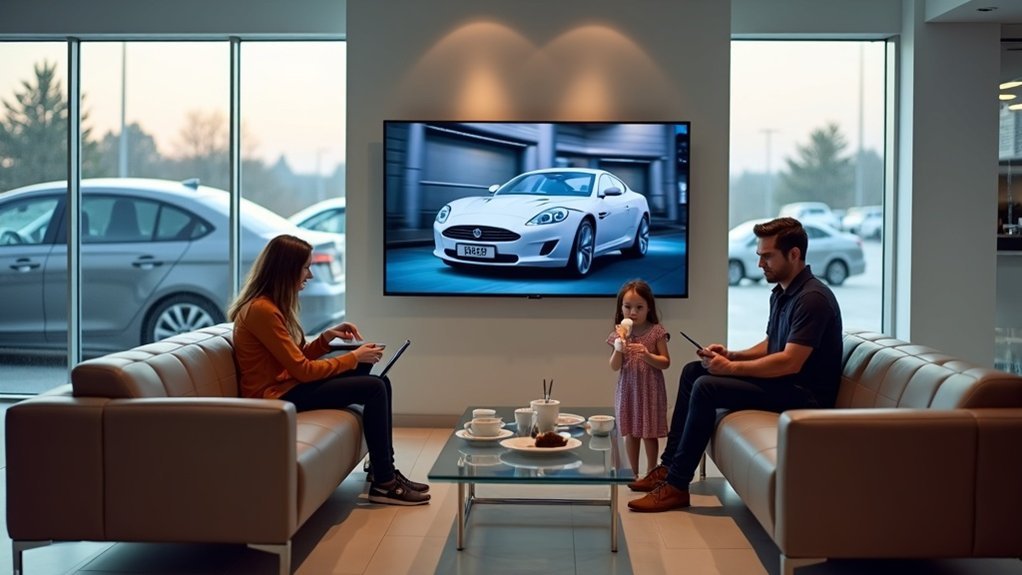
A lounge TV cuts perceived wait times by about a third, so you feel a 30-minute wait like ~20 minutes, and engagement jumps roughly 48%. When customers are entertained and informed with service updates, car‑care tips and timed promotions they stay longer, trust staff more, and respond to upsell CTAs—raising bookings and on‑site spend. Commercial‑grade screens, remote scheduling and CRM feeds keep offers relevant. Keep going to see specific content tactics, tech needs and ROI metrics.
Key Takeaways
- Engaging content distracts customers, making perceived wait times up to 33% shorter and keeping them in the lounge longer.
- Real-time service updates and inventory highlights inform customers and increase likelihood of immediate purchases or add-on bookings.
- Short promotional and educational clips drive interest in maintenance packages and upsells through clear, actionable CTAs.
- Local ads and timed offers convert passive dwell time into incremental revenue by prompting on-site spending.
- Regularly refreshed playlists and measurable analytics boost repeat visits and let dealers optimize content for higher conversions.
How a Customer Lounge TV Reduces Perceived Wait Times and Boosts Satisfaction
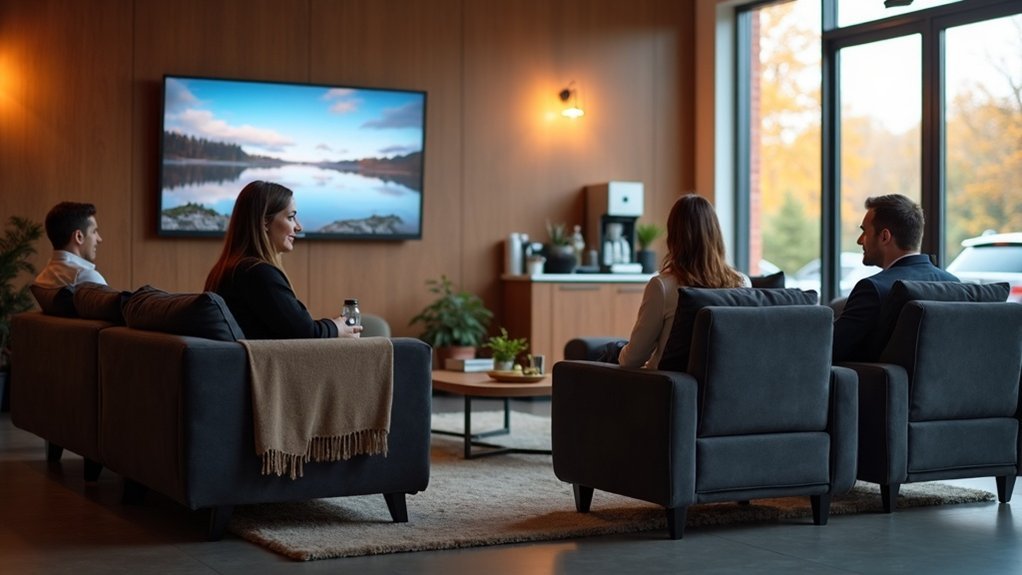
When you add a Customer Lounge TV, wait times feel noticeably shorter—by up to 33%—so a 30‑minute wait can feel like about 20 minutes, which directly improves the service experience. You’ll leverage measurable reductions in perceived wait by showing engaging content that distracts and informs. Data shows customer satisfaction can rise about 46% when programming combines real‑time service updates with useful tips. That mix boosts customer engagement and transparency, so patrons feel valued and informed rather than idle. Concise, dynamic content—service status, car care tips, short videos—keeps attention and promotes loyalty. In practice, the TV turns passive waiting into an active touchpoint, reliably improving satisfaction metrics and strengthening the customer relationship without adding staff time.
Turning Waiting Areas Into Revenue-Generating Engagement Hubs
You’ve already seen how lounge TVs shrink perceived wait times and lift satisfaction — now use that engagement to drive revenue. A Customer Lounge TV cuts perceived waits by up to 33% and boosts engagement by 48%, so you can turn passive time into profitable moments. Use concise programming and rotation to support revenue diversification and deepen customer interaction without overwhelming visitors.
Lounge TVs reduce perceived waits up to 33% and raise engagement 48%, turning idle time into revenue with concise, rotating programming.
- Display timed local-ads and promotions to create incremental ad revenue and cross-promotional partnerships.
- Rotate informative, entertaining content that increases dwell time and reinforces brand visibility.
- Update playlists regularly to keep views fresh, encouraging repeat visits and higher on-site spending.
Measure play rates, engagement lifts, and ad conversions to optimize programming and prove ROI.
Content Strategies That Encourage Upsells and Service Bookings
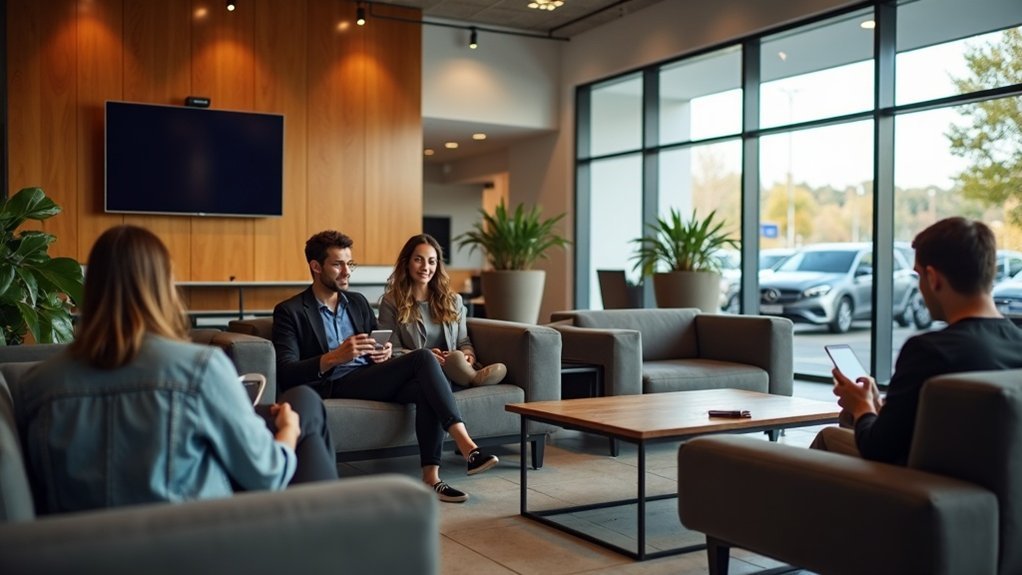
Because engaged customers are more likely to act, use your lounge TV to present short, persuasive videos that spotlight service specials, maintenance packages, and add-ons — content that has been shown to increase satisfaction by up to 46% and, coupled with a 33% reduction in perceived wait time, raises the likelihood of on-site bookings. You should prioritize visual storytelling that clearly demonstrates benefits (before/after, quick demos, technician credibility) and pair each clip with targeted promotions tied to vehicle age, mileage, or recent service. Rotate educational segments like car-care tips to build trust and prompt need recognition. Keep spots under 30 seconds, feature clear CTAs (book now, ask advisor), and measure uplift in bookings to refine messaging for maximum conversion.
Technical Requirements for an Effective Lounge TV Setup
After outlining content that drives upsells and bookings, it helps to match those messages with the right hardware and integrations so they actually get seen and acted on. You’ll prioritize high display brightness for visibility in sunlit lounges, and choose commercial-grade panels rated for long runtimes. Remote content management is non-negotiable: it lets you push updates, schedule playlists, and respond to inventory changes without on-site techs. Add touch capability where useful to boost engagement, but only after validating UX flow. Integrate with CRM and inventory feeds so displayed offers reflect real-time availability and service status. Update content regularly to keep relevance. Focus on reliability, central control, and measurable engagement uplift to justify investment.
Match high-brightness commercial displays, remote content management, and CRM/inventory integrations to drive reliable, measurable upsell engagement.
- High display brightness, commercial panels
- Remote content management system
- CRM/inventory integrations
Measuring Impact: Metrics That Prove Increased Dwell Time and Spend
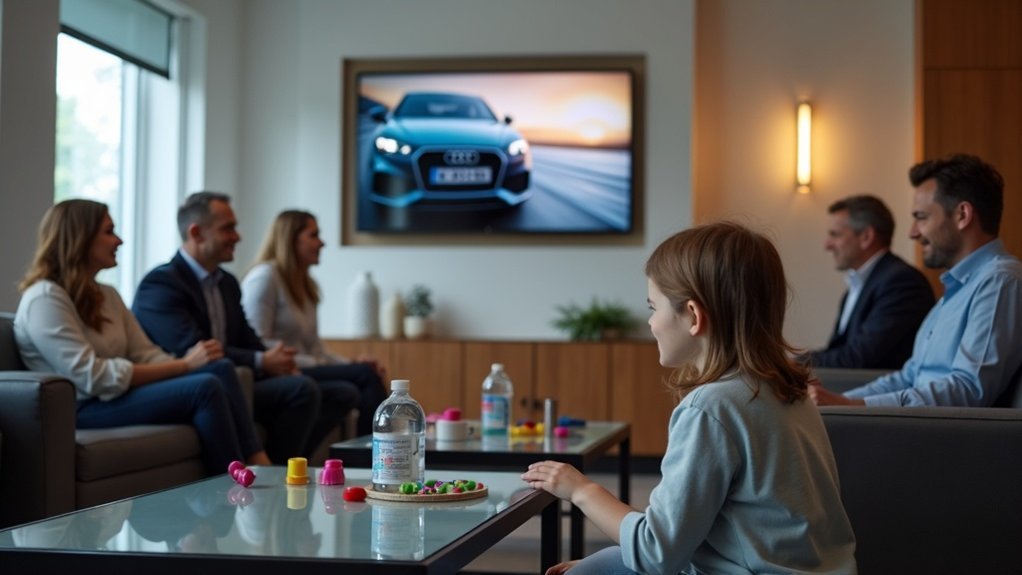
When you tie lounge-TV performance to hard numbers, it’s clear which investments drive longer visits and bigger tickets: reduced perceived wait times (as much as 33%), higher customer satisfaction (+46%), and documented lifts in dwell time and service bookings (20%–25%) all translate into measurable revenue and retention gains. You should track baseline and post-install metrics: average dwell time per visit, service booking volume, average ticket size, and repeat-visit rate. Combine TV analytics (content engagement, playtime) with POS and CRM data to attribute incremental customer spending to lounge-TV exposure. Run A/B tests across locations or timeframes to isolate effects. Report ROI as incremental revenue per hour of dwell time and percent lift in customer spending to justify scaling or content tweaks.
Frequently Asked Questions
What Is a Red Flag in a Dealership?
A red flag is when you see eroded customer trust—frequent complaints, high staff turnover, inconsistent pricing or opaque sales tactics; data show these patterns predict lost sales and lower retention, so you should avoid such dealerships.
What Is the Four Square Trick at a Car Dealership?
It’s a beam-me-up, ridiculously clear sales strategy: you’ll see four square fields — vehicle price, trade-in, down payment, monthly payment — presented to simplify negotiation, focus choices, and boost closing rates using measurable steps.
What Are the Three Most Important Factors to Consider When Purchasing a Vehicle?
The three most important factors are price/financing options, safety/reliability ratings, and vehicle features like fuel efficiency and tech. You’ll prioritize affordability, long-term costs, and features that match your lifestyle and resale expectations.
How Do Car Salesmen Attract More Customers?
By using digital signage that cuts perceived wait times by 33%, you boost customer engagement and refine sales strategies, attracting more customers through targeted offers, real-time inventory highlights, personalized messages, and persuasive service promotions.
Conclusion
You’ll see that a well-designed lounge TV reliably shortens perceived wait times and raises satisfaction — studies show dwell time and ancillary spend climb when customers engage targeted, timely content. Use analytics to A/B test ads, promos and service reminders; optimize screen placement, brightness and Chromecast-like delivery. Track conversion, average repair order and time-on-screen. This isn’t Victorian theater; it’s smart retailing. Invest, measure, iterate — the ROI appears fast and predictable.