

A BDC closing-ratio leaderboard ranks your reps by sold units attributable to BDC follow-up, calculated as BDC-attributed sales divided by leads managed. It ties CRM timestamps and lead-source fields to each sale so you can quantify conversion impact, spot high performers, and target coaching. Track conversion rate, appointment show/close correlation, follow-up cadence, and CRM usage. Automated dashboards keep metrics current and actionable — keep going to see how to implement and coach from this data.
Key Takeaways
- Calculate closing ratio as BDC-attributed sold units divided by leads managed to show true BDC effectiveness.
- Log sale origin and timestamps in the CRM to accurately attribute sold units to specific BDC follow-up.
- Display per-agent and team conversion rates, appointment show rates, and follow-up cadence on the leaderboard.
- Use leaderboard trends to target coaching on appointment conversion and follow-up timing for lower performers.
- Automate CRM reporting and dashboards to maintain standardized attribution, monitor velocity, and compare reps.
How the BDC Closing Ratio Leaderboard Works
Because performance is measurable, the BDC Closing Ratio Leaderboard gives you a clear, data-driven view of each agent’s effectiveness by tracking sold units tied to their lead follow-up and dividing those sales by the total leads they managed to produce a closing ratio. You’ll see each agent’s closing ratio calculated consistently: sold units from BDC follow-up ÷ leads managed. The leaderboard pulls sales data into concise performance reports that update regularly, so you can monitor trends and spot declines or gains quickly. Use the ranking to motivate staff and drive targeted coaching. Management leverages the reports to identify top performers, allocate resources, and design training focused on improving lead management processes and overall conversion efficiency.
Attributing Sold Units to BDC Activity
When you attribute sold units to BDC activity, you’re quantifying the direct impact of lead follow-up on sales—this month 6 of 25 units (24%) were tied to BDC efforts, a clear baseline for improvement. You should log each sale’s origin and timestamp to connect leads into real outcomes, enabling precise closing attribution. Calculate lead-to-sold conversion rates from BDC-sourced leads, compare to overall store performance, and flag gaps. Use that 24% against the 80% potential to prioritize process fixes: faster callbacks, targeted scripts, and follow-up cadences. Regular analysis of attributed units guides resource allocation and training, showing where coaching raises closing efficiency. Treat attribution as an operational metric you monitor weekly and act on immediately.
Key Metrics to Track on the Leaderboard
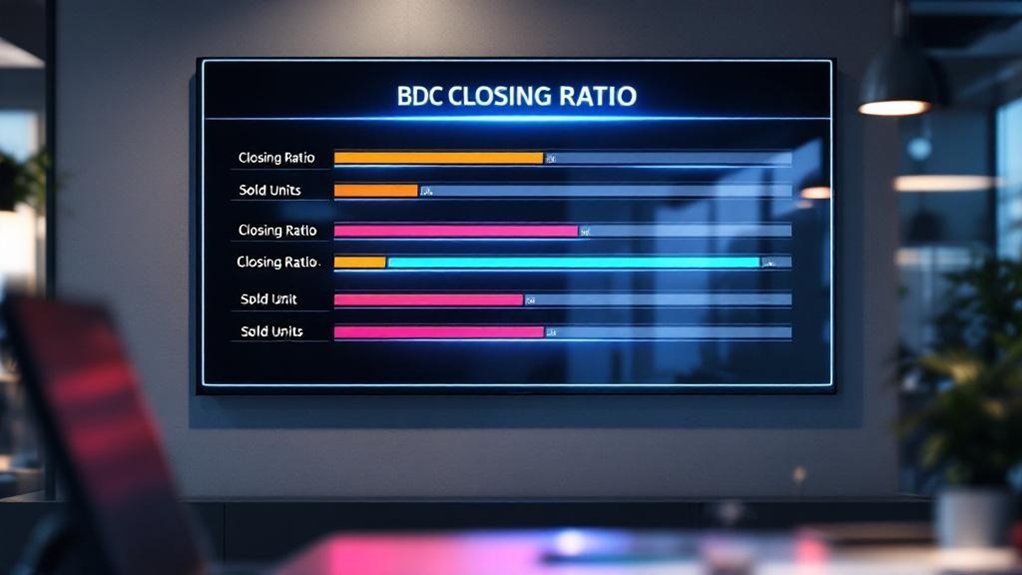
Start with a handful of clear, quantifiable metrics that show who’s converting leads into sales and how. You’ll track sold-unit percentage attributed to BDC activity, appointments set, and conversion velocity to measure effectiveness. Key metrics to display:
- Sold-unit conversion rate (BDC-attributed sales ÷ leads) — compares agents to the ~30% dealership average.
- Appointment show rate and subsequent conversion — ties show rate to chances of closing per appointment.
- CRM usage and follow-up cadence — contacts logged, touchpoints, response time correlated with sold units.
Display per-agent and team summaries so the sales team sees outcomes and variance. Use inbound appointment conversion correlation with sold units to refine lead routing and process metrics, keeping reporting objective and action-oriented.
Using Leaderboard Data to Drive Coaching and Accountability
Now that you’ve settled on the core metrics to display, use the leaderboard as a coaching tool by tying individual numbers to concrete actions and accountability. You’ll identify top performers via closing ratios and sold-unit attribution, then replicate their routines across sales teams. Coaching focuses on appointment conversion, follow-up timing, and communication scripts so agents can improve your sales consistently. Regular reviews create accountability and healthy competition; BDC already contributes 24% of total sales, so small gains matter. Implement a structured feedback loop: set targets, review outcomes, assign action items, and follow up. Highlight achievements to motivate peers and track progress against benchmarks.
| Metric | Coaching Action |
|---|---|
| Conversion Rate | Review calls, refine script |
| Follow-up Effectiveness | Set response SLAs |
Integrating CRM and Reporting for Accurate Attribution
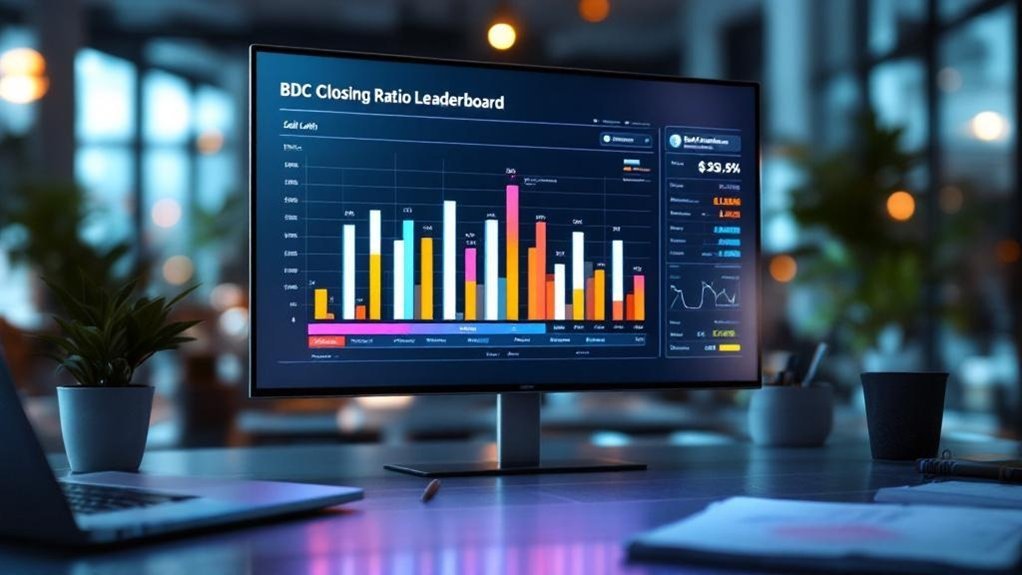
Because CRM integration ties lead records to outcomes, you’ll get accurate sold-unit attribution that shows which BDC activities truly drive conversions. You’ll standardize lead sources and salesperson fields so every sold unit links back to specific BDC actions, revealing direct correlation between activity and results. Keep CRM entries current with contact attempts, sales calls, set rate outcomes, and follow-up actions to measure conversion velocity.
- Automate reporting to surface sold-unit attribution, top performers, and training gaps.
- Track set rate and contact rate metrics alongside sales calls to quantify impact.
- Use dashboards to compare new BDC reps versus experienced agents, spotting trends for coaching.
This process gives you timely, actionable data to optimize lead management and improve closing ratios.
Frequently Asked Questions
What Is Considered a Good Closing Ratio in Sales?
A good closing ratio is typically 20–30%, with top performers hitting 40%+. You’ll use closing ratio benchmarks, sales performance analysis, effective sales strategies, and industry standards comparison to set targets and refine qualifying processes.
What Is a Good Closing Ratio for Car Sales?
A good closing ratio for car sales is about 30%, aiming for 40%+ as top performers. You should use closing ratio benchmarks, sales performance analysis, industry standards, and effective sales techniques to improve processes and outcomes.
How Do You Calculate Sales Closing Ratio?
Divide sales by qualified prospects and multiply by 100. You’ll track sales performance, refine closing techniques, and improve lead management by monitoring this sales metric—closing ratio—regularly, using clear sales metrics and process-oriented analysis.
What Is a 50% Closing Ratio?
A 50% closing ratio means you convert half of qualified leads into sales. It’s a closing ratio definition tied to sales performance metrics, showing effective sales techniques; focus on process improvements for improving sales ratios consistently.
Conclusion
You now have a clear, process-driven way to measure BDC impact: attribute sold units to specific BDC activities, track closing ratios and response timeliness, and integrate CRM/reporting to verify accuracy. Use the leaderboard data to coach reps, set accountability, and iterate on scripts and workflows. When everyone follows the metrics, improvements compound like a rocket—fast, visible, and measurable—so you can continuously optimize performance with disciplined, repeatable actions.