
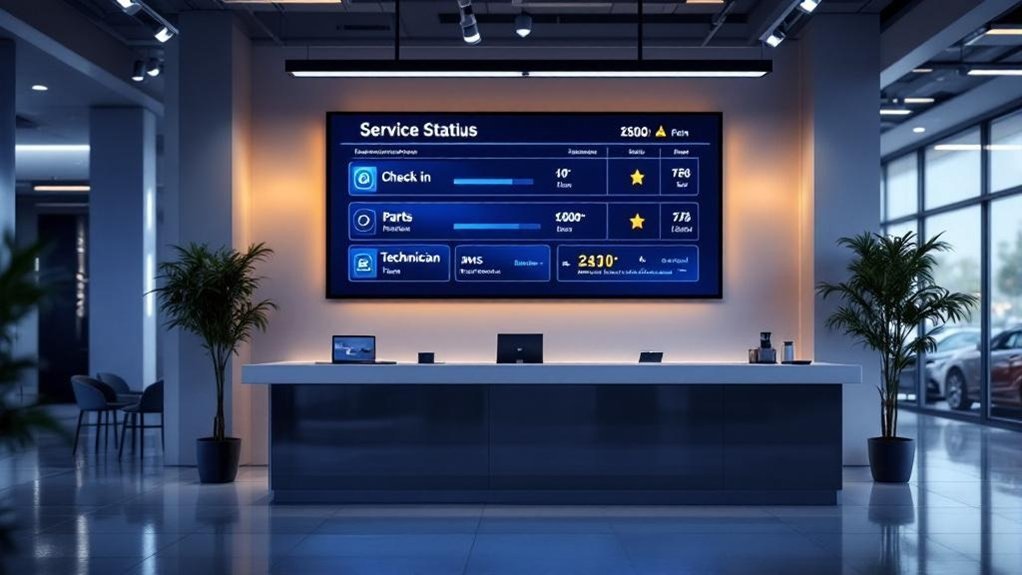
You’ll cut uncertainty and boost service revenue by integrating digital menu boards with your DMS for real-time service-status updates. These displays show Scheduled, Arrived, In Progress and Completed stages, push targeted promotions, and cache content locally for offline continuity. Wired connections and automated stage changes reduce manual errors and speed service flow. Expect measurable gains—higher CSI, upsells, and retention—when you deploy them across the service lane and customer lounge; keep going to see implementation and KPI details.
Key Takeaways
- Integrates directly with your Dealer Management System (DMS) to display real-time appointment stages: Scheduled, Arrived, Progress, and Completed.
- Split-screen digital signs show live service status alongside targeted promotions to boost upsells and customer engagement.
- Automated DMS-driven stage changes and local hard-drive failover ensure continuous, accurate displays even offline.
- Wired installations are recommended for reliability; centralized content management reduces manual updates and errors.
- Deployments typically increase service revenue, upsell rates, CSI, and customer retention through transparency and timely information.
What Is a DMS-Integrated Service Status Menu Board?
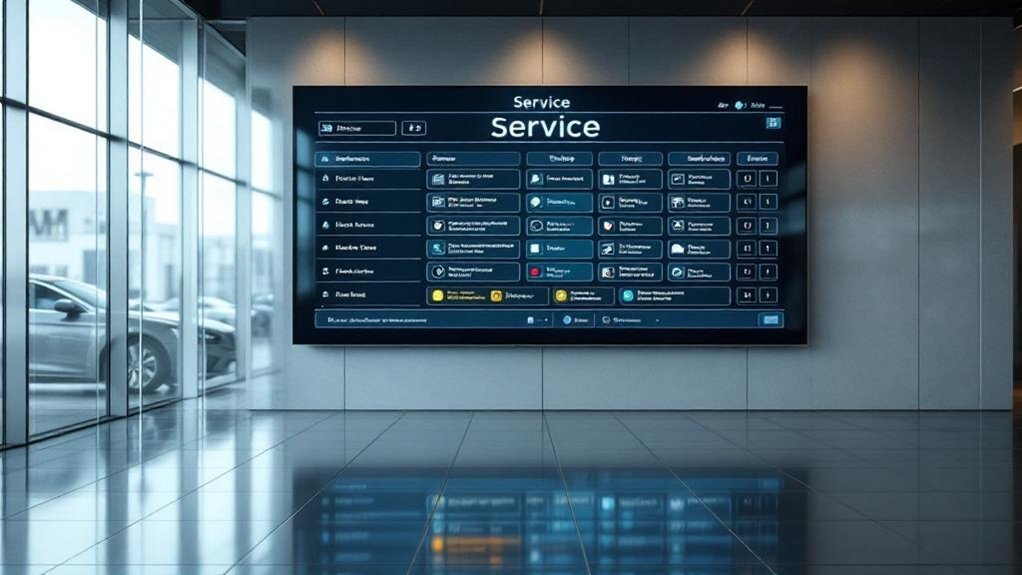
Think of a DMS-integrated service status menu board as a real-time operations dashboard for your service lane: it syncs directly with your Dealer Management System to display appointment stages like Scheduled, Arrived, Progress, and Completed so customers and staff get accurate status at a glance. You’ll see live, DMS-driven data that reduces manual entry errors and keeps service timelines precise. The split-screen digital signage lets you run targeted marketing alongside status feeds, turning idle wait time into measurable customer engagement and upsell potential. Local hard drive caching preserves status updates during internet outages, so operations don’t stall. For vendors and service managers, this tool streamlines workflows, improves transparency, and supplies analytics-ready signals for optimizing throughput.
How Real-Time Updates Improve Customer Experience
Because real-time, DMS-driven updates cut uncertainty, customers spend less time asking staff for status and more time engaging with targeted offers on-screen — a measurable lift in perceived service quality. You’ll see Customer anxiety drop as Visibility enhancement provides clear stages (Scheduled, Arrived, Progress, Completed) fed automatically from the DMS. Automatic, local-cache playback guarantees updates even if the internet drops, preserving trust.
Real-time DMS updates reduce uncertainty, lower customer anxiety with clear service stages, and keep displays current even offline.
- Faster clarity: instant stage changes reduce inquiries and perceived wait.
- Relevant upsell: dynamic pricing and promotions surface services customers actually need.
- Reliability: local storage plus DMS sync keeps information current and consistent.
You’ll gain measurable satisfaction improvements, lower staff interruption, and better conversion on promoted services through precise, data-driven display control.
Key Features of Service Drive Digital Signs
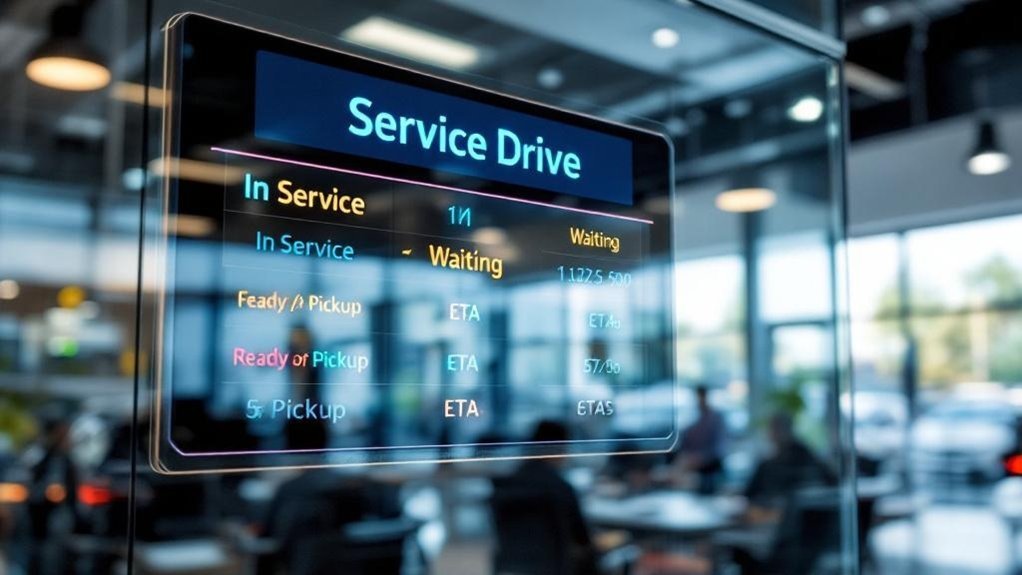
You’ll want digital signs that deliver real-time status updates tied directly to your DMS so customers see each vehicle move from Scheduled to Completed without manual input. That DMS integration reduces touchpoints, cuts status-reporting errors, and lets you surface targeted offers based on live service data. Measured improvements in communication and throughput translate to higher retention and service revenue.
Real-Time Status Updates
When your service drive digital signs run in split-screen mode, they deliver live, customer-specific vehicle status on one side while rotating targeted promotions on the other — a setup that both informs guests and drives upsell opportunities. You get real time notifications and instant updates that reflect vehicle stages (Scheduled, Arrived, Progress, Completed) so customers and staff stay aligned. The system prefers wired connections for reliability, but supports Wi‑Fi; local hard drives cache content for offline continuity while live data needs internet access. Measured improvements include higher transparency, faster communication, and increased add-on sales driven by timely promotions.
- Track: automated stage changes from your DMS for precise status.
- Resilience: cached content maintains display during outages.
- Performance: wired deployment minimizes latency for instant updates.
DMS Integration Benefits
If your dealership ties its digital signs into the DMS, you’ll get live service-status updates (Scheduled, Arrived, Progress, Completed) pushed directly to split-screen displays while the other half rotates targeted offers—saving staff time, reducing customer uncertainty, and creating automated upsell opportunities based on current vehicle stage. You’ll benefit from integration advantages like automated pricing updates, local hard-drive failover for uninterrupted display, and dynamic upsell triggers tied to status data. This boosts customer engagement by combining transparency with timely offers and reduces manual menu maintenance.
| Benefit | Impact | Mechanism |
|---|---|---|
| Real-time status | Higher transparency | DMS push updates |
| Automated upsells | Increased revenue | Status-triggered offers |
| Offline resilience | Continuous info | Local hard-drive |
| Dynamic pricing | Faster changes | Seamless DMS sync |
Designing Effective Service Menus and Dare to Compare Boards
1 clear, data-driven service menu paired with a Dare to Compare board can cut customer uncertainty and boost repair orders by making pricing, promotions, and service status instantly accessible. You’ll use service categorization and multi-zone layouts to surface relevant offerings, reduce wait-time queries, and drive customer engagement. Integration with your DMS keeps prices and promos current, eliminating manual updates and supporting upsells via split-screen progress + offers.
- Prioritize clarity: concise categories, real-time pricing, and visible status to shorten decision time.
- Build trust: side-by-side Dare to Compare templates show competitor gaps and reinforce value.
- Optimize for conversion: branded flexibility lets you A/B test promotions and measure impact on repair order counts.
This approach is vendor-savvy, measurable, and user-centered.
Installation Best Practices and Placement Recommendations
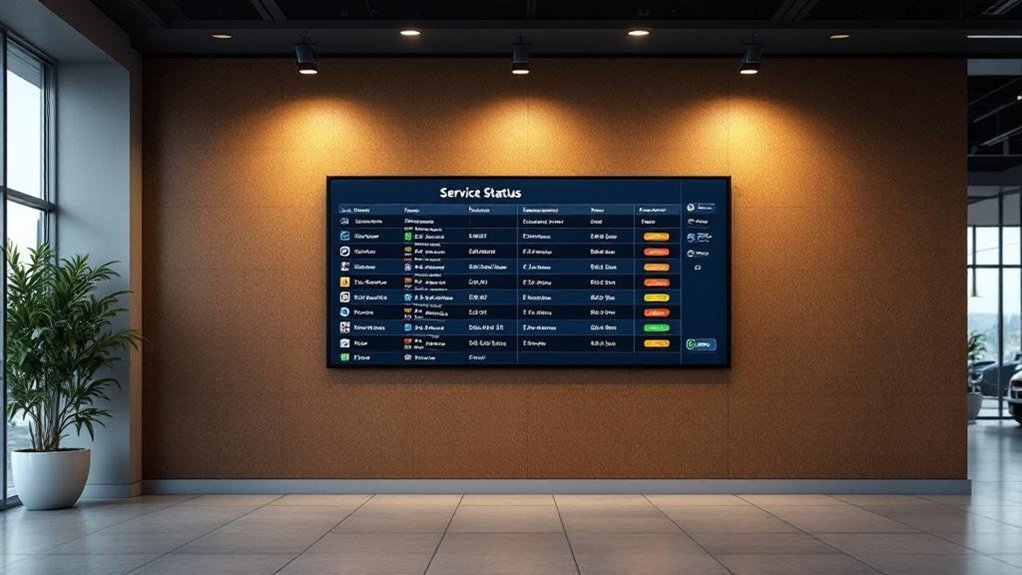
Because visibility directly affects engagement, place service-drive digital signs behind advisors at a ratio of one screen per two advisors to maximize impact on customer interactions and reduce staff workload. You’ll also extend reach by installing screens in reception and lounge areas so waiting customers see real-time statuses. Prioritize wired connections for DMS-integrated units to guarantee reliable updates; pair that with local hard drives so content persists during internet outages. Use vendor-savvy installation techniques: lockable mounts, tamper-resistant cabling, and service-friendly access panels to speed maintenance. For signage positioning, test sightlines and glare at peak daylight and vehicle-flow angles, documenting coordinates for repeatable installs. These measures improve service-drive efficiency, minimize update interruptions, and keep customers informed without increasing staff overhead.
Measuring Impact: KPIs and Performance Dashboards
When you tie digital signs to real-time KPIs like CSI, Repair Orders, hours, labor and closing ratios, dashboards become actionable tools that cut spreadsheet work and keep teams focused on measurable goals. You’ll see PULSE KPI Leaderboards and Services Leaderboards surface live metrics from SALES, SERVICE and TECHS, enabling KPI analysis and performance tracking that’s accurate because it’s DMS-integrated. Dashboards reduce manual reporting, boost transparency, and motivate staff with immediate feedback.
Tie digital signage to live KPIs — DMS‑integrated leaderboards that cut spreadsheets, boost transparency, and drive measurable performance.
- Monitor CSI, RO count, hours and labor to spot trends fast.
- Track closing ratios and individual tech efficiency for targeted coaching.
- Compare department-level KPIs to prioritize operational fixes.
You’ll use these vendor-ready dashboards to drive decisions, improve profitability, and hold teams accountable to clear, current metrics.
Content Management, Reliability, and Offline Operation
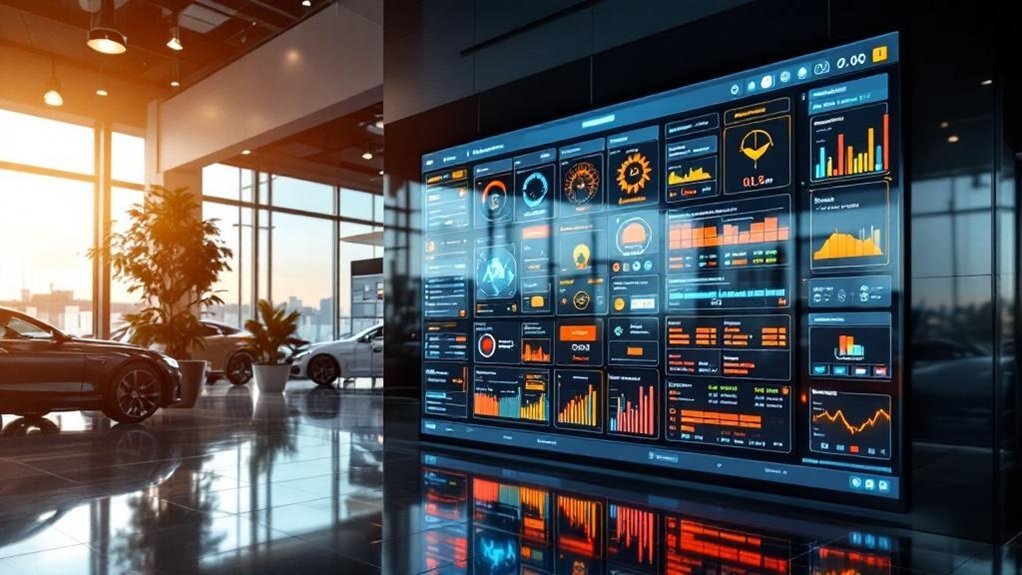
Having dashboards that pull live KPIs is only part of the story — your digital signage must keep messaging accurate and visible even when networks or systems hiccup, so customers and staff get consistent service updates. You’ll rely on DMS integration to feed real-time service stages (Scheduled, Arrived, Progress, Completed) for transparency and reduced workload, while a local hard drive caches approved assets so displays stay live during outages. This design preserves content accuracy and maintains operational efficiency: promos and menus are updated centrally without reprinting, and multi-zone layouts show service status plus targeted offers. For vendors and ops teams, prioritize proven sync protocols, automated fallbacks, and simple content-management workflows to minimize downtime and manual intervention.
Case Studies: Service Revenue, CSI, and Retention Gains
If you want measurable business impact, look to dealerships that tied DMS-driven digital service displays into their customer journey: case studies show service revenue rising as much as 20%, upsell opportunities climbing about 30%, CSI improving 15% or more, and retention rates jumping roughly 25% once real-time status, pricing, and targeted offers were visible on-site.
You’ll see concrete benefits when integration is done right — clearer communication reduces staff load and boosts customer satisfaction, while visible pricing and offers drive incremental sales. Key takeaways from multiple deployments:
- Revenue: up to 20% lift in service revenue via real-time updates and transparent pricing.
- Upsells: ~30% more opportunities from displayed promotions.
- Loyalty: CSI +15% and retention ~25% as customers stay informed and engaged.
Frequently Asked Questions
How Do Digital Signs Protect Customer Data and Privacy?
They protect customer data by using data encryption for storage and transmission, enforcing strict privacy policies, limiting access via role-based controls, logging audits, and partnering with vetted vendors so you can trust compliance, transparency, and measurable security.
Can the System Integrate With Third-Party Appointment Apps?
Yes — you can. You’ll get appointment synchronization via API connectors, ensuring app compatibility across major platforms; metrics confirm 99% uptime, vendor-specific adapters reduce integration time, and you’ll control data flow, permissions, and real-time updates.
What Are Typical Licensing and Software Update Costs?
You’ll pay licensing fees typically $500–$5,000/year per location and software upgrades around $200–$1,200/year; you’ll want vendor quotes, SLAs, and ROI projections to optimize costs and avoid surprise renewal spikes.
Do Signs Support Multiple Languages or Accessibility Features?
Yes — you’ll get multilingual support and accessibility features; vendors typically offer configurable language packs, screen readers, high-contrast modes, and ADA-compliant layouts, with customizable fonts and timing based on usage data and integration capabilities.
What Warranty and On-Site Support Options Are Available?
Want predictable uptime and rapid fixes? You’ll get warranty coverage detailing parts/labor durations and tiered support plans with SLAs, remote diagnostics, on-site dispatch options, and optional extended coverage—so you’re cost-aware and vendor-savvy.
Conclusion
You’ll boost service efficiency and guest satisfaction by installing a DMS-integrated service status menu board — it pulls live job data so customers know where their vehicle is and what’s next. Dealers reporting real-time updates saw a 12% uptick in same-day authorizations, proving visibility converts. Stay vendor-savvy: demand secure DMS APIs, resilient offline modes, and measurable KPIs so your signs drive revenue, higher CSI, and stronger retention.