
You should show real-time stock so customers know what’s available and you’ll cut order errors by about 20%. Highlight daily specials and limited-time offers to drive faster, higher-value impulse buys—these promos can lift conversions near 20%. Use dynamic visuals like rotating photos and short prep clips to boost engagement and featured-item sales up to 30%. Tie all three to inventory and performance metrics so updates are accurate and profitable, and keep going to see how to implement them step‑by‑step.
Key Takeaways
- Real-time item availability and stock levels to prevent orders for sold-out dishes and set accurate expectations.
- Current daily specials, promotions, and limited-time offers linked to inventory to drive urgency and higher-value purchases.
- Dynamic high-quality images and short prep clips that rotate based on performance to increase engagement and conversions.
- Live pricing and modifier options reflecting inventory and margin goals to avoid post-order adjustments and preserve profitability.
- Instant allergen, portion, and prep-time updates to improve order accuracy, reduce waste, and boost customer trust.
Real-Time Availability and Stock Levels

How much smoother would order fulfillment be if your digital menu always showed what’s actually in stock? You’d reduce disappointment and boost customer satisfaction by providing accurate, real-time availability that prevents ordering unavailable items. Data shows dynamic stock level updates cut order errors by about 20% and can lift sales up to 15% as guests choose items they see are ready to serve. By integrating inventory management with your digital menu, you’ll streamline supply chain logistics, minimize food waste, and make smarter purchasing decisions. Real-time visibility also lets you adjust offerings instantly to reflect current supply without guessing. Prioritizing these updates creates a transparent, efficient experience that aligns operational control with measurable customer benefits.
Daily Specials, Promotions and Limited-Time Offers
Sense of urgency sells: featuring daily specials and limited-time offers on your digital menu drives quicker decisions and higher-value orders by signaling scarcity and novelty. You should prioritize limited time promotions and seasonal specials in real time to boost impulse purchases—data shows up to a 20% lift—and to capitalize on customers who browse menus before choosing. Keep updates concise, targeted, and tied to inventory so offers stay credible. Use compelling descriptions that justify premium pricing and rotate themes to encourage repeat visits; 86% of diners research menus beforehand, so relevance matters.
Feature limited-time specials and seasonal offers in real time—concise, inventory-backed promotions drive impulse buys and higher checks.
- Highlight item, time window, and scarcity.
- Tie seasonal specials to premium pricing and margin goals.
- Update offers automatically based on stock and performance data.
Dynamic Visuals: Rotating Images and Live Dish Previews
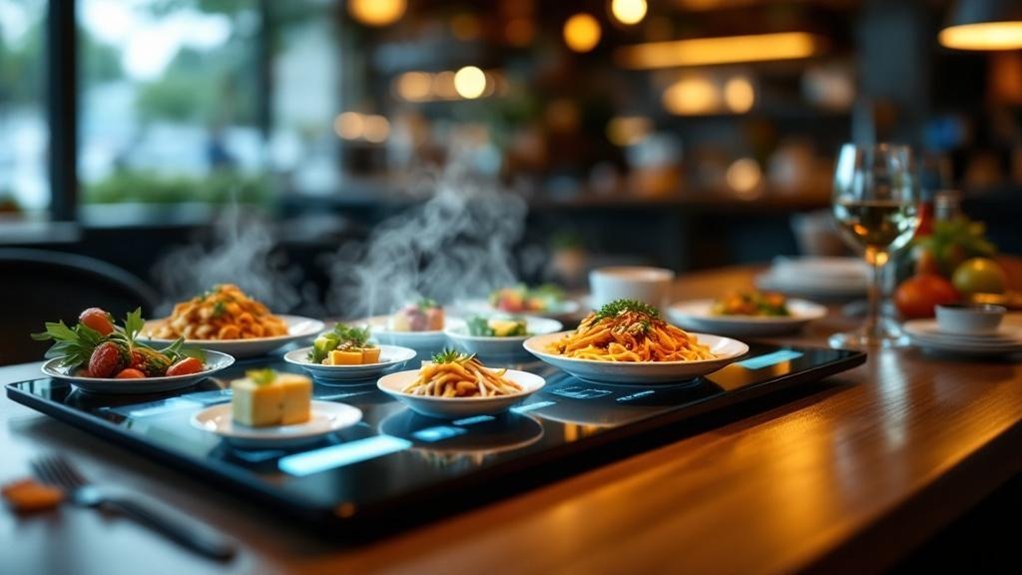
Use rotating, high-quality visuals and live dish previews to grab attention and convert visits into orders: studies show dynamic images can lift featured-item sales by up to 30%, while live previews set accurate expectations for portion and presentation, reducing disappointment and complaints. You should adopt interactive design elements—rotating photos, short preparation clips, and live previews—to boost customer engagement and guide choices. Presentations must be high-resolution, updated seasonally, and tied to promotions so data on impressions and conversions informs which assets rotate. Live previews reduce order disputes by aligning expectations, and prep videos stimulate impulse buys. Measure time-on-item, click-through, and conversion lift, then iterate visuals based on performance to maximize revenue and satisfaction.
Frequently Asked Questions
What Are the Three Main Principles to Consider When Planning a Menu?
Focus on clarity in design, strategic placement of high‑margin items, and enticing descriptions/visuals. You’ll improve user experience, use customer feedback and sales data to iterate, and drive conversions with strategic, customer-focused, data-driven choices.
When Updating Your Menu, What Are Three Indicators of Where to Make Changes?
Like a compass guiding you, you’ll use customer feedback, sales and real-time ordering data to spot underperformers, monitor market trends and seasonality to adapt offerings, and benchmark competitors’ moves to stay relevant and profitable.
What Are the Three Ways the Menu Functions as a Marketing and Communication Tool?
It markets by guiding choices through menu design, communicates promotions and availability in real time, and boosts customer engagement with visuals, descriptions, and data-driven suggestions that raise average order value and encourage repeat visits.
What Is the Most Important Consideration in Menu Planning?
The most important consideration is aligning menu variety with customer preferences — you’ve got to use data on trends and behavior to design offerings that match demand, boost satisfaction, and drive revenue through targeted, strategic choices.
Conclusion
You’re investing in real-time availability, daily specials, and dynamic visuals because customers expect accuracy, urgency, and inspiration — not static menus that disappoint. Yes, you might worry the tech feels complex, but imagine a guest tapping your menu, seeing exactly what’s in stock, a limited-time dessert counting down, and a live dish preview that drives the sale. Data shows those cues boost conversion; focus on simplicity, measurement, and continuous optimization to win repeat business.