

You’ll stop wasting time and overpaying once dealerships use digital price comparison boards that show real‑time, standardized fees and market offers. They give you clear, up‑to‑date cost breakdowns, reduce surprises from hidden charges, and sync online and in‑store prices so quotes match. AI personalization delivers tailored transparent offers, boosting trust and conversions. With standardized displays, you’ll pay for value and not guesswork — keep going to see how this changes buying and service decisions.
Key Takeaways
- They centralize real-time price, fee, and inventory data so customers see accurate, up-to-date service costs.
- Visible, standardized fee breakdowns eliminate hidden charges and reduce buyer confusion and disputes.
- Synchronizing online and in-store prices builds trust by preventing conflicting quotes and surprise add‑ons.
- AI-driven personalization and comparisons let shoppers evaluate tailored offers and confidently choose the best value.
- Transparent boards improve conversions and loyalty, since consumers pay more for predictable, clearly displayed pricing.
A Market in Transition: Why Digital Price Boards Matter

As buyers spend more time researching online, dealerships that don’t show transparent, real‑time pricing risk losing credibility and sales; 86% of U.S. consumers now prioritize clear pricing, yet only 21% find the car‑buying process completely transparent. You’re facing a digital evolution where shoppers expect instant, comparable data before they step onto the lot. Digital price comparison boards give consumer empowerment by surfacing real‑time offers and market supply, so buyers can negotiate from informed positions. With 73% willing to pay more for guaranteed transparency, implementing these tools isn’t optional—it’s competitive strategy. You’ll reduce friction, validate informed shoppers, and capture revenue those opaque competitors lose. Adoption aligns with modern research habits and closes the transparency gap dealerships urgently need to address.
How Pricing Transparency Restores Consumer Trust
Trust is rebuilt the moment pricing becomes predictable and visible; when you show real, up‑to‑date costs and break down fees, shoppers stop guessing and start buying. You’ll tap into consumer confidence: 86% of U.S. buyers prioritize transparency, yet only 21% find car buying fully transparent. That gap costs trust and sales. Implementing digital price comparison boards and clear pricing strategies signals honesty, and 73% of consumers will pay more for that certainty. Moving to a price‑to‑sell model cuts transactional tension, raises satisfaction, and drives referrals. Clear fee breakdowns directly correlate with better experiences, so present standardized, comparable figures across services. Do that, and you’ll convert skepticism into loyalty, higher margins, and measurable reputation gains.
The Hidden Costs That Confuse Buyers
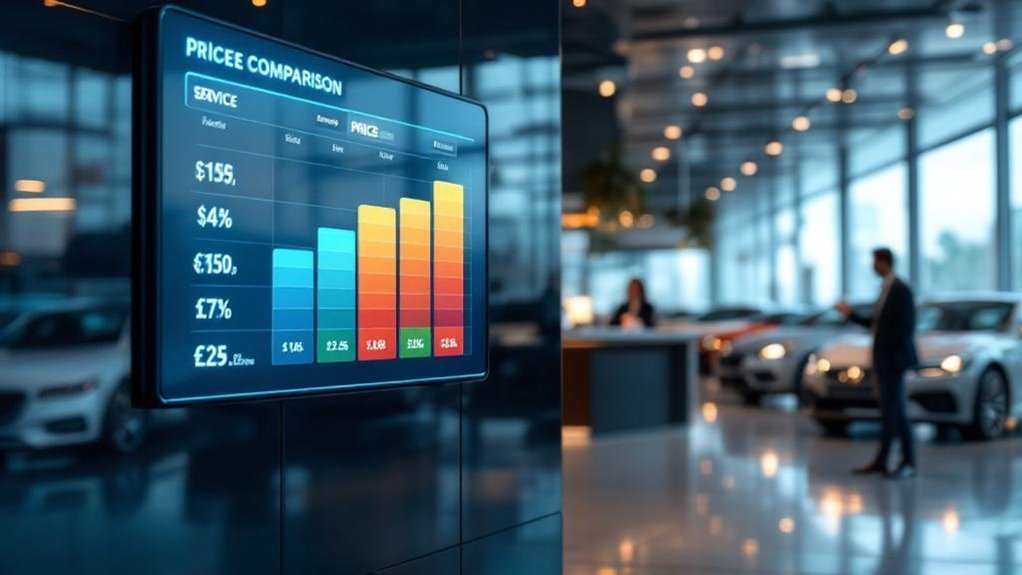
One of the biggest barriers to closing a deal is the surprise of hidden costs—undisclosed fees, inflated interest rates, and add‑ons that push the out‑the‑door price far above the sticker number—because 79% of buyers already don’t see car buying as transparent and regulators report billions lost to these practices. You feel betrayed when hidden fees or opaque financing snowball the total cost, and only 21% of consumers call the process fully transparent. Data shows 55% will pay more for trusted dealerships, so clarity on maintenance, insurance and finance charges directly protects loyalty. Solve financing confusion by surfacing APR, term effects and all fees upfront. That reduces disputes, preserves reputation and converts skeptical shoppers into repeat customers.
Synchronizing Online and In-Store Prices With Technology
When online listings and showroom tags don’t match, customers get suspicious fast — and that suspicion costs sales; syncing prices across web, mobile and in‑store displays with automated software and AI reduces that friction by ensuring the same APRs, fees and total out‑the‑door numbers are shown everywhere. You’ll build trust quickly when price synchronization eliminates surprise add-ons and conflicting quotes. Data shows 86% of U.S. consumers prioritize transparency, and 73% will pay more for guaranteed price transparency — leverage that by deploying digital price comparison boards that surface uniform offers. Automated updates cut human error, let customers verify deals without visiting competitors, and make your pricing defensible. The result: fewer lost leads, higher satisfaction scores, and a measurable competitive advantage.
Personalization and Trust: AI’s Role in Transparent Offers

Because buyers expect relevance and clarity, AI-driven personalization lets you surface offers that feel both tailored and transparent — increasing trust by showing financing, APRs, fees and trade-in values that match a shopper’s profile and search behavior. You’ll convert skepticism into confidence by aligning advertised and in-store prices and by presenting clear financing terms. Data shows 80% of consumers prefer customized experiences, so personalized offers drive measurable consumer engagement and repeat business. Key mechanisms include:
- Data‑driven price alignment: AI normalizes online vs. actual prices, reducing surprises.
- Transparent financing displays: APRs, fees, and trade values shown up front build trust.
- Tailored follow‑ups: Contextual offers based on behavior increase conversion rates and satisfaction.
AI scales transparency while keeping interactions relevant.
Using Video and Interactive Media to Explain Pricing
Video and interactive media clarify complex pricing faster than text alone, cutting confusion and boosting trust by showing exactly how APRs, fees, trade‑in values and incentives affect monthly payments. You’ll use video tutorials and interactive walkthroughs to break down financing, show 360° vehicle details, and deliver personalized follow-ups that raise engagement and conversions. Educational clips explain how digital price comparison boards work, while testimonial videos validate transparent practices. Interactive media lets buyers manipulate variables in real time, so value drivers become obvious. Embed these formats across your site and in lead follow‑ups to reduce friction and build credibility.
| Format | Purpose | Impact |
|---|---|---|
| Video tutorials | Educate pricing | +Trust |
| Interactive walkthroughs | Engage details | +Time-on-site |
| Personalized videos | Recap offers | +Conversions |
| Testimonials | Social proof | +Credibility |
| 360° views | Show condition | +Confidence |
Practical Steps Buyers Can Take When Comparing Prices

When comparing prices, you should check total ownership costs — taxes, fees, fuel, insurance, and projected maintenance — not just the sticker price. Always compare identical service items and warranty coverage line-by-line so you’re evaluating apples to apples. Document those comparisons and ask for written breakdowns to use as leverage in negotiations.
Check Total Ownership Costs
If you want an accurate comparison, don’t just look at sticker price — tally insurance, fuel, routine maintenance, expected repairs, and financing costs to see what each car will actually cost you over time. Use digital price comparison boards to run a quick ownership analysis: they aggregate insurer quotes, fuel economy, maintenance schedules, and current interest rates so you can compare total costs side‑by‑side. Verify figures on third‑party platforms and ask dealers for a full fee breakdown before signing. Stay alert to market trends—rising rates or parts shortages can flip your math. Follow these steps:
- Pull insurer, fuel, and maintenance data into the tool.
- Add expected repair and financing fees.
- Compare summed total costs across options.
Compare Identical Service Items
After you’ve run total‑ownership numbers, the next step is to compare identical service items across dealers so you’re not paying for different scopes of work. Use digital price comparison boards to confirm price accuracy and service consistency: list part, labor, and inclusions, then cross‑check advertised vs. quoted prices. Document every communication and save screenshots to prevent hidden fees. Leverage third‑party verification to build leverage—73% of buyers pay more for guaranteed transparency—and remember 86% prioritize it. Side‑by‑side tables let you spot discrepancies fast, helping you negotiate better and account for rising financing costs. Be systematic, insist on written scope, and walk away if a dealer can’t match documented standards.
| Item | Labor | Inclusions |
|---|---|---|
| Oil change | $ | Filter, disposal |
| Brake pad | $ | Rotor check |
| Inspection | $ | Report, taxes |
Building Reputation and Repeat Business Through Openness
You’ll build lasting trust by publishing transparent service pricing so customers know what to expect before they step on the lot — research shows 86% of consumers prioritize transparency and 73% will pay more for it. Matching online quotes to in‑store prices with digital comparison boards cuts skepticism and supports the 88% of buyers who say trust is essential. That consistency not only boosts customer satisfaction where only 21% now see the process as fully transparent, it also drives repeat business and higher margins.
Transparent Service Pricing
When dealerships put clear service prices front and center—on digital comparison boards or service menus—they’re answering what 86% of consumers demand: transparency, which builds trust and encourages repeat business. You’ll meet customer expectations and sharpen pricing strategies by showing exact fees, labor rates, and common-package costs. That clarity reduces skepticism—only 21% of buyers now feel the process is fully transparent, so you’ve got room to lead.
- Show standardized service fees so advertised and billed prices match.
- Publish labor rates and parts markups to cut perceived deception.
- Highlight guarantees and comparisons to convert new customers willing to pay for transparency.
Transparent pricing boosts loyalty, reputation, and acquisition—73% will pay more when they trust your prices.
Consistent Online–In-Store Trust
Because customers expect consistency across channels, matching your online listings to in-store offers is critical: 86% of consumers say transparency matters and only 21% feel the buying process is fully transparent, so any price gaps will erode trust fast. You can adopt trust building strategies that prioritize pricing alignment — move from a price-to-negotiate to a price-to-sell model to reduce friction and increase repeat purchases. Automated synchronization of rates across websites, apps, and showroom displays guarantees the same figure wherever customers interact, cutting disputes and surprise fees. Communicate all fees upfront and use digital price comparison boards to prove consistency in real time. That clarity not only restores confidence but also creates a measurable reputation advantage in a competitive market.
Frequently Asked Questions
Why Should You Always Be Transparent With Vehicle Pricing?
You should always be transparent with vehicle pricing because it builds consumer trust, reduces negotiation friction, increases satisfaction, and boosts sales; data shows clarity raises willingness to pay and prevents post‑purchase regret, improving your reputation and referrals.
What Is a Red Flag in a Dealership?
A red flag is murky pricing—like smoke hiding a fire—when dealership tactics include hidden fees, aggressive negotiation, or mismatched online versus in‑store pricing. Data show clear pricing strategies build trust; avoid places lacking transparency.
Why Is Transparent Pricing Important?
Transparent pricing matters because it builds consumer trust, boosts satisfaction, and cuts negotiation friction; you’ll keep more loyal buyers and can charge premiums, since data shows most customers prioritize transparency and will pay more for it.
What Is the Four Square Trick at a Car Dealership?
Contrasting clarity with confusion, the four square is a pricing strategy that splits price, trade‑in, down payment and monthly payment. You’ll feel pressured and misled as it hides true cost, complicating honest comparison and trust.
Conclusion
You’re right to demand clarity — dealerships with digital price boards make that possible, and it’s working: studies show 72% of consumers are likelier to buy from businesses that disclose full pricing upfront. By synchronizing real-time online and in-store figures, using AI to personalize offers, and embedding short explainer videos, dealers cut confusion and build repeat customers. Insist on transparent comparisons; doing so not only protects your wallet but forces the market toward honesty and better service.