
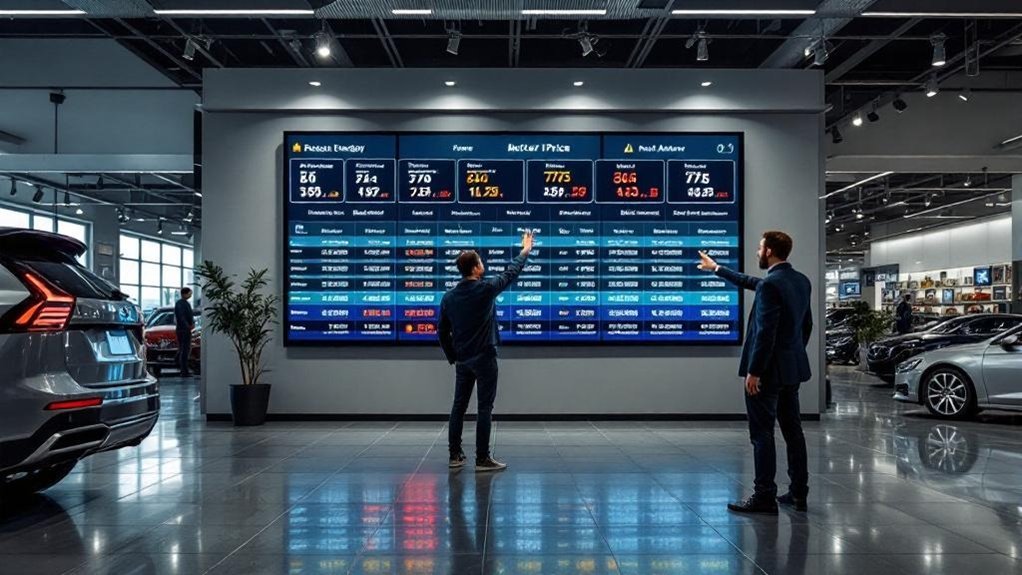
You need real-time updates on your dealership’s digital price comparison board because they instantly align online, lot, and competitor prices to protect margins and recover lost sales. Live feeds cut manual errors and labor, speed price reactions to market shifts, and sync inventory with local demand signals. Accurate, consistent pricing builds measurable customer trust and reduces buyback risk. Automated rules guard profitability while enabling dynamic moves — keep going to see practical integration and maintenance steps.
Key Takeaways
- Prevents customer abandonment by ensuring online and lot prices match in real time, preserving trust and conversion rates.
- Enables dynamic pricing to respond instantly to competitor moves and local demand, protecting margins and sales velocity.
- Eliminates manual update delays and human errors, reducing mispriced vehicles and operational workload.
- Keeps inventory visibility accurate across platforms, aligning SKU availability with buyer interest for better turnover.
- Provides audit trails and alerts for feed anomalies, enabling fast corrections and consistent brand credibility.
What “Real-Time” Data Means for Dealership Pricing
Because pricing can shift by the hour, real-time data lets your dealership push instant updates to digital displays and systems so customers always see the current vehicle prices. You’ll use dynamic pricing to respond to competitor moves and demand signals, keeping listings aligned across online and in-store channels. That alignment boosts data accuracy, reducing pricing discrepancies that erode trust and cause service friction. With real-time feeds, you’ll adjust margins to optimize inventory turnover and profitability while transparently communicating price changes to shoppers. Operationally, this cuts manual updates and error rates, letting sales teams focus on conversions. Measurable outcomes include faster turn rates, fewer price disputes, and improved shopper confidence — all driven by accurate, synchronized pricing informed by live market inputs.
How Real-Time Price Updates Reduce Lost Sales
When your price board reflects live market changes, you cut the main causes of lost sales: outdated listings, online–in-store mismatches, and slow competitor response. You get measurable competitive advantages by ensuring displayed prices match your online inventory and market moves, increasing buyer trust and conversion rates. Real-time updates improve customer experience through transparency and fewer surprises at checkout.
- Accurate live pricing prevents customers from abandoning purchase decisions due to outdated info.
- Synchronized online and in-store figures eliminate frustrating discrepancies that erode trust.
- Rapid reaction to competitor moves lets you capture price-sensitive buyers before they leave.
- Reduced human-error pricing incidents lower the chance of mispriced vehicles and lost revenue.
This data-driven approach protects sales and strengthens your brand positioning.
Operational Savings From Moving Away From Manual Pricing

You’ll cut labor hours substantially by replacing manual price updates with automated digital boards, freeing staff for higher-value tasks. You’ll also eliminate recurring material costs for paper, ink, and printer upkeep, improving your bottom line. Together these savings tighten your operational budget and support faster, more consistent pricing across channels.
Reduced Labor Hours
Although it may seem small at first glance, moving from manual price tags to a digital price comparison board cuts weekly labor hours substantially — dealerships report reclaiming several hours per vehicle from eliminated tasks like printing, swapping displays, and chasing down lost keys. You’ll see measurable labor efficiency and clear time savings as staff shift from admin chores to customer-facing activities. Automated, real-time updates remove manual correction cycles and lost-key delays, reducing error-driven rework. Typical impacts include:
- Faster price changes across the lot with a single update, eliminating manual trips.
- Fewer hourly employees tied to display maintenance and printing duties.
- Reduced time correcting pricing discrepancies from staggered manual updates.
- More staff hours available for sales, lead follow-up, and customer engagement.
This drives operational productivity and higher ROI per labor dollar.
Lower Material Costs
Beyond reclaimed labor hours, you’ll see immediate cuts to material and operational expenses by replacing paper-based pricing with digital boards. You’ll eliminate recurring costs for paper, ink and print runs—reducing vendor spend and printer maintenance line items—so your balance sheet reflects measurable digital savings. Automated updates cut staff time devoted to manual changes, lowering labor expense and freeing teams for revenue-driving tasks. You also reduce risks tied to lost keys and ad-hoc fixes that generate unplanned replacement costs. With real-time price management, you maintain pricing accuracy across the lot, which minimizes revenue leakage from mispriced vehicles and preserves customer trust. The result: predictable, lower material overhead and operational efficiency that supports your brand and margins.
Improving Customer Trust With Accurate, Synchronized Prices
When dealerships keep digital price boards synchronized in real time, customers see accurate, up-to-the-minute prices that cut confusion and build measurable trust. You’ll deliver customer transparency and demonstrate pricing integrity by removing discrepancies between online listings and in-store displays. Studies show buyers prefer clear, current prices; real-time updates reduce disputes, speed decisions, and protect margins by aligning offers with market conditions.
- Instant alignment of web and lot prices removes doubt at purchase
- Reduced complaints and returns from pricing errors improve brand reputation
- Faster price adjustments keep you competitive without manual lag
- Clear, consistent pricing drives loyalty and repeat visits
Adopting synchronized, data-driven pricing is a tangible signal that your brand values transparency and reliability.
Integrating Inventory and In-Market Demand for Smarter Pricing

You’ll align live inventory with local demand signals so pricing updates reflect actual stock and buyer interest in real time. Using zip-code level demand analytics, the board will surface which units command premium pricing and which need competitive markdowns. Automated margin protection rules keep price moves profitable while preventing undercutting and margin erosion.
Live Inventory Alignment
Because real-time inventory feeds connect your lot to over 5.6 million in-market shoppers, aligning live stock levels with current demand lets you price more competitively and move units faster. You’ll use live inventory trends to inform pricing strategy shifts, reducing days-to-sale and avoiding stale stock. Accurate feeds let you react to make/model shortages or surpluses and maintain brand positioning.
- Monitor SKU-level availability against local search volume in real time.
- Auto-adjust MSRP-to-list spreads when a model’s demand spikes or softens.
- Prioritize promotions on overstocked trims to protect margins.
- Display updated, trust-building prices that convert window shoppers.
This tight integration delivers measurable inventory turnover improvements and consistent customer-facing brand confidence.
Demand-Driven Price Signals
If you tie your live inventory to real-time demand signals, you’ll price to match actual buyer interest instead of relying on stale heuristics—integrating feeds from sources like ZeroSum lets you identify high-demand SKUs and adjust list prices, incentives, and promotions instantly so inventory turns faster, margins are protected, and shopper trust increases through consistently accurate listings. You’ll use demand metrics to prioritize SKUs, feeding them into pricing algorithms that update the comparison board continuously. That alignment boosts competitiveness, transparency, and conversion by reflecting true market willingness to pay. Below is a quick snapshot to illustrate focus areas and expected outcomes.
| Focus | Data Input | Expected Outcome |
|---|---|---|
| SKU priority | Demand metrics | Faster turns |
| Price update | Real-time feed | Accurate listings |
| Promotion | Incentive signals | Higher traffic |
| Reporting | Conversion rates | Better strategy |
| Trust | Transparency | Increased sales |
Automated Margin Protection
Linking demand-driven price signals to automated margin protection lets you keep profitability front and center while prices change in real time. You’ll use automated pricing that merges inventory status with live market demand, so each SKU’s price reflects competitive conditions and desired margin optimization. This reduces guesswork and the risk of stale pricing hurting turnover or profits. Real-time updates let you react to demand shifts immediately, improving sell-through rates and protecting per-vehicle margins.
- Live demand feeds adjust prices to prevent overpricing or underpricing.
- Inventory-aware rules prioritize margin targets across models and trims.
- Automated pricing engines execute changes within defined margin-optimization guards.
- Reporting ties price moves to profit and turnover metrics for continuous calibration.
This keeps your brand profitable and responsive.
Best Practices for Maintaining a Real-Time Price Comparison Board

When you maintain a real-time price comparison board, integrate live DMS feeds and automated syncing across platforms so displayed prices, inventory, and promotions stay accurate and trustworthy; schedule routine technical checks, train staff on monitoring procedures, and use customer feedback to quickly correct discrepancies and refine the board’s effectiveness. You should prioritize real time synchronization and measurable pricing strategies: automate DMS-to-display pipelines, log update latencies, and set alerts for feed anomalies. Schedule weekly health checks, monthly reconciliation reports, and quarterly audits to validate margins and promotional accuracy. Train teams on standardized monitoring playbooks and corrective workflows so responses are under defined SLAs. Track customer-reported issues and resolution times, then iterate display logic to reduce errors and preserve brand credibility.
Frequently Asked Questions
Do Dealerships Have to Honor Online Price Mistakes?
No, you usually don’t have to honor online price mistakes; dealers correct price discrepancies under UCC principles and disclaimers. Still, consumer rights and transparency matter, so prompt, data-driven updates build trust and reduce disputes.
What Is a Red Flag in a Dealership?
A red flag in a dealership is any warning sign—like inconsistent pricing, hidden damage, aggressive sales tactics, or high staff turnover—that signals poor dealership practices and risks customer trust, legal exposure, and brand reputation.
What Is the Four Square Trick at a Car Dealership?
65% of buyers report confusion; the four square is a pricing strategy showing vehicle price, trade-in, down payment, and monthly payment. You’ll spot shifting figures used to steer focus, so question each component carefully.
What Is the Red Flag Rule for Car Dealers?
The Red Flag Rule requires you to detect red flag indicators, implement a written identity-theft program, monitor financing transactions, train staff, and maintain dealership compliance to prevent identity theft — reducing risk, fines, and reputational damage.
Conclusion
You’ll boost sales and cut costs when your price board updates in real time — it’s that simple. For example, a regional dealer who switched to automated, synchronized pricing saw a 12% uptick in conversions and a 25% drop in price-related customer complaints within three months. Use live inventory feeds, market signals, and automated rules to keep offers accurate and consistent so your brand looks reliable, margins stay protected, and customers trust what they see.