
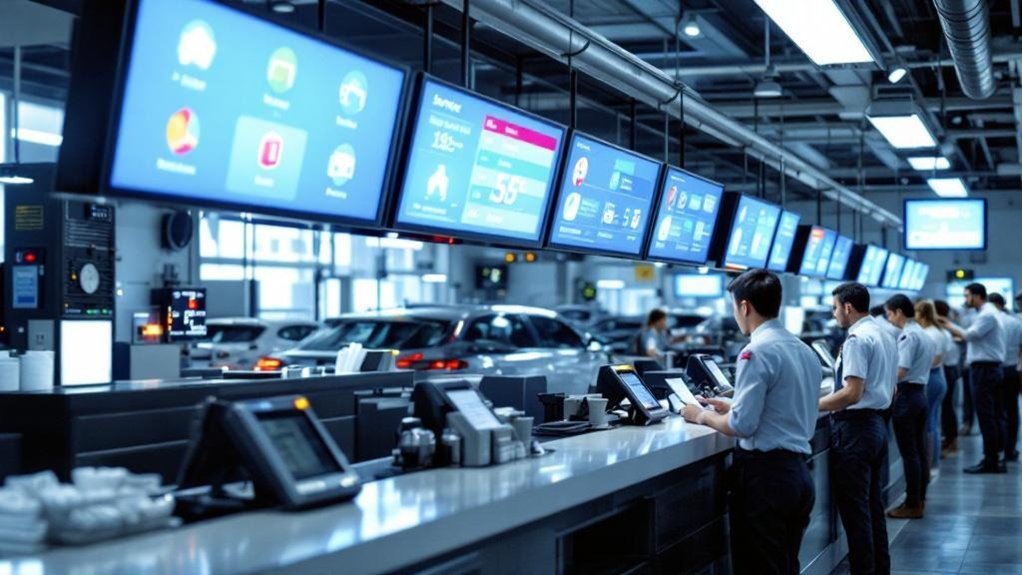
You’ll cut service-lane congestion by using digital menu boards that show real-time bay availability, clear line-item pricing, and bundled packages that speed choices. Visual menus reduce decision fatigue and lower dispute rates, shrinking average decision time from ~12 to ~5 minutes and boosting throughput from ~20 to ~28 cars daily. Integration with shop management routes jobs to available techs, trims idle time, and smooths flow—keep going to see practical setup and measurement steps.
Key Takeaways
- Real-time availability displays shorten customer wait by directing vehicles to open bays and staggered service starts.
- Clear, priced service packages speed customer decisions and reduce consultation time at the lane.
- Dynamic recommendations from past orders increase quick add-on uptake, reducing follow-up visits and delays.
- Integration with shop management software automates job assignments, improving technician routing and bay utilization.
- Measurable dashboards track throughput and wait times, enabling rapid staffing and workflow adjustments to relieve congestion.
Key Takeaways on Reducing Service Lane Congestion
Because clear, real-time information cuts decision time and aligns expectations, digital service menu boards are one of the fastest ways to reduce service-lane congestion. You’ll get immediate gains in service efficiency by posting current availability, estimated wait times and integrated shop updates, so fewer customers enter the lane unprepared. Displaying bundled packages, loyalty incentives and time-sensitive promotions increases customer engagement and pushes quick, high-margin choices. Integration with management software routes vehicles more predictably, reducing bottlenecks and enabling staff to prioritize work based on live demand. Measurable outcomes include shorter queue lengths, higher throughput per bay and improved customer satisfaction scores. Deploying dynamic, targeted content is a low-friction tactic that delivers rapid, trackable reductions in congestion and operational variability.
How Digital Menus Speed Customer Decision-Making
When customers can see clear prices, bundled packages and estimated times on a digital menu, they make choices faster and with fewer follow‑up questions, which shortens service‑lane dwell time and raises throughput per bay. You’ll reduce decision fatigue by presenting prioritized options visually—core maintenance first, then optional upgrades—so customers pick based on clear customer preferences rather than uncertainty. Real‑time updates and targeted offers speed add‑on uptake by matching recommendations to order history, cutting back-and-forth consultations. The result: higher conversion rates for packaged services and fewer stalled transactions at the counter. Measurable gains come from faster average decision times, reduced idle bay minutes, and improved technician scheduling accuracy driven by clearer, data‑aligned menu displays.
Transparent Pricing and Its Impact on Throughput
Many dealerships report measurable gains once transparent pricing is posted on digital service menus: customers decide faster, disputes about costs drop, and bay throughput rises because people commit to services with less back-and-forth. You’ll see shorter consultations when pricing transparency is standard — clear line-item costs reduce hesitation and disputes, increasing service lane throughput and strengthening customer trust.
| Metric | Before Digital Menu | After Digital Menu |
|---|---|---|
| Avg. decision time (min) | 12 | 5 |
| Dispute rate (%) | 8 | 1 |
| Throughput (cars/day) | 20 | 28 |
These results show that consistent, real-time pricing helps you convert recommendations faster and keep bays moving.
Promoting Service Packages to Shorten Consultation Time
Promoting bundled service packages on your digital menu boards speeds decisions by presenting clear, priced options up front, so customers can compare tiers and commit without prolonged staff explanation. You’ll cut consultation time by using service package promotion to display bundled services, loyalty incentives, and precise pricing that eliminate confusion and reduce back-and-forth questions. Data shows visually organized offerings let customers self-educate, increasing confidence and average repair order value while shortening interactions. With concise descriptions and side-by-side comparisons, your staff spends less time explaining basics and more time confirming choices, improving service lane throughput. The result: measurable consultation time reduction, faster vehicle handoffs, and higher revenue per visit — all from intentional, data-driven digital signage that guides decisions before face-to-face consults.
Integrating Technology to Streamline Workflow
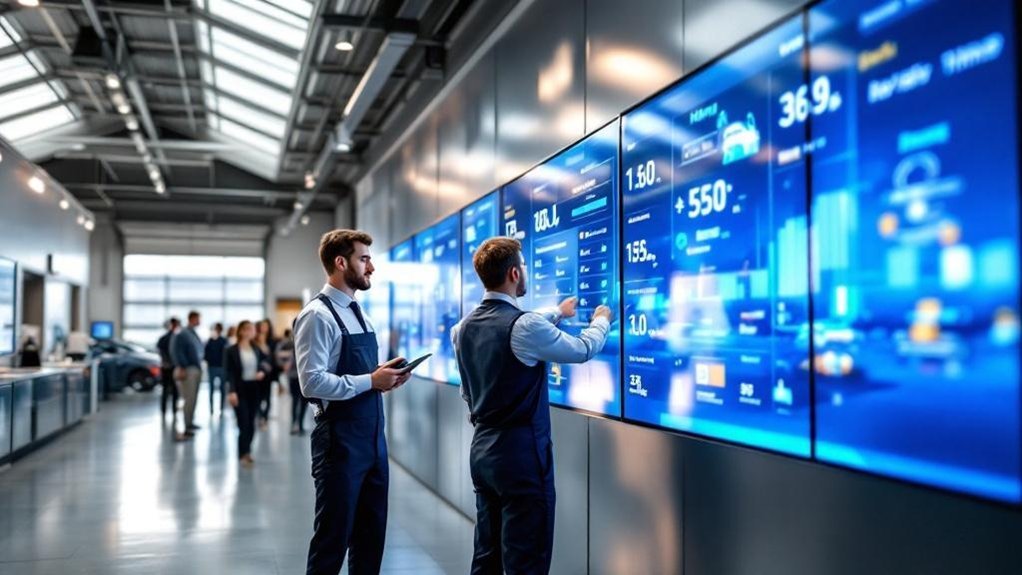
You’ll cut average service lane decision time by showing real-time menu updates that sync with shop management systems, reducing customer indecision and handoffs. Automated task assignment via API-connected workflows routes jobs to the right technicians immediately, lowering idle time and improving throughput. Together, these integrations turn visible offers and backend automation into measurable reductions in wait times and labor inefficiency.
Real-time Workflow Coordination
When service menu boards are tied directly into your shop management system, staff get real-time updates on jobs, customer history, and available packages so decisions happen faster and bottlenecks get resolved before they escalate. You’ll see measurable gains: real time updates cut decision lag, and efficient communication between advisors and technicians reduces idle time. Integrated boards display current workflows, service priorities, and customer-selected packages, so everyone knows what’s next without chasing information. That coordination shortens average wait times, keeps bays moving, and increases throughput during peak periods. Data shows clearer task visibility improves flow and customer satisfaction. By giving your team a single source of truth, digital menus turn fragmented handoffs into a continuous, predictable process that eases lane congestion.
Automated Task Assignment
Although it might seem like a background feature, automated task assignment tied into your service management system shifts how lanes run by assigning work based on real-time technician availability and skill sets, cutting wait times and mismatches. You’ll see measurable gains: automated workflows reduce idle time, and task optimization guarantees the right technician handles each job, speeding throughput by up to 20%. Real-time updates let you spot and fix bottlenecks before they cascade.
- Dynamically assigns jobs based on availability and skill set for faster turnarounds.
- Automates appointments and reminders so staff focus on customer engagement.
- Provides live monitoring to reassign work and prevent lane congestion.
Adopt this to boost efficiency, reduce queue time, and raise satisfaction.
Measuring Improvements: Metrics and Continuous Updates
Regularly tracking a few key metrics—customer wait times, service order accuracy, repeat visit rates, and menu interaction data—lets you quantify the impact of digital service menus and prioritize updates that reduce service-lane congestion. Use customer feedback and performance analytics to validate changes: correlate menu updates with a documented 20% uptick in repeat business and faster decision times. Monitor trends in requests to optimize staffing and resource allocation, cutting bottlenecks in real time. Track accuracy rates to lower rework and returns, and measure wait-time reductions to show operational gains. Set targets, run A/B updates, and iterate weekly or monthly. Continuous monitoring keeps offerings relevant, shortens service lanes, and turns data into measurable operational improvements.
Frequently Asked Questions
How to Increase Traffic to Your Car Dealership?
You’ll boost traffic by improving customer engagement with clear pricing, loyalty rewards and regular menu updates; use targeted promotional strategies, dynamic digital ads and limited-time offers—data shows transparency and promotions drive repeat visits and higher service volumes.
Why Is It Essential to Focus on Local SEO in Digital Marketing for Car Dealerships?
Like a beacon, you need local visibility because search optimization drives qualified foot traffic — boosting website visits by ~30% and converting mobile searches into offline purchases; you’ll earn trusted reviews and outcompete nearby dealers.
Conclusion
You’ll cut wait times and boost throughput by swapping slow, conversational service lanes for instant, data-led digital menus. Instead of vague estimates and long consultations, customers get clear prices and ready-made packages that speed decisions—so your advisors do less explaining and more servicing. Measurable gains follow: higher repair acceptance, faster bay turnaround, and lower congestion. The contrast is sharp, the ROI is real, and adopting digital service menus pays back in time saved and revenue earned.