

You need real-time BDC-to-sales handoff metrics on your sales leaderboard to stop leads from slipping and to hold teams accountable. Track Appointment Confirmation Rate and Handoff Response Time, and surface pass timestamps, contact attempts, and conversion windows. Integrate with your DMS for live status updates so you can spot bottlenecks, assign coaching, and run short contests tied to conversion lifts. Use leaderboard views to align BDC and reps around clear KPIs — keep going to uncover setup and coaching tactics.
Key Takeaways
- Show real-time Appointment Confirmation Rate to track BDC effectiveness at converting contacts into scheduled showroom or test-drive visits.
- Display Handoff Response Time to measure average interval between BDC pass and sales rep first contact for accountability.
- Surface live lead status and conversion stage to quickly identify bottlenecks and prevent lead leakage.
- Integrate DMS data for automated attribution of revenue and downstream close rates to each BDC-to-sales handoff.
- Use leaderboard-driven coaching and contests tied to handoff-to-sale metrics to boost performance and sustained improvements.
Why Real-Time BDC-to-Sales Handoff Metrics Matter

When you track real-time BDC-to-sales handoff metrics, you get clear, actionable visibility into how leads move from initial contact to sales opportunity, allowing you to spot drop-offs and fix them quickly. You’ll use real-time data to measure conversion rate at each stage, creating performance visibility that holds BDC and sales teams accountable. That visibility uncovers bottlenecks so you can intervene and improve closing ratios. Displaying metrics on the sales leaderboard gamifies performance, boosting collaboration and urgency. Automated reporting captures call details and appointments, proving which lead management tactics generate genuine opportunities. With precise, timely insights, you can align incentives, refine processes, and feed strategic planning that increases throughput and profitability without guesswork.
Key Metrics to Track During the Handoff
Focus on two real-time KPIs: Appointment Confirmation Rate and Handoff Response Time, since they directly predict conversion velocity and customer experience. You’ll measure how many BDC-scheduled appointments are confirmed and how quickly sales acknowledges and acts on each handoff. Track both metrics continuously to spot friction points, prioritize coaching, and reduce lead leakage.
Appointment Confirmation Rate
Because confirmed appointments strongly predict showroom traffic and technician utilization, the Appointment Confirmation Rate quantifies the percentage of scheduled visits that customers have explicitly confirmed, giving you a clear measure of BDC effectiveness in securing attendance. Track Appointment Confirmation Rate on your Sales Leaderboard to spot trends in customer engagement and evaluate appointment setting and follow-up processes. Break the metric down by call type and service category to pinpoint weak spots needing training or resource shifts. Use real-time metrics to flag likely no-shows so you can redeploy capacity and preserve sales opportunities. A rising rate signals effective BDC communication and performance tracking; a falling rate demands rapid refinement of scripts, timing, or confirmation channels to protect conversion rates and operational efficiency.
Handoff Response Time
If your team wants to keep BDC-generated momentum from cooling off, measure Handoff Response Time—the average interval between a BDC pass and the sales rep’s first contact—and aim for sub‑5‑minute engagement based on industry benchmarks. You’ll use real-time metrics to monitor lead response time across the BDC-to-sales exchange, tracking average seconds/minutes and the percentage of handoffs that get immediate follow-up. Correlate those response bands with conversion rates to quantify follow-up effectiveness and impacts on sales performance. Flag reps or shifts where sales team efficiency lags, then run targeted coaching or routing changes. By linking handoff response time to customer engagement and customer satisfaction scores, you’ll prioritize interventions that raise conversion rates while reducing lead leakage.
How DMS Integration Enables Live Handoff Data

When your DMS is integrated with the BDC, you get live handoff data that lets you monitor conversion rates, appointment confirmations, and lead statuses in real time, so you can spot bottlenecks and act immediately. You’ll use DMS integration for real-time tracking of BDC-to-sales handoff metrics, feeding live updates to the sales leaderboard so sales performance is visible and competitive. Key performance indicators like lead conversions and appointment confirmations are tracked continuously, letting you diagnose process gaps and training needs.
- Monitor conversion timelines and appointment confirmations to reduce lost leads.
- Surface KPIs on the sales leaderboard to drive a competitive environment and faster response.
- Use live updates to align BDC and sales actions and improve overall sales performance.
Improving Closing Ratios With Handoff Visibility
Although the mechanics of lead transfer are often overlooked, real-time handoff visibility on the Sales Leaderboard gives you measurable leverage to boost closing ratios by highlighting which handoff practices actually convert. You’ll use real-time metrics to monitor BDC-to-sales handoff effectiveness — call-to-appointment and appointment-to-sale rates — so you can quantify lead conversion and improve sales performance. Visibility drives accountability and strengthens communication and collaboration between BDC and sales teams, reducing dropped leads. Data-driven insights let managers act fast on patterns that suppress closing ratios and identify training needs without guesswork. A structured, metric-focused approach converts visibility into repeatable processes, lifting closing ratios and profitability while aligning teams around measurable goals.
Coaching Opportunities Identified by Handoff Metrics
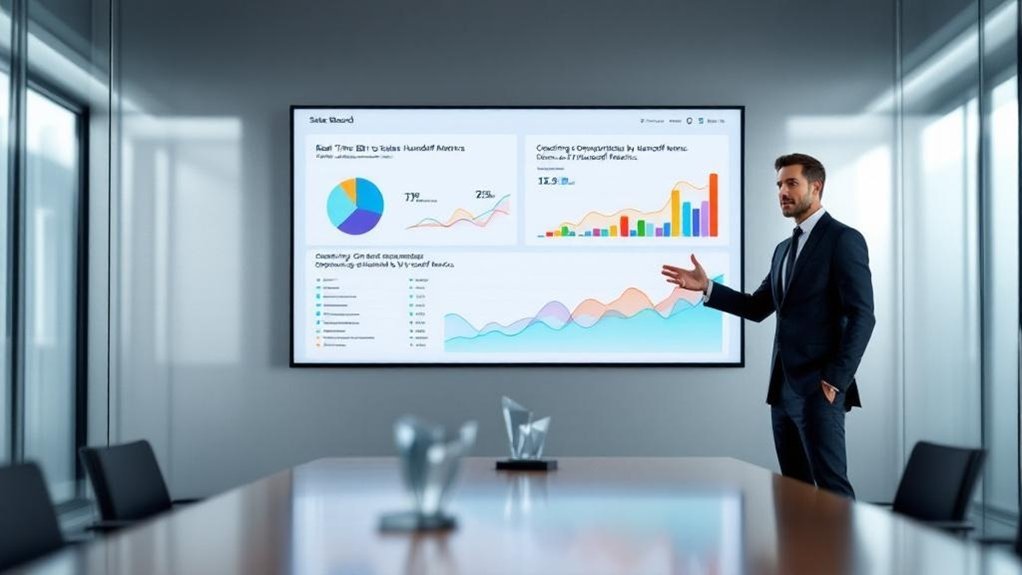
Anyone looking at real-time BDC-to-sales handoff metrics on the Sales Leaderboard will quickly spot targeted coaching opportunities, because conversion rates, contact-to-appointment timing, and appointment-to-sale ratios reveal exactly where process breakdowns and skill gaps exist. You can use those insights to drive measurable performance improvement and accountability across the team. Focus coaching on clear, data-backed deficits:
Real-time Sales Leaderboard metrics reveal where handoffs fail—use them to target coaching, track progress, and drive accountability.
- Rapid interventions where lead follow-up effectiveness is low, pairing coaching on sales techniques with monitored follow-up cadence.
- Communication strategies for reps whose appointment-to-sale ratios lag despite timely handoffs, using role-play and objection-handling drills.
- Targeted retraining for individuals with poor conversion rates, tying progress to Sales Leaderboard metrics and weekly performance reviews.
This approach aligns BDC-to-sales handoff metrics with strategic development and sustained sales team performance.
Designing Leaderboard Views for BDC and Sales Teams
A tailored Sales Leaderboard view gives you a real-time lens into BDC-to-sales handoffs, letting teams monitor lead response time, appointment scheduling rates, and conversion metrics side-by-side to pinpoint where process or skill gaps are costing deals. Design views that surface key performance indicators—lead response, appointments set, qualified leads passed, and conversion percentage—so both BDC and sales see the same performance metrics. Use real-time data integration from the DMS to provide instant feedback, fueling accountability and enabling dynamic strategies when trends shift. Configure individual and team panes to foster healthy competition while preserving collaboration. Prioritize clarity: sortable columns, threshold highlights, and trend sparklines that translate raw numbers into actionable insights to boost dealership performance.
Using Handoff Data to Run Effective Sales Contests

Use handoff-to-sale conversion rates to set clear contest goals and reward the reps who turn transferred leads into closed deals. Track time-to-contact wins so you can incentivize rapid follow-up and shorten the handoff-to-sale timeline. Tie rewards to deal-attribution tracking to guarantee credit is accurate and contests drive the right collaborative behaviors.
Handoff-to-Sale Conversion
When you tie real-time BDC-to-sales handoff conversion rates to targeted contests, you get precise, actionable incentives that raise closing ratios and revenue. You’ll use handoff metrics on the sales leaderboard to spotlight high-performing salespeople and drive measurable behavior change. Track conversion rates by source, rep, and communication methods to design contests that reward what actually closes.
- Run short, focused sales contests based on recent handoff-to-sale conversion windows to accelerate results.
- Compare methods (call, text, email) in leaderboard reports to steer coaching and refine follow-up scripts.
- Reward team improvements in conversion rates and customer satisfaction while monitoring for sustained performance.
This strategic, data-driven approach creates a streamlined sales process and higher customer satisfaction.
Time-to-Contact Wins
Building on handoff-to-sale conversion tracking, Time-to-Contact Wins focuses on how quickly your team reaches leads after a BDC handoff and uses that metric as the contest KPI. You’ll use time-to-contact as a clear, measurable metric on the sales leaderboard to drive accountability and rapid follow-up. Real-time BDC-to-sales handoff data lets you run sales contests that reward fastest response and consistent performance, boosting customer engagement and conversion rates. Track trends to spot top performers and process gaps, then calibrate benchmarks that align with improved closing ratios. Contests tied to these metrics create targeted incentives, improve response discipline, and provide actionable analytics for coaching. Ultimately this strategic, data-driven approach raises performance while keeping results transparent and fair.
Deal-Attribution Tracking
Because real-time BDC-to-sales handoff data ties each sale back to the originating agent, deal-attribution tracking gives you a precise, auditable way to credit performance and design contests that drive the right behaviors. You’ll use deal-attribution tracking and real-time metrics to build transparent sales leaderboards that boost accountability and sharpen performance evaluation. Handoff data lets you identify top BDC and sales performers, improve lead quality, and raise conversion rates through targeted coaching. Sales contests become measurable, fair, and aligned with business goals when they’re informed by BDC-to-sales handoff data.
- Reward structures tied to conversion rates and lead quality.
- Leaderboards showing individual contributions for accountability.
- Coaching triggers based on auditable handoff and outcome metrics.
These data-driven strategies increase efficiency and motivate higher sales.
Measuring ROI From Improved Bdc-To-Sales Processes

ROI measurement starts with clear, real-time visibility into how many BDC leads actually turn into sales and what revenue each touchpoint produces. You’ll use BDC,sales,metrics,ROI,performance,tracking,conversion,engagement,reporting,strategies to map outcomes to actions. Integrate real-time data so you can attribute revenue accurately, spot which lead sources and communication patterns yield higher conversion, and reallocate resources to maximize margins. Monitor appointment scheduling success and downstream close rates to pinpoint coaching gaps and improve agent performance. Automated reporting simplifies recurring analysis, letting you compare strategy iterations and quantify incremental revenue per investment. When you measure ROI this way, decisions become evidence-based: shift spend to top-performing channels, refine scripts that boost engagement, and scale processes that demonstrably lift sales.
Frequently Asked Questions
What Is the Pulse Sales Leaderboard?
The PULSE Sales Leaderboard is your data-driven platform showing sales performance and real time metrics, visualizing leaderboard dynamics, BDC effectiveness and conversion rates for sales tracking, team motivation, performance benchmarks and competitive analysis.
Which Metric Is Commonly Used to Measure Sales Performance?
The commonly used metric is sales conversion (win rate); you’ll track average deal, sales cycle, lead generation, customer acquisition, revenue growth, sales quota, pipeline management and sales forecasting to drive strategic, data‑driven performance improvements.
Conclusion
You’re now equipped to treat real-time BDC-to-sales handoff metrics like a control tower — spotting delays, sealing gaps, and steering conversions. Track handoff time, contact attempts, and conversion lift; tie them to DMS timestamps and leaderboard signals so you can coach precisely and run contests that move KPIs. Like a pit crew shaving seconds off a lap, your data-driven tweaks will raise closing rates and justify ROI with clear, measurable gains.