
When you replace whiteboards with digital screens, don’t skip software and firmware updates—you’ll lose performance and patches. Only use manufacturer‑approved accessories to avoid input lag and damage. Clean screens with dry microfiber and manufacturer‑safe solutions to preserve responsiveness. Don’t treat the display as a passive projector; exploit touch, multimedia, and assessment tools. Calibrate and customize brightness, audio, and user profiles for each classroom. Continue on and you’ll get practical setup, maintenance, and usage steps to optimize outcomes.
Key Takeaways
- Neglecting software and firmware updates, which degrades touch performance, security, and feature availability.
- Using incompatible accessories that cause input lag, dropped connections, or physical damage to the touch layer.
- Cleaning with abrasive cloths or ammonia-based chemicals that damage coatings and reduce brightness and responsiveness.
- Treating the screen like a passive projector instead of leveraging multi-touch, collaboration, and interactive tools.
- Failing to customize display, audio, and touch calibration or create user profiles for consistent classroom usability.
Skipping Software and Firmware Updates
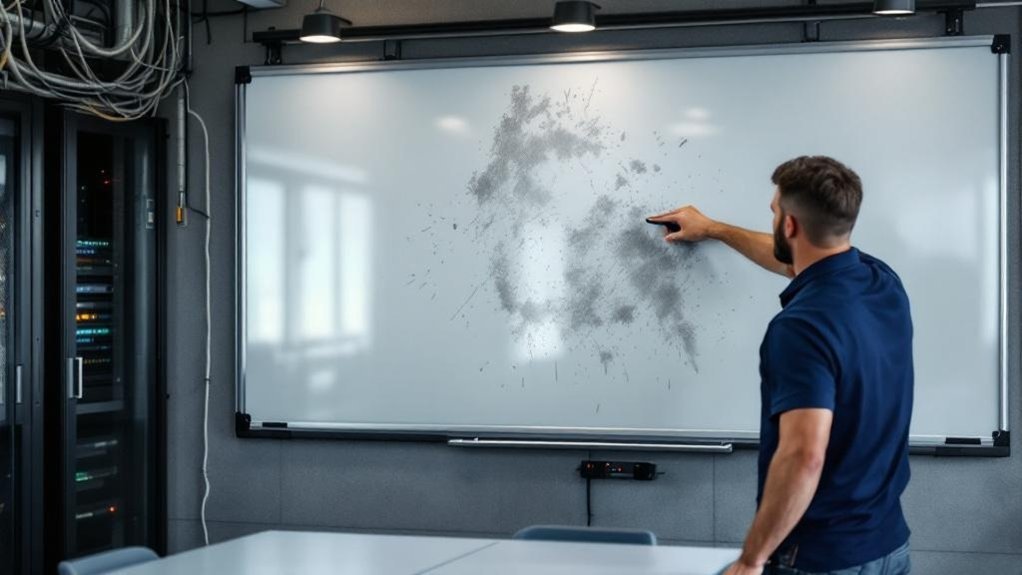
If you skip software and firmware updates, you’ll quickly encounter degraded performance—unresponsive touch, lagging input, and missed feature improvements—because updates deliver bug fixes, security patches, and enhancements critical to digital screen operation. You should enable automatic updates to reduce administrative overhead and guarantee system updates are applied promptly; weekly reviews complement automation to verify success and address failures. Neglecting software and firmware maintenance risks missing security enhancements and bug fixes that directly affect user experience and could disrupt lessons in modern classrooms. Connect to vendor support pages for notifications and firmware images, and document update schedules. Treat updates as integral to lifecycle management: they preserve peak performance, reduce reactive troubleshooting, and maintain a predictable, secure teaching environment.
Using Incompatible Accessories
When you attach non‑compatible accessories to a digital whiteboard, you can expect dropped connections, input lag, or even physical damage to the touch layer — issues that undermine classroom flow and increase repair costs. If you’re using incompatible accessories with an interactive whiteboard or touchscreen display, verify model-specific support before deployment. Manufacturer‑recommended tools preserve touch functionality and minimize performance issues; third‑party styluses or pens can abrade or degrade the touch layer and should be avoided unless explicitly listed as compatible accessories. Check the user manual and the manufacturer’s website for approved peripherals and firmware notes. In procurement and daily use, adopt a policy to only deploy certified accessories for each digital screen to maintain reliability, reduce downtime, and control maintenance expenditure.
Poor Cleaning Methods
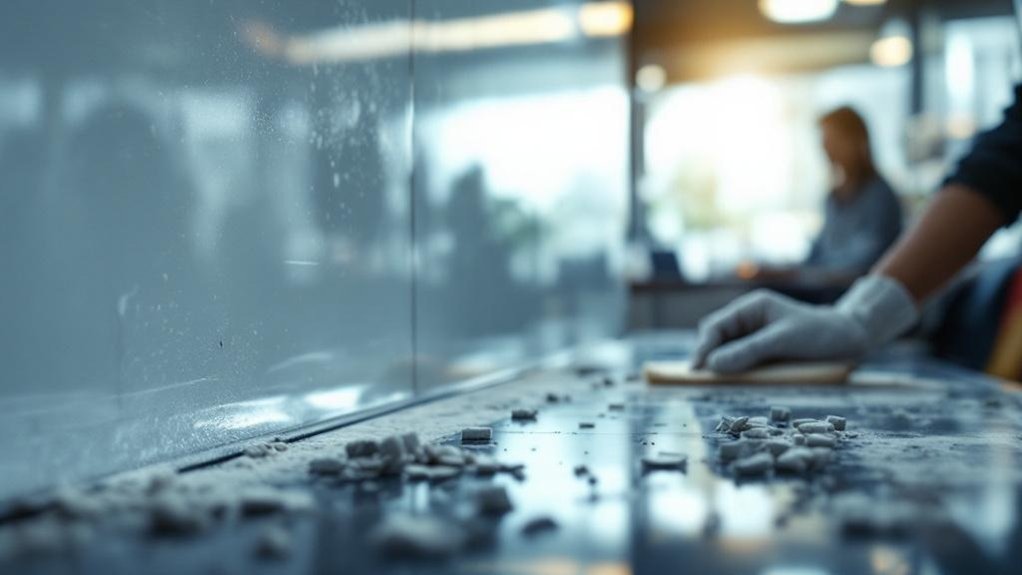
One simple routine many teams overlook is proper cleaning of high‑touch digital screens, and using the wrong materials or chemicals can cause irreversible damage. When you neglect poor cleaning methods, fingerprints and dust accumulate rapidly on a touchscreen used in modern education, reducing display brightness and degrading touch response. Always use a dry microfiber cloth made for sensitive surfaces; avoid abrasive cloths, ammonia‑based cleaners, and wet wipes that strip protective coatings or impair interactive features. Implement daily use cleaning protocols aligned with manufacturer guidelines to sustain clarity and responsiveness. By treating cleaning as maintenance rather than an afterthought, you preserve touch response, extend service life, and avoid one of the common mistakes to avoid when replacing whiteboards.
Treating the Screen as a Passive Projector
Although a screen can display slides, treating it like a passive projector ignores its multi‑touch and collaborative capabilities and wastes features that boost engagement and retention. You shouldn’t limit the display to static slides; interactive whiteboards and Smart Classroom panels provide multi‑touch input, live annotation and collaborative tools that transform lesson plans. Design dynamic presentations that integrate multimedia content and opportunities for students to manipulate objects, answer polls or co‑edit notes. That approach helps you engage students and promote active participation, avoiding monotonous lectures and improving retention. Evaluate each lesson plan for interactive touchpoints, workflow for switching between instructor and student control, and use of built‑in assessment tools. Use the screen as an active pedagogical device, not a passive projector.
Failing to Customise Settings for the Classroom
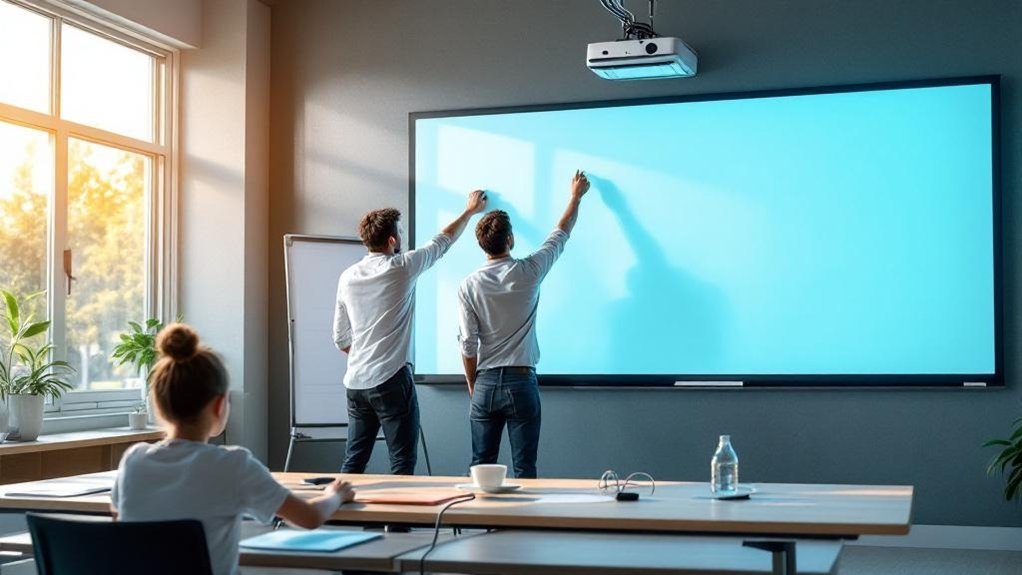
If you skip customizing the display and audio for your classroom, you’ll undermine visibility, touch accuracy and overall usability. In a modern classroom you must prioritize configuring brightness, contrast and audio profiles to enhance visibility and sound clarity across varying ambient light and seating positions. Calibrate touch after relocating the screen to restore precise interactive response and avoid user frustration. Implement multiple user profiles for subjects or teaching styles so teachers can switch optimized settings quickly, improving efficiency. These simple customizing steps make the interactive screen intuitive, boost engagement and reduce technical interruptions. Treat settings as part of deployment: document preferred configurations, train staff on profiles and schedule periodic recalibration to maintain consistent performance and pedagogical value.
Frequently Asked Questions
What Are the Disadvantages of Interactive Whiteboards?
You’ll face interactive whiteboard drawbacks like cost implications, technical difficulties and connectivity issues, plus maintenance challenges, software compatibility and durability concerns; you’ll need user training, and may see limited engagement despite advanced features.
What Is the Difference Between a Whiteboard and an Interactive Whiteboard?
A whiteboard is a passive writing surface; an interactive whiteboard adds interactive features, higher screen resolution, a user interface, collaborative tools and software compatibility, affects maintenance costs, portability options, boosts audience engagement and content versatility for you.
Why Is a Digital Board Better Than a Chalkboard for Some Classrooms?
Ironically, you’ll ditch chalk for instant digital engagement: digital boards boost student interaction and classroom collaboration, enable multimedia resources and content integration, deliver real time feedback, accessibility features, lesson versatility, and improve teaching efficiency.
What Does Interactive Whiteboard Mean?
An interactive whiteboard’s a large touch display that lets you use interactive features for student interaction and classroom collaboration, boosting user engagement and learning outcomes while requiring technology integration, software compatibility, teacher training and cost considerations.
Conclusion
When you swap whiteboards for digital screens, avoid neglecting updates, incompatible accessories, poor cleaning, passive use, and one-size-fits-all settings. For example, a middle school that skipped firmware updates lost touchscreen calibration mid-term, disrupting lessons until a costly service visit fixed it. You’ll save time and money by scheduling updates, using certified peripherals, following manufacturer cleaning guides, training teachers to use interactive tools, and tailoring display settings to classroom lighting and lesson needs.