

You need a digital service status menu because real-time updates and transparent pricing cut uncertainty, reduce inbound calls, and free advisors to focus on throughput and quality. Customers want clear progress indicators and itemized costs, which boosts trust and repeat business while lowering disputes. Automated notifications and standardized menus improve operational efficiency and measurable KPIs like time-to-complete and NPS. Keep this in place and you’ll see improved retention, revenue, and clearer next steps if you want more detail.
Key Takeaways
- Real-time status updates reduce customer anxiety and inbound calls by keeping customers informed throughout the service process.
- Transparent, itemized digital menus build trust and decrease invoice disputes through clear pricing and service explanations.
- Automated notifications free advisors to focus on throughput, improving shop efficiency and technician productivity.
- Consistent multi-device displays and secure APIs ensure accessible, up-to-date information across smartphones, tablets, and desktops.
- Measurable metrics (call reduction, NPS, completion times) demonstrate ROI and guide continuous process improvements.
Key Takeaways for Dealerships and Customers

Because customers want both technology and human touch, a digital service status menu gives you a measurable way to improve satisfaction and operational efficiency: 91% of consumers prefer a mix of digital tools and staff support, and real-time automated updates cut needless calls, reduce anxiety, and keep throughput steady. You’ll see customer engagement rise as patrons get transparent, timely progress reports on vehicle work, which lowers inbound call volume and boosts perceived service quality. Operationally, automated status feeds let advisors focus on exceptions, accelerating bay utilization and reducing cycle times. As part of digital transformation, these menus create consistent touchpoints that standardize communication, lift productivity, and drive repeat business. Metrics—call reductions, NPS, repair turnaround—prove the ROI for both customers and dealerships.
How Real-Time Service Status Builds Trust
Every status update — sent the moment a diagnostic is complete, a part arrives, or a job moves to final inspection — reduces customer uncertainty and sharply lowers inbound calls, with 91% of customers saying clear progress communication is critical to their satisfaction. When you deliver automated, real-time service status updates to mobile devices, you cut repeat inquiries and free advisors to focus on throughput and quality. That operational efficiency translates into measurable trust building: informed customers report less anxiety and higher perceived competence. Consistent, accurate timestamps and concise explanations drive customer engagement and create a feedback loop that boosts loyalty and repeat business. By measuring response rates and call reduction, you can quantify the ROI of transparency and continuously optimize the fixed ops workflow.
Transparent Pricing and Service Breakdown Benefits

When you present a clear, itemized digital service menu with consistent pricing, customers can immediately see what they’re paying for and why, which drives trust and reduces disputes. You get measurable benefits: transparent pricing and a precise service breakdown increase repeat business by 20% and satisfy 96% of customers who prioritize clarity. Operationally, consistent displays cut call volume and time spent explaining invoices.
- Reduces billing disputes through visible line-item costs
- Boosts retention by highlighting loyalty programs and offers
- Streamlines advisor workflow with standardized pricing templates
- Enables data-driven pricing adjustments tied to demand
Reducing Customer Anxiety With Instant Updates
You’ll cut customer anxiety by pushing real-time repair notifications that tell them exactly what’s happening with their vehicle at each milestone. Providing transparent wait-time estimates alongside those updates reduces uncertainty and lowers incoming calls, improving advisor efficiency. Data shows informed customers report higher satisfaction and are likelier to return, so operationalizing instant updates delivers measurable service gains.
Real-time Repair Notifications
Because uncertainty fuels frustration, real-time repair notifications give your customers immediate, data-backed updates on their vehicle’s progress, cutting the need for repeat calls and lowering anxiety. You’ll boost customer engagement by sending automated status changes that reflect shop workflow, technician notes, and estimated next steps, while honoring notification preferences so messages stay relevant. Studies link timely updates to higher satisfaction and perceived reliability, and operations see fewer inbound calls and smoother bay scheduling. Proactive alerts strengthen trust and drive loyalty, since informed customers are likelier to return. Implement brief, actionable messages tied to repair milestones and measure impact with response and retention metrics.
- Reduce inbound calls with automated mobile updates
- Respect notification preferences to prevent overload
- Tie alerts to technician-entered data for accuracy
- Track engagement and repeat-service rates
Wait-time Transparency
Although wait times are often out of a customer’s control, giving them instant, accurate updates through a digital service menu turns uncertainty into predictability—customers who get timely status notifications are 80% more likely to return, and fewer inbound calls let advisors focus on repairs instead of repetitive updates. You get clearer customer expectations and measurable gains in service efficiency when real-time updates cut anxiety and no-show rates. Automated notifications free advisors to complete work, improving throughput and loyalty. Immediate transparency builds trust and reduces repeat contact. Below is a concise operational snapshot:
| Metric | Impact |
|---|---|
| Timely notifications | +80% return likelihood |
| Automated updates | Fewer inbound calls |
| Transparency | Higher customer expectations met |
| Reduced uncertainty | Improved service efficiency |
Increasing Service Revenue Through Clear Packages
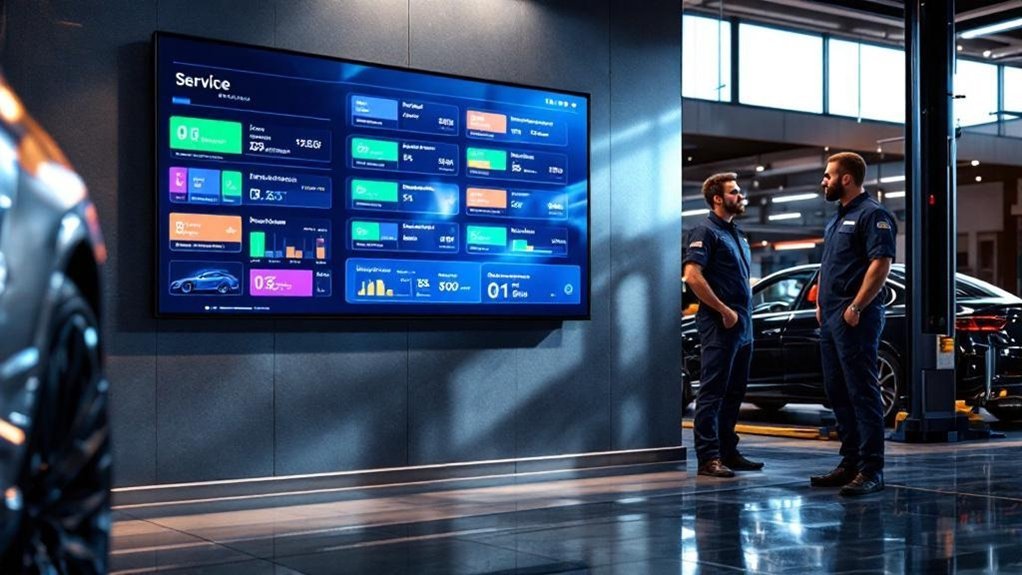
When dealerships present bundled services in a clear, digital menu, customers are more likely to choose higher-value options and spend more per repair order, driving measurable increases in service revenue. You’ll see service package clarity reduce friction in customer decision making: transparent pricing and bundled benefits increase confidence and conversion. Operationally, digital menus let you track which packages perform, optimize offerings, and forecast revenue. Clear displays cut explanation time for advisors, raising throughput and satisfaction. Use data to iterate packages based on uptake and margin.
- Show bundled benefits and price breakdowns side-by-side
- Highlight top-performing packages with uptake metrics
- Use A/B testing to refine package structure and messaging
- Surface recommended packages based on vehicle data and service history
Loyalty Programs and Repeat Business Opportunities
Clear, digital service menus don’t just boost average repair orders—they’re a powerful channel for loyalty programs that keep customers coming back. You’ll use transparent pricing and bundled packages to showcase loyalty rewards, which drives customer retention and a measured 20% bump in repeat business. With 96% of customers valuing transparency, menus build trust and operational predictability, cutting follow-up friction. Integrated service plans give customers peace of mind and schedule cadence for regular maintenance, increasing lifetime value and up to 30% more revenue from loyal patrons.
| Program Feature | Operational Benefit |
|---|---|
| Bundled packages | Higher average order, clearer upsell paths |
| Loyalty rewards display | Improved retention, predictable service flow |
| Integrated plans | Consistent return visits, workload planning |
Integration and Device Compatibility Considerations
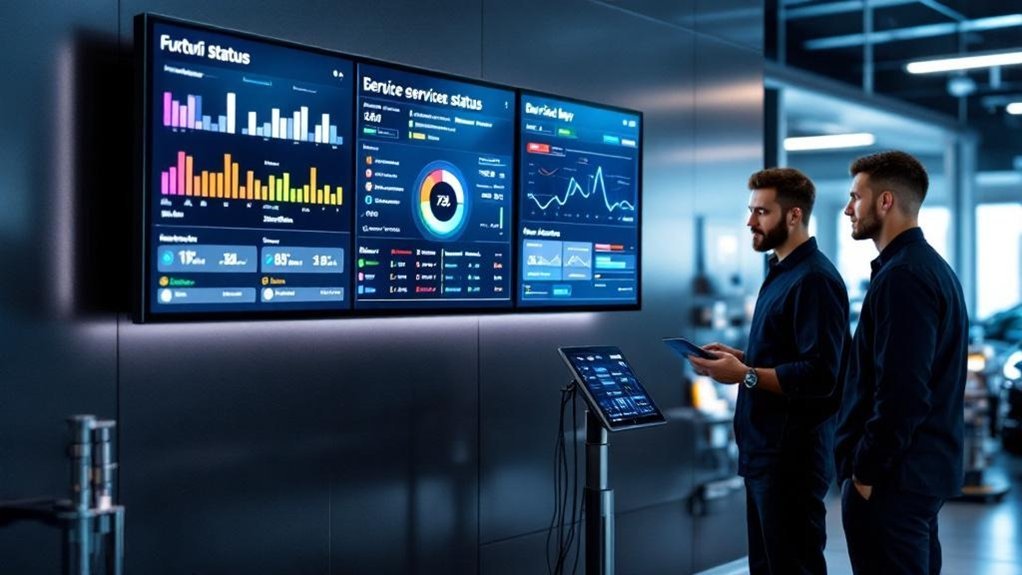
You’ll want to prioritize API and software compatibility so your digital service status menu syncs in real time with shop management systems, reducing manual updates and errors. Guarantee multi-device display support—smartphones, tablets, laptops and desktops—to give every customer consistent, accessible status views across their preferred devices. Evaluate integration costs against measurable gains in operational efficiency and customer satisfaction to justify implementation.
API and Software Compatibility
Because your digital service status menu needs to work with the tools technicians and customers already use, API-first integration and broad device compatibility are essential for reliable, real-time communication and streamlined shop operations. You’ll face API integration challenges and must design for software scalability issues from day one, making certain connections to shop management systems are secure, low-latency, and maintainable. Prioritize data mapping, auth protocols, and versioning so you don’t break workflows during updates. Regular maintenance and security controls protect customer data and preserve trust. Multi-language support and responsive design keep communication inclusive and accessible.
- Guarantee robust authentication and encryption for all API calls.
- Monitor performance to catch latency or scaling bottlenecks.
- Implement clear versioning and rollback plans.
- Log and audit integrations for compliance and troubleshooting.
Multi-Device Display Support
While supporting smartphones, tablets, laptops, and desktops might seem routine, ensuring consistent, real-time service status across those devices requires tight API integration, responsive UI design, and device-aware security so customers always get accurate updates no matter how they check progress. You’ll rely on reliable API connections to sync shop management data instantly, reducing perceived wait times by delivering live progress to any screen. Prioritize device accessibility and multi-language options to reach diverse customers while maintaining robust encryption and session controls to protect PII. From an operations perspective, standardized payloads and versioned APIs cut support overhead and speed troubleshooting. Measure user experience with cross-device analytics to iterate UI responsiveness and error rates, improving throughput and satisfaction.
Maintaining Accuracy: Continuous Updates and Improvements
When dealerships keep their digital service status menus updated in real time, customers get clear, accurate progress indicators that cut unnecessary calls and build trust; regular audits of menu items and response times let you identify gaps, align offerings with evolving preferences, and measure improvements in satisfaction and repeat business. You’ll use service menu accuracy and customer feedback as primary inputs to tighten workflows, reduce inquiry volume, and demonstrate operational reliability. Continuous updates let you reflect parts availability, technician capacity, and estimated completion windows so customers see realistic timelines. Treat the menu as a living operational dashboard that informs staffing and parts ordering decisions, and prioritize iterative improvements driven by measurable bottlenecks and direct customer input.
Keep digital service menus updated in real time—clear progress, fewer calls, and data-driven improvements that boost trust and efficiency
- Track update latency and error rates
- Log customer feedback themes
- Schedule weekly menu audits
- Tie changes to process KPIs
Measuring Success and Customer Satisfaction Metrics
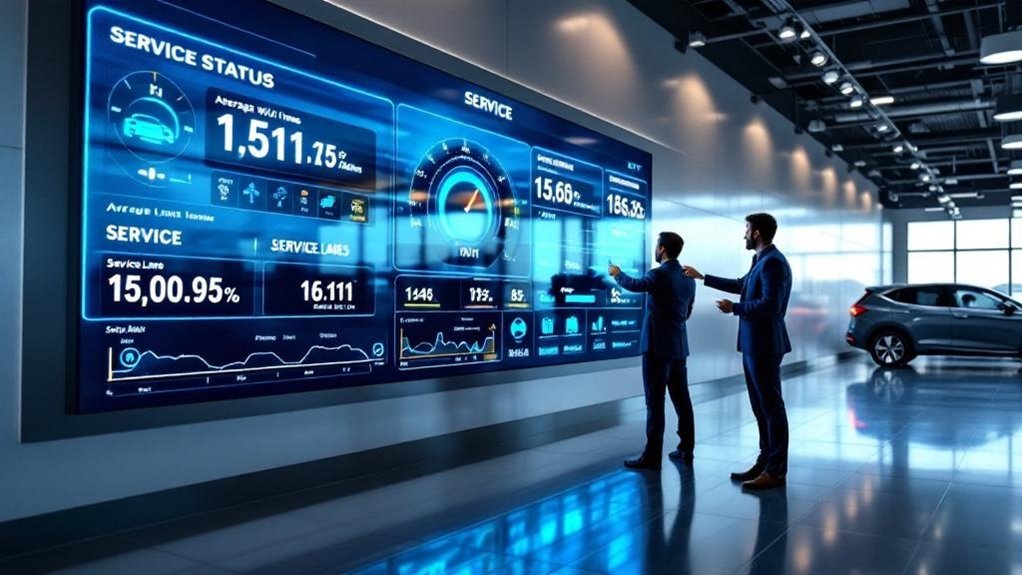
If you want to prove the value of a digital service status menu, start by defining concise, measurable metrics that tie real-time updates to customer satisfaction and operational outcomes. You’ll track objective KPIs: notification delivery rates, reduction in inbound status calls, average time-to-complete, and retention lift — research shows informed customers are 80% more likely to return. Pair these with qualitative measures from customer feedback and satisfaction surveys to quantify perception changes. Use A/B tests to link specific update frequency or messaging to satisfaction score deltas. Automating notifications should cut repetitive inquiries and improve throughput; measure technician idle time and bay utilization before and after. Report metrics dashboard weekly, iterate processes based on survey insights, and tie improvements to revenue and loyalty.
Frequently Asked Questions
Why Is It Essential to Focus on Local SEO in Digital Marketing for Car Dealerships?
You should focus on local SEO because local search boosts visibility where customers are, driving calls, visits and higher customer engagement; data shows optimized listings and mobile search capture nearby buyers, improving operations, traffic and service conversions.
How Do Service Customers Increasingly Prefer to Communicate With Dealerships?
You want hybrid options: text message, online chat, and in-person help; you’re choosing convenience, transparency, and speed, so you’ll get automated updates, real-time status, fewer calls, and better advisor focus for efficient service.
Conclusion
You’ll see faster buy-in when you show real numbers: real-time service status cuts perceived wait times and boosts transparency, which raises trust and repeat business. Clear pricing and package visibility lift attach rates, while instant updates and loyalty incentives drive higher lifetime value. Integrate across devices, keep data current, and measure NPS, CSAT and revenue per RO to stay ahead. In short, it’s the whole ball of wax for modern fixed ops success.