

You’re ditching paper menus because digital service boards cut printing costs, save staff time, and update prices, parts, and lane status instantly to prevent errors and disputes. They improve customer flow and transparency, make complex service options easier to understand with visuals, and let you push targeted upsells that boost ticket value. Cloud control scales across locations and reduces double-bookings. Keep going and you’ll see practical tips for choosing hardware, software, and vendor support.
Key Takeaways
- Digital service boards cut recurring printing costs and staff time spent updating paper menus.
- Real-time updates show lane status, pricing, and part availability, reducing customer confusion and disputes.
- High-quality visuals and dynamic content speed decisions and improve the waiting-room experience.
- Centralized scheduling and consistent info reduce technician downtime and speed check-in processes.
- Cloud-based systems with role-based access and OTA updates simplify scaling and future-proof operations.
The Cost and Efficiency Advantages of Digital Service Boards
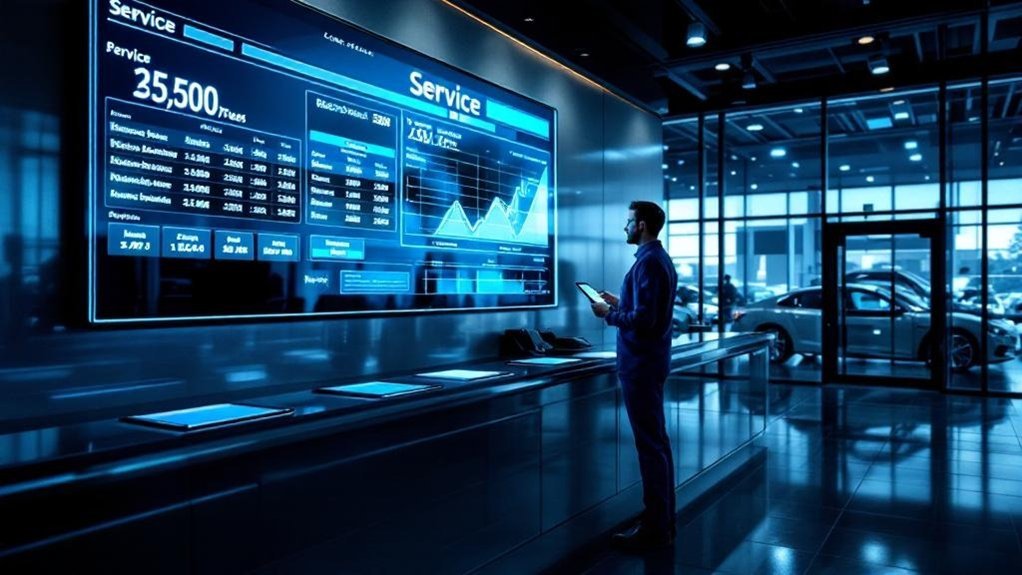
Because printing and constantly updating paper menus eats into your budget and staff time, switching to digital service boards pays off quickly: you cut recurring printing costs, eliminate manual menu maintenance, and keep pricing accurate in real time. You’ll see measurable cost savings as print runs disappear and promotions update without reprints. Operational efficiency improves because staff spend less time replacing menus and more time serving customers, and streamlined displays reduce wait times by up to 15%. Dynamic boards let you highlight specials and adjust offerings based on inventory, boosting average sales by 3–10%. With accurate, flexible displays you reduce customer confusion, simplify transactions, and free your team to focus on higher-value interactions that drive retention and revenue.
Real-Time Updates That Keep Customers Informed
You’ll want your digital board to show instant service status so customers know whether a lane is open, an appointment is delayed, or a vehicle is ready. Live pricing changes should appear immediately to prevent sticker shock and keep quotes accurate during demand shifts. Real-time part availability updates let your team set proper expectations and avoid wasted trips or follow-up calls.
Instant Service Status
When your car is in the shop, real-time service updates on a digital board keep you informed of progress, estimated completion times, and any delays without having to ask staff. You get instant notifications and clear service tracking that remove guesswork—boards update as work moves through inspection, repair, and final QA. That transparency reduces anxiety and stops crowds at the desk, so technicians and advisors can focus on completing jobs. You’ll see updated completion windows and delay notices the moment schedules change, which builds trust and smooths expectations. Digital status displays streamline communication, cut interruptions, and improve throughput by keeping you informed without extra staff time.
- Faster clarity with instant notifications
- Accurate service tracking updates
- Fewer interruptions, better efficiency
Live Pricing Changes
If a price or promotion changes mid-day, digital service boards update instantly so you’re always seeing current rates without staff having to reprint menus or explain discrepancies. You get live updates that reflect service pricing, special offers, and temporary adjustments the moment they’re entered, which reduces mismatches between quoted and billed amounts. That continuous accuracy boosts price transparency, lowering disputes and customer calls about outdated figures. Because 77% of visits are routine maintenance, timely information keeps those frequent interactions smooth and predictable. Operationally, your service team spends less time manually changing displays and more time assisting customers, improving throughput. In short, real-time pricing on digital boards keeps you informed, builds trust, and streamlines day-to-day shop operations.
Real-Time Part Availability
Real-time pricing sets the expectation that what’s shown is what you’ll pay — the same immediacy applies to parts availability, which matters just as much for keeping service appointments on schedule. You’ll see precise, up-to-the-minute part status thanks to real time tracking tied to inventory systems, so you won’t be surprised by backorders or delays. That clarity helps you choose alternatives, accept promotions, or reschedule knowing the facts.
- Instant visibility: digital boards pull live inventory data to display current stock and lead times.
- Decision confidence: accurate displays prevent miscommunication and speed approvals.
- Sales lift: highlighting in-stock promotions drives uptake while preserving inventory accuracy.
Enhancing the Customer Experience With Visual Content
Because visuals make complex information easier to digest, digital service boards let you see service options, pricing, and promotions at a glance—high-quality images and dynamic content shorten decision times (by about 15%), build emotional engagement, and keep customers informed with up-to-date offerings that reinforce trust and encourage repeat visits. You’ll benefit from visual storytelling that turns technical service details into clear, relatable scenarios—before/after photos, icons, and short video clips help you understand value quickly. Customer engagement rises when testimonials and timely promotions appear where you’re already looking, improving perceived transparency. Real-time pricing updates reduce surprises, strengthening confidence in choices. Overall, polished visuals make interactions faster and more satisfying, increasing the likelihood you’ll return for future maintenance.
Streamlining Service Department Operations and Workflow
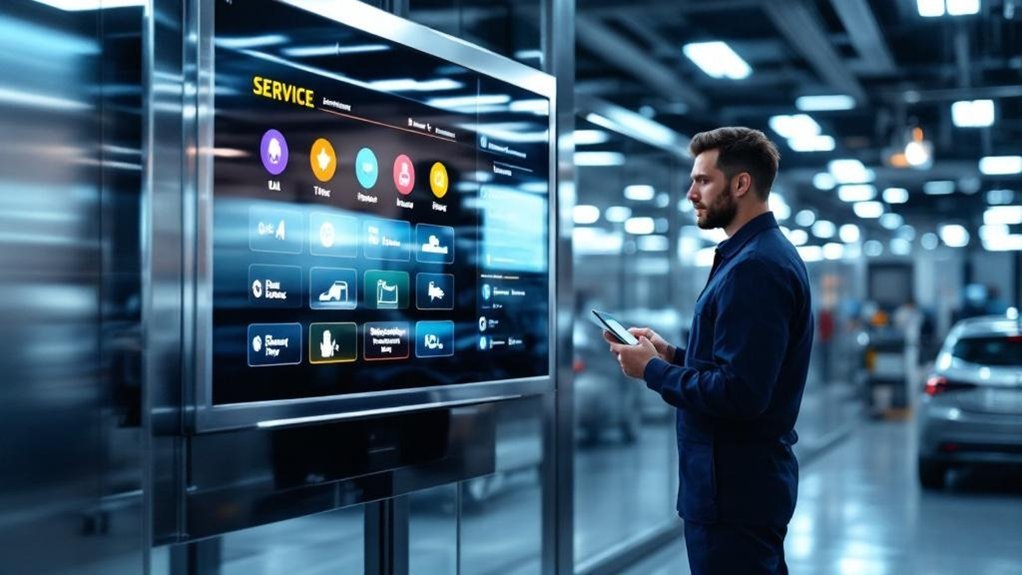
When you switch to digital service boards, your service lane runs smoother and your paperwork headaches shrink because schedules, pricing, and promotions update instantly across the shop. You’ll remove manual paper swaps, sync maintenance schedules in real time, and present consistent information to customers and technicians — improving workflow optimization and service efficiency. Digital boards cut confusion, speed check-in, and raise perceived professionalism.
- Centralized scheduling: updates push to all displays and devices, reducing double-bookings and manual calls.
- Clear task lists: technicians see concise priorities and status changes, minimizing downtime and rework.
- Customer-facing clarity: owners get accurate wait times and maintenance reminders, streamlining throughput and improving satisfaction.
Boosting Sales Through Targeted Promotions and Upsells
You can boost add-on sales by placing targeted upsell messages where customers are most attentive, like check-in kiosks and waiting-area screens. Use dynamic deal highlighting to push time-limited offers and high-margin services with clear visuals and concise calls to action. Track responses and rotate content based on performance to keep promotions relevant and measurable.
Strategic Upsell Placement
If dealerships want to raise average transaction values without adding headcount, strategic upsell placement on digital service boards is a practical lever: highlighting high-margin services, limited-time offers, and loyalty packages in real time lets you push the right promotion to the right customer, increasing the odds of unplanned purchases and boosting profits by as much as 10%. You’ll use upsell strategies that prioritize margin, timing, and visual appeal. Real-time updates let you spotlight slow-moving services or tie offers to service history, improving customer engagement and repeat visits. Measure responses and rotate offers based on performance so the board learns what converts. Be deliberate: placement, wording, and urgency determine whether a prompt becomes an add-on sale.
- Prioritize high-margin services
- Rotate limited-time offers
- Showcase loyalty packages
Dynamic Deal Highlighting
Building on how strategic upsell placement boosts average transaction value, dynamic deal highlighting uses real-time visuals and targeted messages to push the right offer at the right moment. You’ll use dynamic content and visual engagement to showcase promotions that can lift sales by up to 10% and prompt unplanned purchases—8 out of 10 viewers respond to compelling digital promotions. You can swap slow-moving items, tweak pricing instantly, and tailor messages by demographic or service time to maximize impact. This creates a professional, trust-building environment that outperforms static signs while improving operational efficiency.
| Metric | Effect | Action |
|---|---|---|
| Sales lift | +10% | Highlight top promos |
| Conversion | 80% | Use videos/graphics |
| Efficiency | Faster updates | Remove slow items promptly |
Scalability and Centralized Management for Multi-Location Dealers
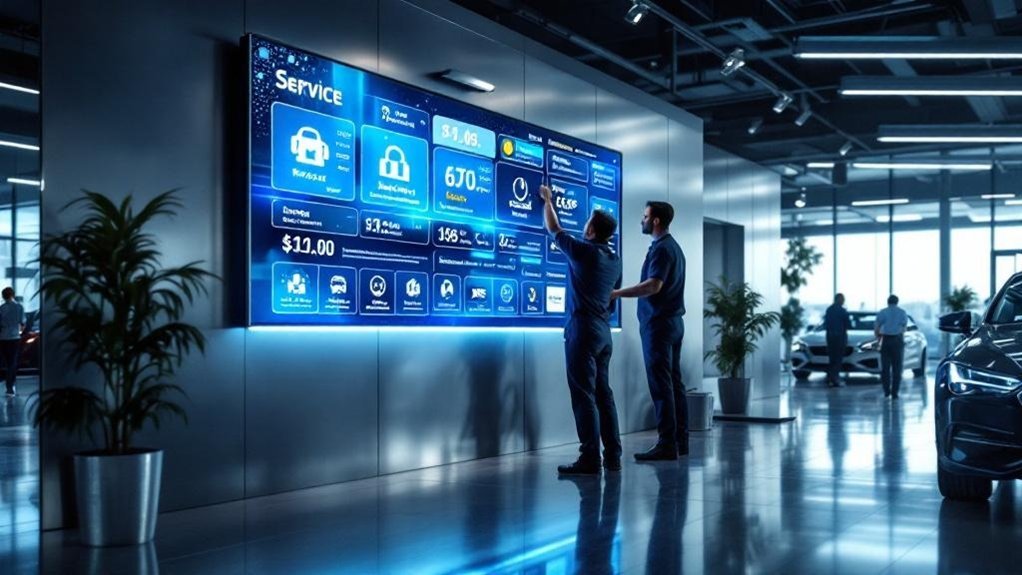
Because multi-location dealerships need consistent messaging at scale, centralized digital service boards let you manage content across every site from a single dashboard, pushing updates, promotions, and localized variations instantly. You get centralized control for multi location management, so brand voice, pricing, and service options stay uniform while allowing location-specific tweaks. Cloud-based deployment means you can add displays or new facilities without major hardware overhaul, cutting printing and distribution costs. Real-time analytics show customer interactions across dealerships, letting you refine campaigns and allocate resources where they perform best. Operational efficiency improves, and marketing becomes data-driven and immediate.
- Rapid rollouts: update all locations from one interface.
- Localize: customize content per dealership or event.
- Scale cheaply: add sites without heavy infrastructure changes.
Choosing the Right Hardware and Software for Your Dealership
When you’re equipping a dealership for digital service boards, prioritize commercial-grade, energy-efficient LCDs and cloud-based software that work together through a robust CMS so you can remotely manage, schedule, and scale content across locations; also verify hardware supports future expansion and that the software enforces secure communications (SSL/HTTPS) to protect sensitive data. For hardware selection, choose durable screens rated for continuous operation, easy-mount enclosures, and low power draw to reduce maintenance and energy costs. For software integration, pick cloud-based digital signage platforms with role-based access, template libraries, and centralized scheduling. Confirm the CMS offers device grouping, over-the-air updates, and audit logs. Finally, validate vendor support, warranty terms, and a clear upgrade path to avoid costly rip-and-replace later.
Frequently Asked Questions
Do Customers Prefer Digital Menu Boards?
Yes — you’ll usually prefer digital menu boards because customer preferences favor digital convenience, real-time updates, and engaging visuals that speed decisions, boost unplanned purchases, and improve margins, making your service experience faster and more satisfying.
What Is the Four Square Trick at a Car Dealership?
The four square trick’s a sales technique where dealers split pricing into four boxes—trade, price, down, payment—to shift numbers and obscure true cost; you should focus on total price and financing terms to avoid confusion.
What Are the Disadvantages of Digital Menus?
You’ll face digital signage challenges like high upfront costs, glitches, and maintenance; customer engagement issues with tech-averse patrons; plus staff training, frequent content updates, and potential downtime that can disrupt service and frustrate customers.
Are Digital Menu Boards Worth the Cost?
Yes — with a 10% sales lift, your cost analysis favors digital menu boards; they boost customer engagement, cut printing expenses, allow real-time updates, and drive unplanned purchases, so you’ll likely recoup investment pragmatically.
Conclusion
Switching to digital service boards saves you time and money while improving transparency and upsell opportunities. You’ll update jobs in real time, showcase before-and-after photos, and push targeted offers without reprinting menus. For example, a regional dealer group replaced paper boards across five locations, cutting admin hours 30% and increasing accessory sales 12% within three months. Be pragmatic: pick scalable software and durable displays so the system grows with your business and keeps customers informed.